I love that I get to play with kids for a living. I have been working with neurodivergent kids for years, and as a typical work day I get to figure out how to work on skills in the most fun way possible. My goal is to engage kids in play while using things they love so that we can work on the skills they need.
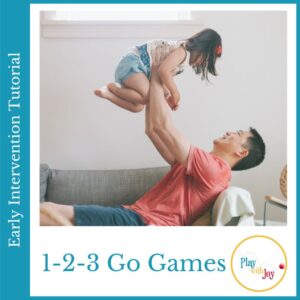
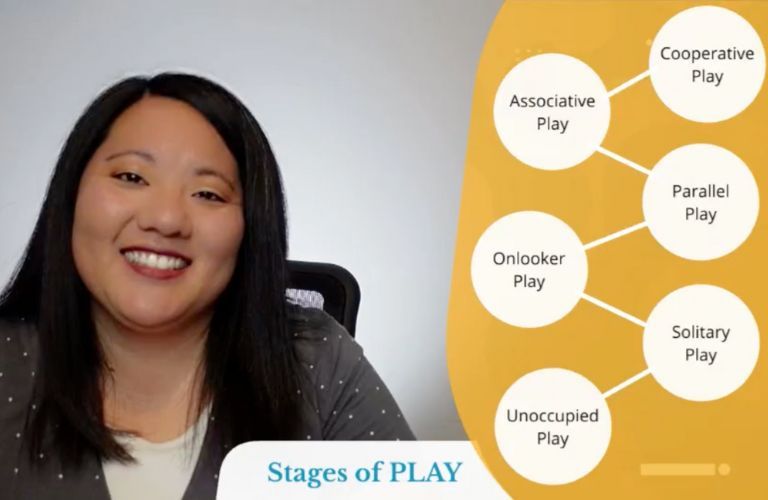
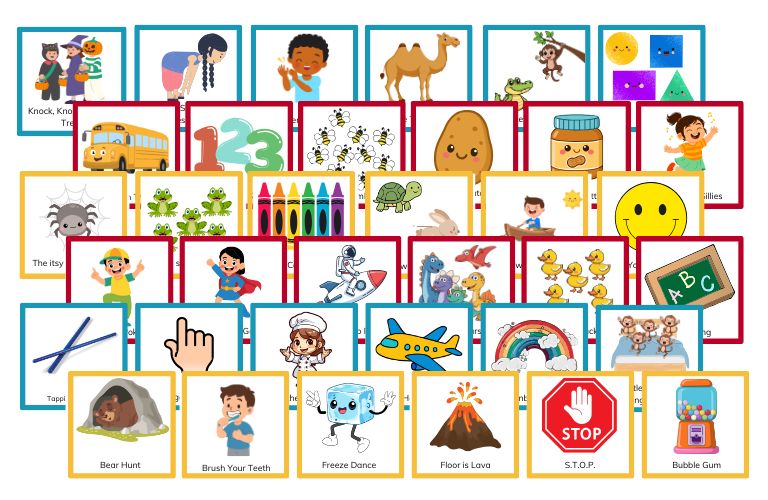
Games aren’t just about fun; they can be powerful tools for enhancing many different developmental skills in children. The 1-2-3 go game can be adapted at all different stages of play, and target so many different areas of development.
Let’s talk about some of those areas of development that you can use this simple game with.
Increase Engagement
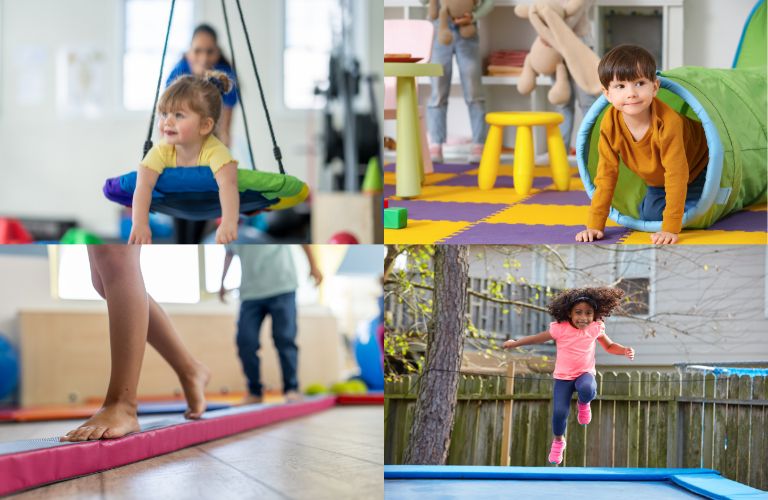
The anticipation of the “Go” signal and the excitement of movement can capture a child’s attention, making them fully engaged in the game. Adding some sensory movement like spinning, jumping, swinging, or running can also help the engagement going.
If your primary goal here is engagement, start with what the child loves to do. Then try to continue to build anticipation with your excitement, and use some expectant waiting for them to initiate that they want more.
Increase circles of communication
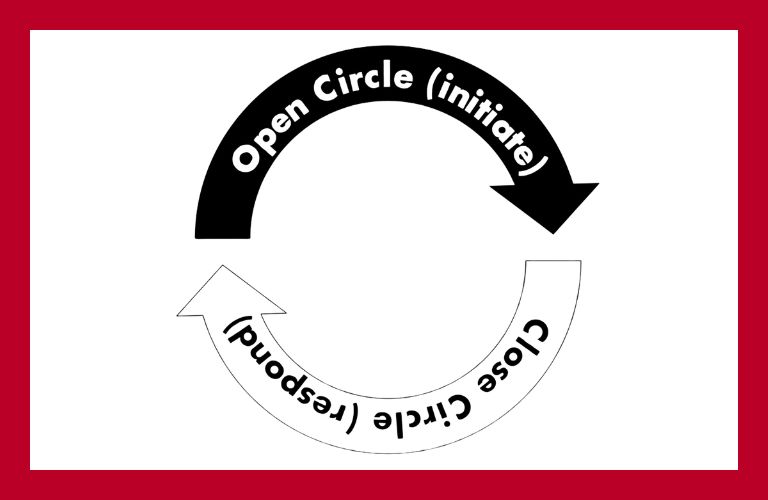
If you’re not familiar with what a circle of communication is, it’s the back and forth interactions between two or more people. Initiating is opening a circle and responding is closing the circle. Circles of communication are so important when a child is in the beginning phases of communication.
Taking turns initiating the countdown to “Go” encourages children to open more circles. When you are at a stage of working on circles, your goal is just to get more and more consecutive circles. Playing a high interest game like this can help increase those circles.
If your child is working on initiation, you can add long pauses and wait for your child to say the next part of the sequence whether it’s a number or whether it’s “go.” You can also do this with gestures, facial expressions, or any other ways your child may try to communicate.
Increase natural imitation
Children often naturally imitate the actions and behaviors of others. In the 1-2-3 Go game, they mimic the countdown and movement, enhancing their natural imitation skills, which are crucial for learning and social development.
The game’s structure encourages children to communicate with purpose. They initiate the countdown, engage others, and respond to cues—all of which contribute to purposeful interactions that strengthen their communication skills.
Strengthen response inhibition
The game involves stopping at “3” and waiting for the “Go” signal. This practice of response inhibition helps children develop self-control and restraint, skills that are valuable in various settings, from classrooms to everyday life. This is a fun and playful way to improve your child’s ability to wait before they respond.
Develop flexible thinking
While the game follows a pattern, you can adapt it to help them work on their flexible thinking. Instead of saying 1-2-3 Go, you might say 1-2-3 Run and then the next time 1-2-3 Jump. Changing up the activity requires the child to flexible and listen to the directions.
There are so many different activities that you can incorporate the 1-2-3 Go game into. When the child is familiar with this routine, you can pair it with an activity that they might not be as comfortable with and it will make it easier for them because they know the 1-2-3 Go game.
1-2-3 Go Games Are Building Your Child's Developmental Skills
The simple 1-2-3 Go game may appear basic, but its impact on children’s development is significant. By engaging in this playful activity, children enhance attention, engagement, initiation skills, communication, imitation, interaction, response inhibition, and flexible thinking.
Remember, these skills don’t exist in isolation—they support each other, contributing to holistic growth. So, the next time you gather children for a round of 1-2-3 Go, know that you’re not just playing a game; you’re nurturing a wide range of developmental skills that will serve them well in their journey ahead.
1-2-3 Go Games Tutorial
Once you purchase 1-2-3 Go Games and log in, you will have full access to all the content below this section.
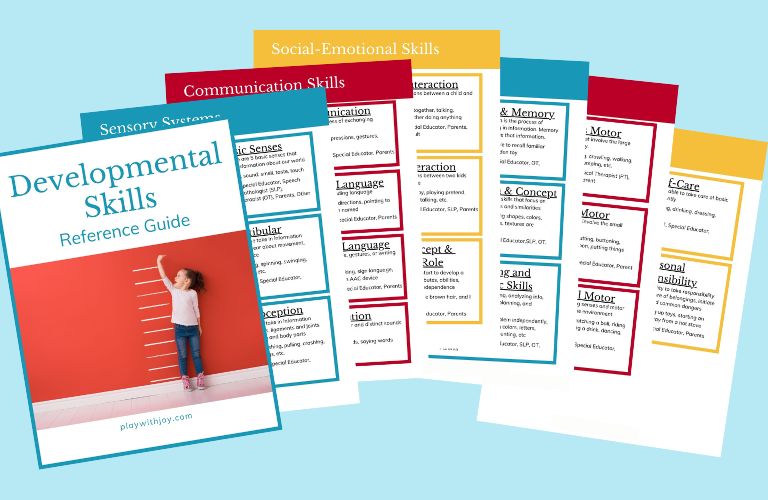
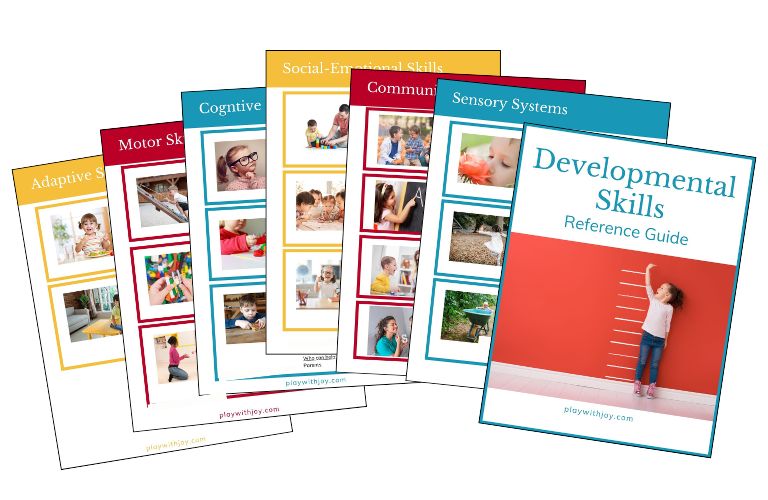
Get Your Free Developmental Skills Reference Guide
Parents, educators, and therapists – Add this to your toolbox to better understand key areas of child development. Plus get extra tips, activities and strategies to your inbox.
Unsubscribe at any time. See Privacy Policy for more details.