
Improving Developmental Skills Through Play
I love that I get to play with kids for a living. I have been working with neurodivergent kids for years, and as a typical work day I get to figure out how to work on skills in the most fun way possible. My goal is to engage kids in play while using things they love so that we can work on the skills they need.
Games aren’t just about fun; they can be powerful tools for enhancing many different developmental skills in children. The 1-2-3 go game can be adapted at all different stages of play, and target so many different areas of development.
Let’s talk about some of those areas of development that you can use this simple game with.
Increase Engagement
The anticipation of the “Go” signal and the excitement of movement can capture a child’s attention, making them fully engaged in the game. Adding some sensory movement like spinning, jumping, swinging, or running can also help the engagement going.
If your primary goal here is engagement, start with what the child loves to do. Then try to continue to build anticipation with your excitement, and use some expectant waiting for them to initiate that they want more.
Increase circles of communication
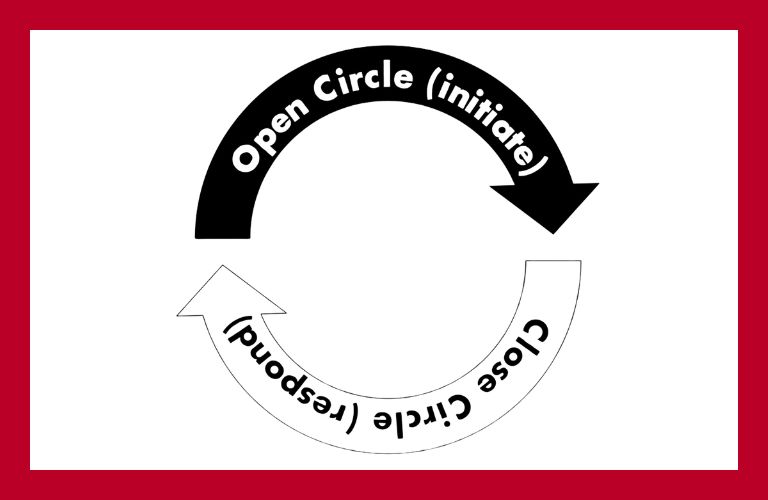
If you’re not familiar with what a circle of communication is, it’s the back and forth interactions between two or more people. Initiating is opening a circle and responding is closing the circle. Circles of communication are so important when a child is in the beginning phases of communication.
Taking turns initiating the countdown to “Go” encourages children to open more circles. When you are at a stage of working on circles, your goal is just to get more and more consecutive circles. Playing a high interest game like this can help increase those circles.
If your child is working on initiation, you can add long pauses and wait for your child to say the next part of the sequence whether it’s a number or whether it’s “go.” You can also do this with gestures, facial expressions, or any other ways your child may try to communicate.
Increase natural imitation
Children often naturally imitate the actions and behaviors of others. In the 1-2-3 Go game, they mimic the countdown and movement, enhancing their natural imitation skills, which are crucial for learning and social development.
Get The Complete
1-2-3 Go Games Tutorial
Here
Participate in purposeful interactions
The game’s structure encourages children to communicate with purpose. They initiate the countdown, engage others, and respond to cues—all of which contribute to purposeful interactions that strengthen their communication skills.
Strengthen response inhibition
The game involves stopping at “3” and waiting for the “Go” signal. This practice of response inhibition helps children develop self-control and restraint, skills that are valuable in various settings, from classrooms to everyday life. This is a fun and playful way to improve your child’s ability to wait before they respond.
Develop flexible thinking
While the game follows a pattern, you can adapt it to help them work on their flexible thinking. Instead of saying 1-2-3 Go, you might say 1-2-3 Run and then the next time 1-2-3 Jump. Changing up the activity requires the child to flexible and listen to the directions.
There are so many different activities that you can incorporate the 1-2-3 Go game into. When the child is familiar with this routine, you can pair it with an activity that they might not be as comfortable with and it will make it easier for them because they know the 1-2-3 Go game.
1-2-3 Go Games Are Building Your Child's Developmental Skills
The simple 1-2-3 Go game may appear basic, but its impact on children’s development is significant. By engaging in this playful activity, children enhance attention, engagement, initiation skills, communication, imitation, interaction, response inhibition, and flexible thinking.
Remember, these skills don’t exist in isolation—they support each other, contributing to holistic growth. So, the next time you gather children for a round of 1-2-3 Go, know that you’re not just playing a game; you’re nurturing a wide range of developmental skills that will serve them well in their journey ahead.
1-2-3 Go Games Tutorial
Once you purchase 1-2-3 Go Games and log in, you will have full access to all the content below this section.
Functional Developmental Levels (FDLs): 1-6
This activity is great for kids at an FDL of: 1-6
The Functional Developmental Levels (FDL) are based on The PLAY Project and DIR/Floortime
- FDL 1: Self Regulation & Shared Attention
- FDL 2: Engagement & Relating
- FDL 3: Intentionality & Two-Way Communication
- FDL 4: Social Problem-Solving & Mood Regulation
- FDL 5: Creating Symbols & Using Words & Ideas
- FDL 6: Emotional Thinking, Logic & Sense of Reality
Stages of Play: 1-6
This activity is great for kids primarily participating in stages: 1-6
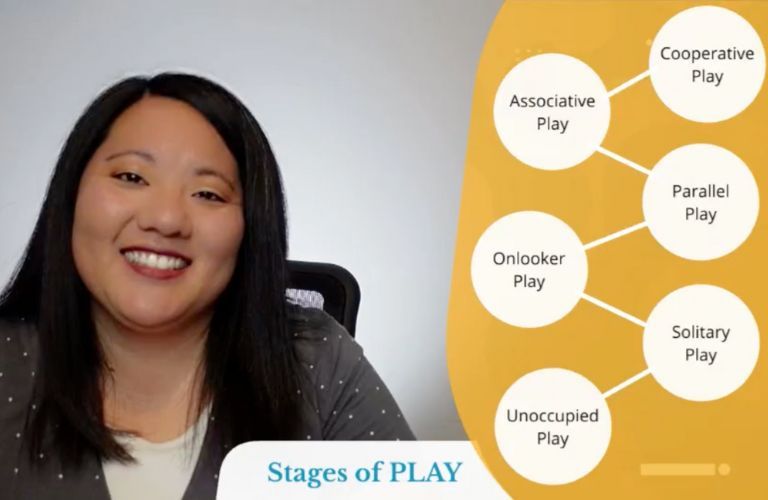
The Stages of Play come from Parten’s Stages of Social Play.
- Stage 1: Unoccupied Play
- Stage 2: Solitary Play
- Stage 3: Onlooker Play
- Stage 4: Parallel Play
- Stage 5: Associative Play
- Stage 6: Cooperative Play
Sensory Input: Auditory, Vestibular, Proprioception
This activity includes: vestibular and proprioception
Our senses include more than the usual 5 senses. Some kids may seek certain types of sensory input and/or avoid other types.
- Visual: Sight
- Auditory: Sound
- Olfactory: Smell
- Oral: Taste (Gustatory) and using the mouth to speak, make sounds, eat, chew, drink, etc.
- Tactile: Touch
- Vestibular: How we process information about movement, gravity, and balance. We receive this information through the inner ear.
- Proprioceptive: How we process information about body position and body parts. We receive this information through our muscles, ligaments, and joints.
Areas of Development: Communication, Executive Functioning, Motor, Social
This activity is good for targeting the following developmental skills: communication, cognitive, executive functioning, motor, social
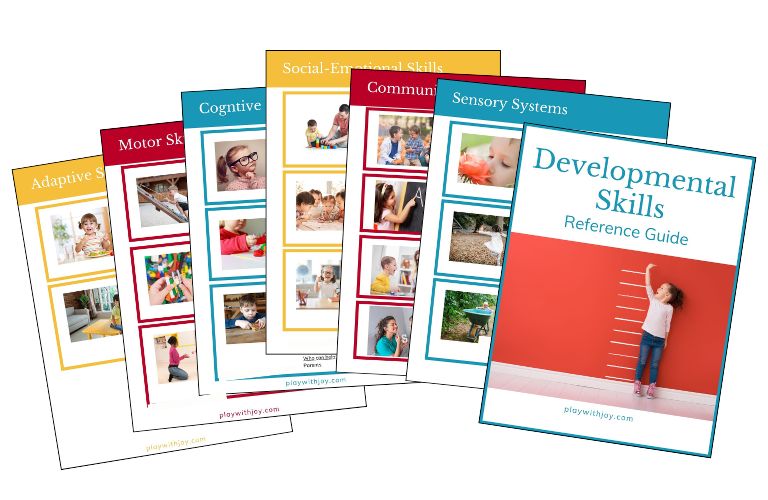
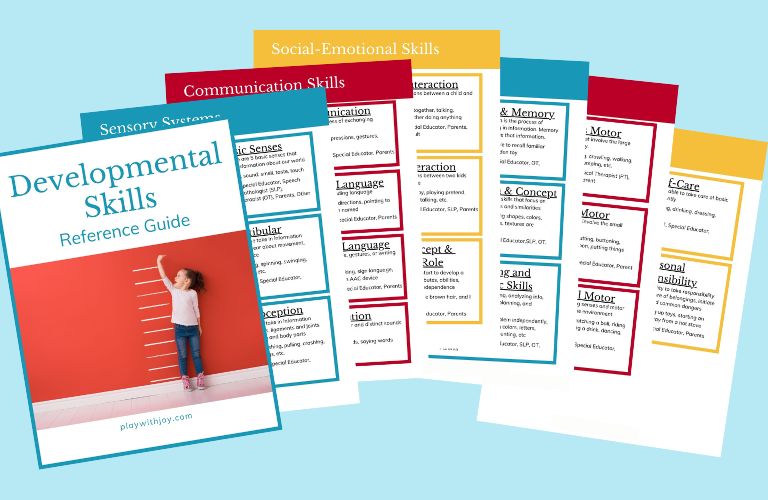
These are the main areas of child development addressed in the Early Intervention Tutorials
- Communication: receptive language, expressive language, listening, two-way communication
- Cognitive skills: cause & effect, literacy, math, science, problem solving, perception and concept
- Executive functioning: emotional control, flexibility, perseverance, self-monitoring, organization, planning, response inhibition, attention, task initiation, time management, working memory
- Motor skills: fine motor, gross motor, perceptual motor
- Social-emotional skills: peer interaction, self concept & social role, pretend play, behavior, group activities
- Adaptive skills: self-care, personal responsibility
Supplies
- Not necessary, but it depends on what activities you’re combining
Instructions
- You can play 1,2,3, Go games with just about anything you’re doing
- This sets up a sequence or a routine that helps a child know what to expect next.
- It also helps a child to participate in getting the activity started
- You can wait for the child to say 1,2,3, Go! Or you can pause before “Go” for your child to say it
- Use this activity to get some extra circles of communication
Video Tutorial
*This video is originally from the course Parents Playing On Purpose: How To Be A Child’s Best Early Interventionist
Adapting to Different Stages of Play
Stages 1-4
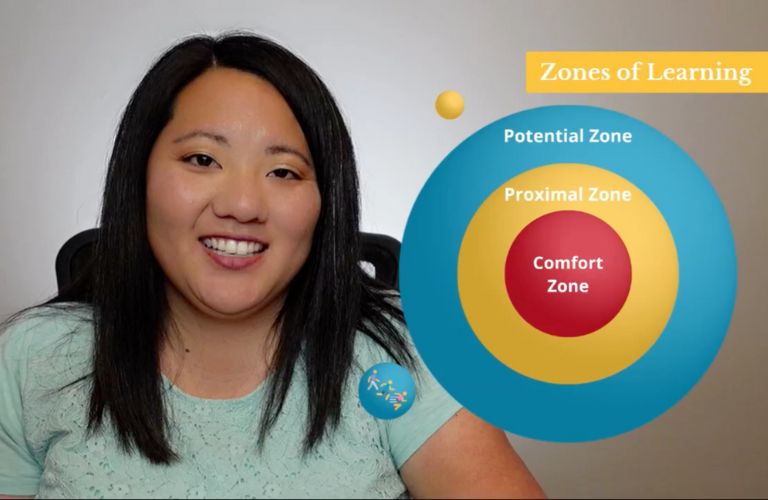
At stages 1-2 kids may not be very interested in other people yet. At stages 3-4, kids are typically starting to be interested in other kids, but aren’t engaging in play with them yet.
Our main focus at stages 1-4 is going to be attention, engagement, and simple circles of communication (even if it’s just 1-3 circles at a time).
GOALS:
- Increase attention to one activity
- Engage in play with a familiar adult
- Initiate wants and needs through words, sounds, gestures, or facial expressions (open circles of communication)
- Will respond when you open a circle of communication (close circles of communication)
- Increase natural imitation
- Participate in purposeful interactions
TIPS FOR PLAYING WITH A CHILD AT THESE STAGES
- Instead of trying to get your child to imitate you, try imitating your child. Sometimes this helps pique your child’s interest in you
- Add movement. Adding movement and changing the sensory input can help some kids to increase their engagement with others
- If you’re having a difficult time getting your child to engage with you, start wherever your child is. You can turn most things into a predictable sequence and then make it a game. For example, if your child is lining up trains, you can count to 3 as he does it. Instead of counting how many cars there are, just count 1,2,3 and then start over. Try helping (if he lets you) by handing him the trains as you count to 3. Once you’ve set up a sequence, then start to pause and wait expectantly. For example, do 2 trains and count to 2, then wait. If your child reaches for the next car, then give that gesture a word by saying “3!”
- If you’re having a hard time finding something that you can make into a sequence, then just go to Being With and wait until you have a better opportunity.
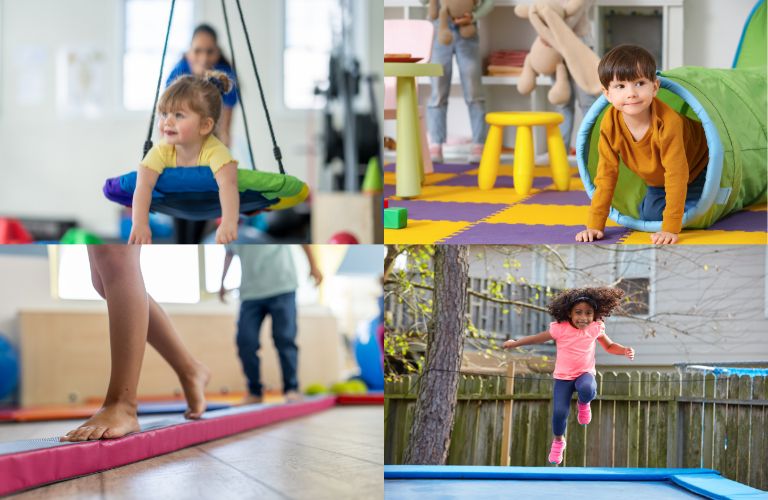
Sensory Motor Play is a great way to add a 1-2-3 Go Game. Many (not all) kids are motivated by movement activities. Here are some simple activities that you can do. These activities would be good for kids at all FDLs/Stages.
- Spinning on a chair
- Jumping on a trampoline/bed
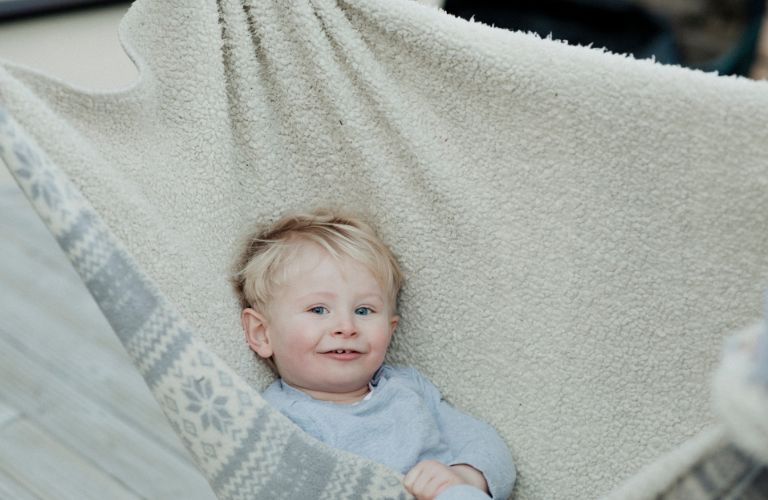
- Swinging in a blanket
- Singing a song
- Turning the bath water on and off
- Playing a chase game
- Tickle monster
- Going down a slide
- Throwing a ball
- Making a balloon fly
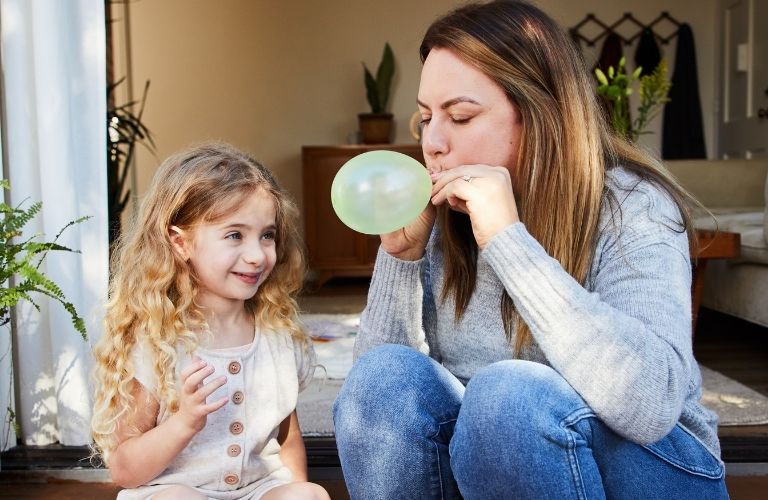
- Blowing bubbles
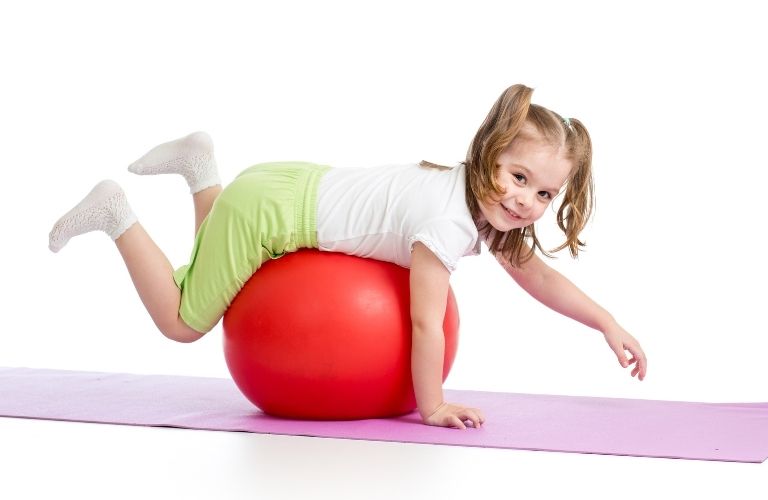
- Bouncing on a ball
Stages 5-6
These stages are when kids are starting to interact more with each other, communicate with each other, and negotiate with each other. This is also when kids start to d
These stages are when kids are starting to interact more with each other, communicate with each other, and negotiate with each other. This is also when kids start to do more complex pretend play.
GOALS:
- Engage in cooperative play with a peer
- Follow one-step directions
- Follow multi-step directions
- Act as a character in role-play
- Give a turn to a peer when asked
- Ask for a turn
TIPS FOR THESE STAGES
- 1-2-3 Go Games are a good way to get kids to play together and follow simple rules. There’s basically two rules, stop and go 🙂
- You can let kids take turns being the director and the followers or let them take turns choosing what action to do when you say go
Here are some activity ideas for these stages that add in a little more complexity than stages 1-4. You can definitely adapt it to whatever level of play your child is at.
- Obstacle course
- Freeze Dance
- Acting like different animals
- Running around the room acting like different types of transportation (plane, car, train, etc.)
- Clean up
- Racing cars
- Hide and seek
o more complex pretend play.
GOALS:
- Engage in cooperative play with a peer
- Follow one-step directions
- Follow multi-step directions
- Act as a character in role-play
- Give a turn to a peer when asked
- Ask for a turn
TIPS FOR THESE STAGES
- 1-2-3 Go Games are a good way to get kids to play together and follow simple rules. There’s basically two rules, stop and go 🙂
- You can let kids take turns being the director and the followers or let them take turns choosing what action to do when you say go
Here are some activity ideas for these stages that add in a little more complexity than stages 1-4. You can definitely adapt it to whatever level of play your child is at.
- Obstacle course
- Freeze Dance
- Acting like different animals
- Running around the room acting like different types of transportation (plane, car, train, etc.)
- Clean up
- Racing cars
- Hide and seek
Developmental Skills
In this section, I will give you specific examples of what you can do in this activity to address specific areas of development.
Communication Skills
Executive Functioning Skills
Receptive Language
Receptive Language (Understanding language)
- For kids who are not using more than 1-2 word sentences independently, use salient language throughout this activity. This means you’re emphasizing certain words, or just using one word as you speak. For example just saying “1,2,3 GO!” is using salient language.
- Give your child choices. Do you want to go fast or slow? Should we swing or bounce?
- For kids who are able to follow directions, work on simple one step or multi-step directions. For example, “when I say go, clap your hands” or “when I say go, jump as high as you can”
- Set up two sequences so that your child can choose between the two. For example, jumping to you from the couch or spinning in a chair. Do each a few times to set up the sequences. Then you can say “let’s jump” Then wait without giving prompts or clues and see if your child goes to the right place. This would be the fun (and in my opinion, more effective) alternative of looking at pictures of a kids spinning and jumping and saying “point to jumping”
- Instead of doing 1,2,3 Go, change it to 1,2,3 (name an action) and the director gets to change it as much as they want to. For example “1,2,3 spin…stop…1,2,3 jump…stop…1,2,3 crawl”
Expressive Language
Expressive Language (Using words, gestures, or writing to express oneself)
- For kids who are working on initiating, 1,2,3 Go Games are perfect. First, set up the routine/sequence, then pause and wait expectantly for your child to initiate that she wants more. This can be through a word, a gesture, eye contact, etc. Give their initiation a word, and go.
- For kids who are able to use more words, expect more when they initiate. If they just say “go”, then do some playful obstruction and do the wrong action. Remember the obstruction is playful, not frustrating. For example if your child wants you to run fast, when they say “go” then just walk real slow. Then if they initiate they want you to go faster, then add a word and say “go fast”
- For kids who are able to have conversations, start pretending. Pretend like you’re statues and can only move when someone says go. Or pretend like you’re Toy Story characters and you can only move when “Andy” leaves the room.
Two-Way Communication
Two-Way Communication (Continuous back and forth interactions)
- For kids who are working on initiating, focus on getting multiple circles of communication. Get as many back and forth interactions as you can between sequences.
- As your child is able to communicate more, and you are getting 20+ back and forth circles, then start working on the quality of circles. First quantity, then quality.
- When you’re working on quantity, it doesn’t matter how small the circle is. When you’re working on quality, you want to get more information. Have conversations about what you’re doing. For example the child says “spin” so you say “fast or slow?” the child says “fast” so you say “should we spin in the kitchen or in the living room?” etc. Always try to take things one step further than your child is used to.
Flexibility
Flexibility (being able to switch between different topics or activities easily)
- This is a fun game to work on flexibility for kids. Some kids may get stuck on doing the same thing the same exact way, so you can build in some theme and variation to add flexibility
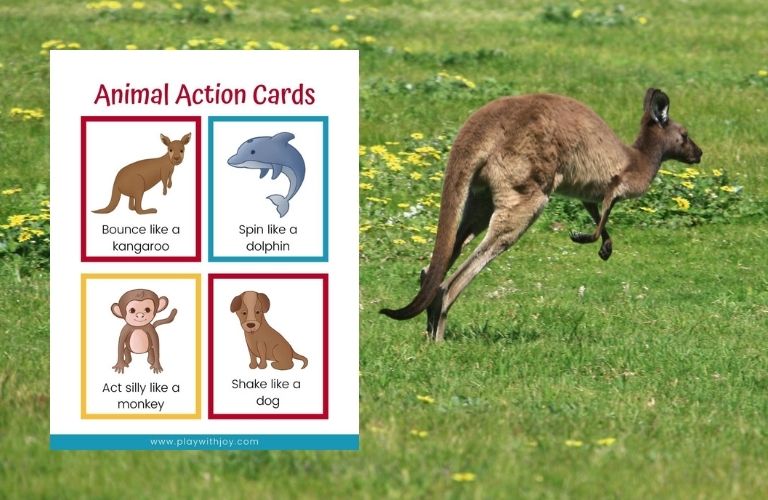
- Play a 1,2,3 Go game with Animal Actions. Choose an animal and what action to do for that animal. Then after a few times, switch it up. Either change up the animal or change the action for the animal.
- For kids who tend to get stuck in a loop (that’s not an official term, just one I use a lot) meaning they are a little rigid and keep doing the same thing, find ways to change up the activity. If you’re jumping on the couch, change locations, change what number you’re counting to, change whose turn it is. If you’re spinning in a chair, change how fast you go, change which direction you go, instead of spinning go for a ride across the kitchen.
- I mentioned this same activity in the Receptive Language section, but it works on flexibility as well. Instead of doing 1,2,3 Go, change it to 1,2,3 (name an action) and the director gets to change it as much as they want to. For example “1,2,3 spin…stop…1,2,3 jump…stop…1,2,3 crawl”
- If you have a child working on pretend play, you could do the same thing, but name characters. “1,2,3 ballerina…stop…1,2,3 fireman…stop…1,2,3 doctor”
Response Inhibition
Response Inhibition (impulse control, being able to wait a turn, wait for directions, and think before going into action)
- Stop and go games are the best for working on response inhibition with young kids. It’s a fun game, and it make them have to stop and wait for directions.
- Take turns being the director and follower
- Let the director change the instructions so it keeps changing and you work on following directions
- You can change the type of directions from verbal to gestural so the child has to look at you
- You can use the lights to indicate whether to stop or go by turning them on and off
- You can use music to indicate whether to stop and go
- Using different senses helps kids tune in their actions to what is going on around them, thus helping with response inhibition
Attention
Attention (focusing and taking in information even when there are distractions or if it’s boring)
- I always like to work on attention skills first by increasing attention on things the child likes to do.
- If this is a fun game, you can keep increasing the ways you play it and the amount of time you spend doing it. Add theme and variation to increase engagement.
- For kids who have a hard time paying attention and waiting for directions, you can slowly increase the amount of time they have to stop before doing the next action.
- I mentioned this in the Response Inhibition section, but you can add things like music, lights, gestures, etc to change the ways the child has to pay attention and look for cues.
Task Initiation
Task Initiation (being able to start a task in a timely manner)
- 1,2,3 Go is all about task initiation and waiting for that cue to begin
- With response inhibition, you’re working on waiting to start before just jumping in. With task initiation, you’re wanting the child to stop waiting and start when they’re asked to.
- Mix up the tasks. Add sensory motor tasks with harder tasks. Make it fun and motivating. Here’s an example. If you’re wanting a child to color, you can do “1,2,3 jump…stop…1,2,3 walk…stop…1,2,3 color…stop” Start by just doing the hard things for short amounts of time.
Working Memory
Working Memory (the ability to remember information while performing a complex task)
- If you’re working on working memory, you can add this to 1,2,3 Go games easily
- Make up gestures that are a signal for an action. Do 2 or 3 at a time. Whenever you say “go” do one of the signals and the child has to do that action. Plan it out together and let the child choose some of the actions. Then they might be able to remember better. The signals can be as simple as holding a certain number up.
- If you’re playing with multiple kids, each one can take turns deciding on an action.
- You could do the same activity with pictures and when you hold up a picture, then the kids do a certain action
- Make a sequence of 3 actions and every time you say stop and go, they have to remember wha the next action is and do that. For example if the sequence of actions is jump, spin, run. The first time you say “1,2,3 go” they jump. Then you stop and say “1,2,3 go” and this time they spin without you telling them what to do.
Motor Skills
Gross Motor Skills
Gross Motor (skills that involve the large muscles of the body)
Here are some simple gross motor actions you can do while playing 1,2,3 Go (pretty much anything where you’re moving)
- Jumping
- Running
- Spinning
- Jumping Jacks
- Rolling
- Stretching
- Putting balls around the room and running to gather them and put them in a laundry basket
- Crawling
- Obstacle course
- Dancing
- Walking across a balance beam
- Going up the stairs
- Climbing
Perceptual Motor Skills
Perceptual Motor (coordinating senses and motor skills to interact with the environment)
Here are some activity ideas to work on perceptual motor skills while playing 1,2,3 Go
–Bilateral Coordination (using both sides of the body together in one activity)
- Drumming with two sticks
- Playing toss with a ball (one that you have to use two hands to catch)
- Pushing a heavy box across the room
- Crawling
- Clapping
- Skipping
- Riding a bike
- Popping bubbles with two hands (clapping)
–Body Awareness (knowing body parts and where they are in a defined space)
- Clap your hands
- Stomp your feet
- Turn your head
- Shrug your shoulders
- Sway your hips
- Drum on your legs
- Open and close your eyes
–Crossing Midline (moving one limb across midline to the other side of the body)
- Touching your hand to the opposite knee (cross crawls)
- Making boxcars drive across a path that goes from one side of the body to the other
- Keepy Uppy (as Bluey would say). Mark one hand or have the child hold a paper plate in one hand. You can only use that hand to hit the balloon to keep it up
- Sit n’ spin (affiliate)
–Eye-hand Coordination
- Playing catch
- Popping bubbles
- Hitting a target with beanbags
- Driving a toy car along a piece of tape
–Motor Planning (being able to perform a sequence of movements to complete a task)
- Animal Actions
- Climbing
- Playing on a playground
- Obstacle course
Social Skills
Social-Emotional
Group Activities
- This is an easy game to play as a group if you’re in a large room or outside. Have one director, and everyone else follows the directions when they say go.
- If one child in the group needs extra help, have an adult or a child helper be their buddy while they play
Peer Interaction
- Great for parallel playing, doing the same actions together
- Take turns being the director
- Take turns choosing which action to do
Pretend Play
- Animal Actions
- Pretend to be different characters like a cook, firefighter, dancer, singer, bus driver, teacher, etc.