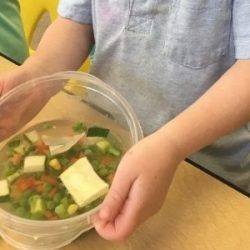
Rainbow Stew is a fun, no-pressure way to work on so many different skills like motor skills, social skills, sensory play and more!
Here are the things I like about this activity
- You can make the book come alive (pre-literacy)
- It’s a way to expose kids to different kinds of foods without putting pressure on them to eat it (especially for kids who have food aversions)
- Kids can explore and create however they want to
- You can work on communication skills during this activity
- You can do this as a group incorporating social skills
- Fine motor is embedded
- You can also target executive functioning skills, cognitive skills, and adaptive skills
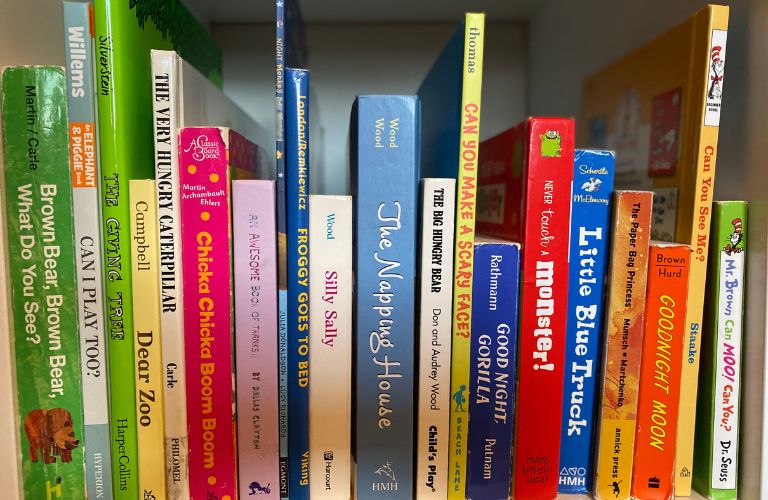
The book I like to use with this activity is Rainbow Stew by Cathryn Falwell. It’s about some kids that get to spend the day with their grandfather. They go explore outside and pick foods from the garden. Then they get to make stew with all the colorful vegetables they picked.
The book can be a bit wordy, so when I’m working with younger kids or kids that have a difficult time attending for long periods of time, I just make up my own words. You can just label pictures, or say simple things like “I see something green. It’s a green zucchini. Let’s pick the zucchini for our stew.”
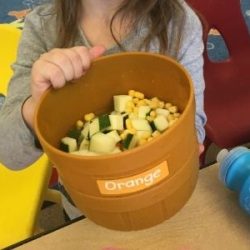
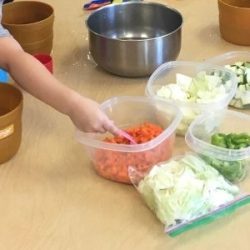
After reading the book you can either have the food ready for your child to create a stew, or you can go search for the food together. You can hide the food around and do it like an egg hunt, or you can just search in the fridge. If you have a garden, even better!
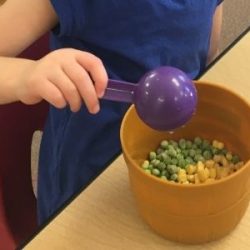
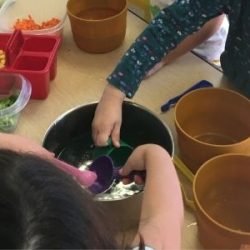
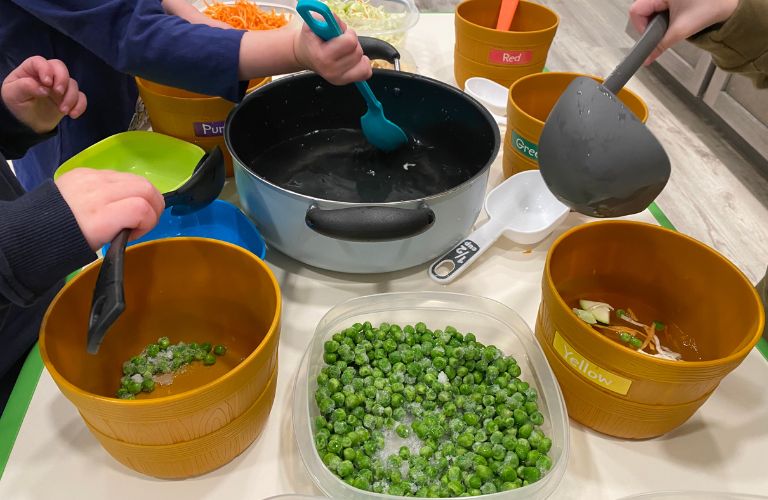
Scooping is fun (and great for fine motor), so put out a big bowl of water and some measuring cups for your child to do his own scooping.
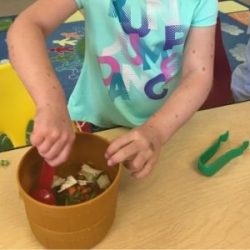
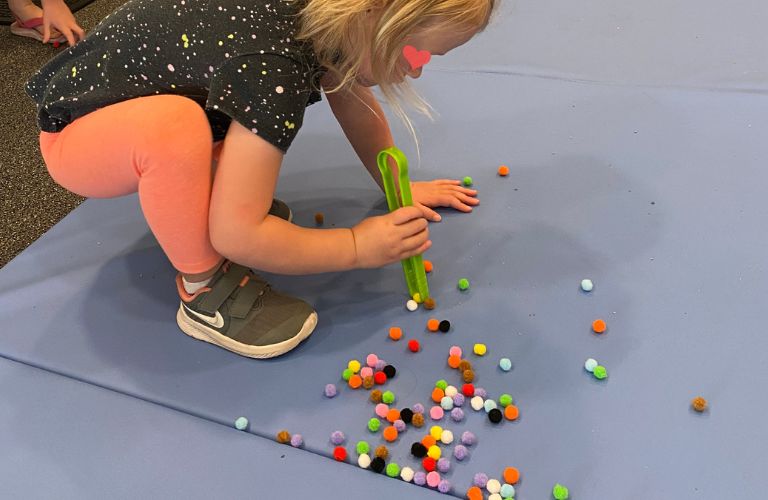
You can add some more fine motor by adding different types of utensils to use. You can get some kid tweezers (I’ll post a picture at the bottom so you know what I’m talking about), you can have different sized spoons, add some spices and measuring spoons. Get creative and allow your child to get creative too! That’s what’s so fun.
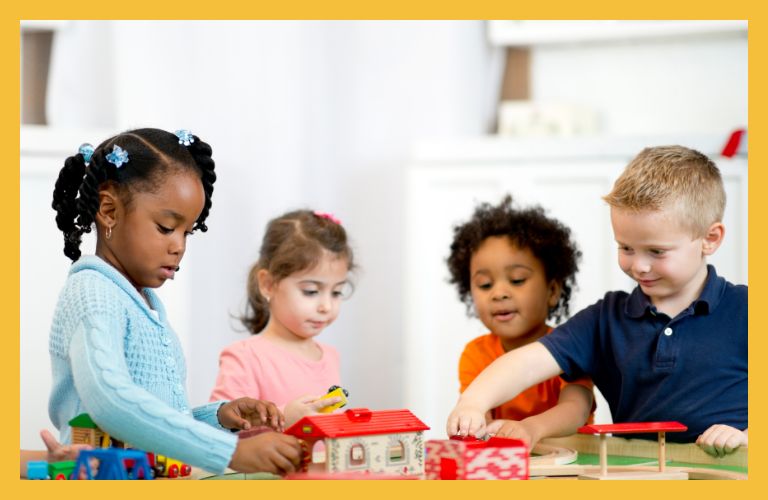
If you’re able to do this as a group activity, it’s really great for working on social skills. Here are a few skills you can work on.
- Sharing (only have one container per food item for the kids to share)
- Waiting for a turn
- Offering a turn
- Making a comment to a peer
- Parallel play
- Cooperative play
- Act out the story, everyone takes a specific role
- Play restaurant
- Play house
- Play school lunch
- Play gardeners
When I do this with my preschool classes, they love it! It’s fun to see how proud they are when they create their very own stew.


Rainbow Stew Tutorial
Once you purchase the Rainbow Stew Tutorial, you will have full access to all the content below this section.
Functional Developmental Levels (FDLs): 1-6
This activity is great for kids at an FDL of: 1-6
The Functional Developmental Levels (FDL) are based on The PLAY Project and DIR/Floortime
- FDL 1: Self Regulation & Shared Attention
- FDL 2: Engagement & Relating
- FDL 3: Intentionality & Two-Way Communication
- FDL 4: Social Problem-Solving & Mood Regulation
- FDL 5: Creating Symbols & Using Words & Ideas
- FDL 6: Emotional Thinking, Logic & Sense of Reality
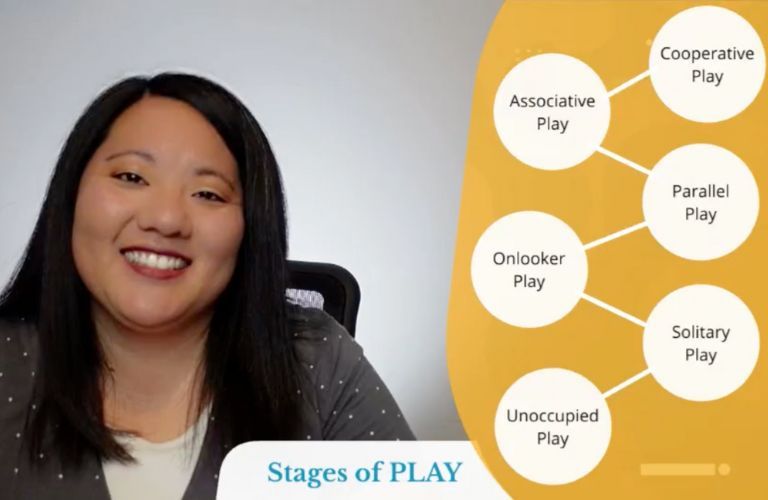
Stages of Play: 1-6
This activity is great for kids primarily participating in stages: 1-6
The Stages of Play come from Parten’s Stages of Social Play.
- Stage 1: Unoccupied Play
- Stage 2: Solitary Play
- Stage 3: Onlooker Play
- Stage 4: Parallel Play
- Stage 5: Associative Play
- Stage 6: Cooperative Play
Sensory Input: Olfactory, Oral, Tactile
This activity includes: olfactory, oral, tactile
Our senses include more than the usual 5 senses. Some kids may seek certain types of sensory input and/or avoid other types.
- Visual: Sight
- Auditory: Sound
- Olfactory: Smell
- Oral: Taste (Gustatory) and using the mouth to speak, make sounds, eat, chew, drink, etc.
- Tactile: Touch
- Vestibular: How we process information about movement, gravity, and balance. We receive this information through the inner ear.
- Proprioceptive: How we process information about body position and body parts. We receive this information through our muscles, ligaments, and joints.
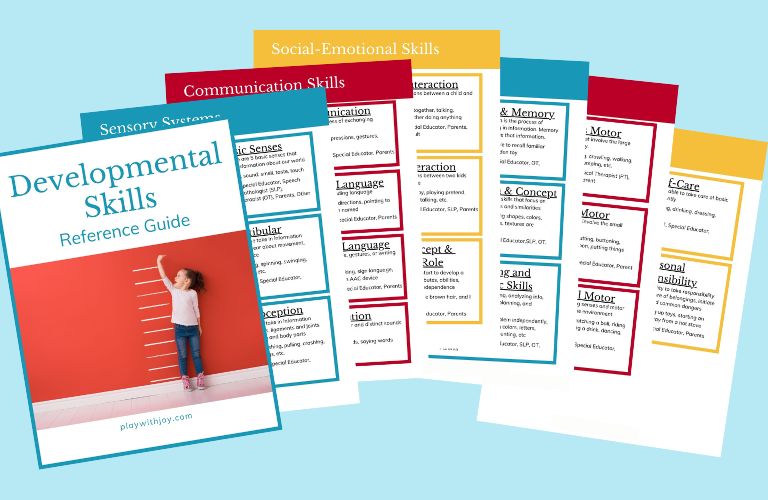
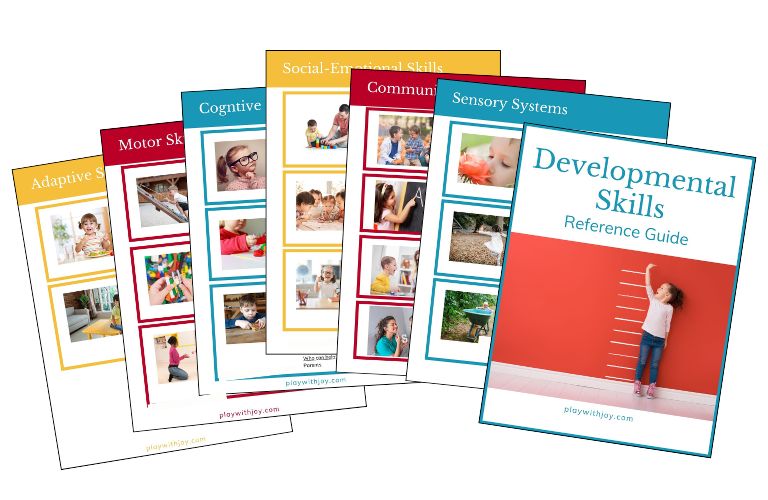
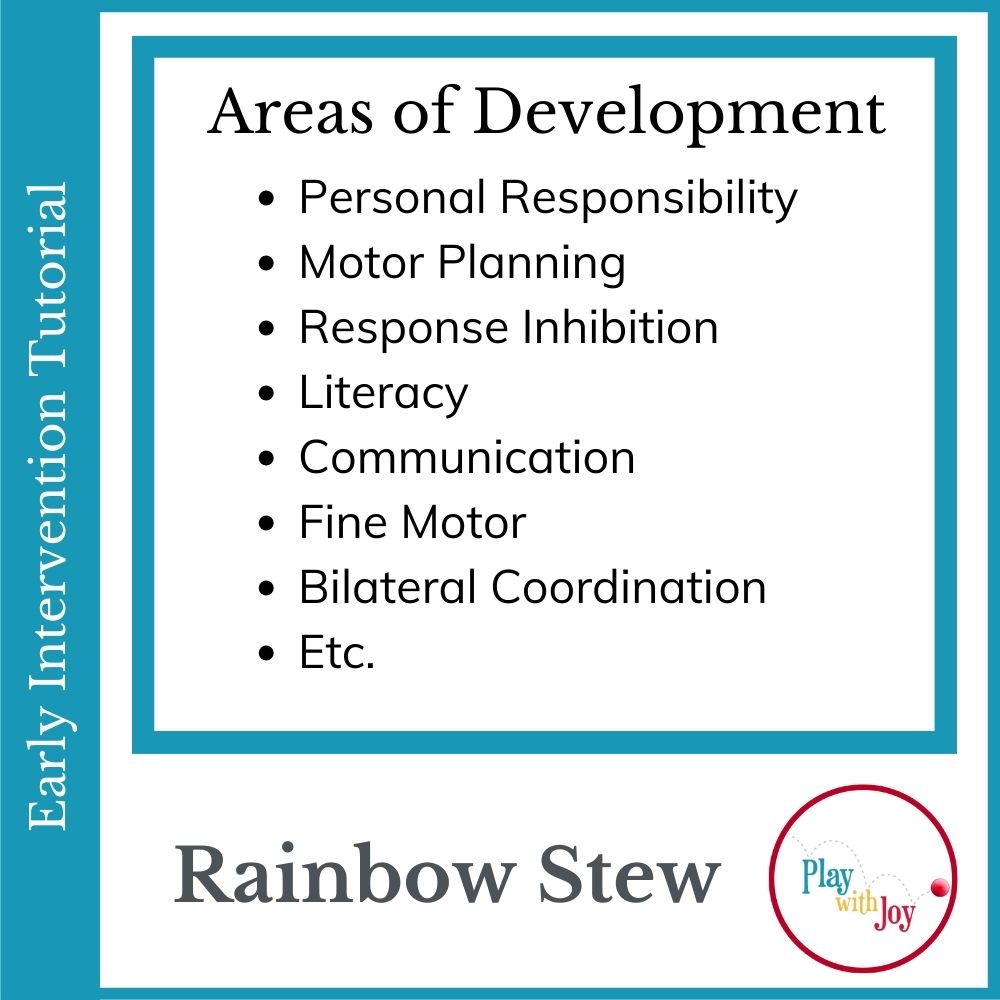
Areas of Development: Communication, Cognitive, Executive Functioning, Motor, Social, Adaptive
This activity is good for targeting the following developmental skills: communication, cognitive, executive functioning, motor, social, and adaptive
These are the main areas of child development addressed in the Early Intervention Tutorials
- Communication: receptive language, expressive language, listening, two-way communication
- Cognitive skills: cause & effect, literacy, math, science, problem solving, perception and concept
- Executive functioning: emotional control, flexibility, perseverance, self-monitoring, organization, planning, response inhibition, attention, task initiation, time management, working memory
- Motor skills: fine motor, gross motor, perceptual motor
- Social-emotional skills: peer interaction, self concept & social role, pretend play, behavior, group activities
- Adaptive skills: self-care, personal responsibility
Ingredient Ideas
- Chopped carrots
- Chopped peppers
- Chopped celery
- Frozen peas
- Frozen corn
- Seasonings
- Bowls
- Spoons
- Water
Instructions
- Chop a variety of veggies and put them in individual containers
- Set out a bowl of water with a ladle or large spoon
- Set out seasonings
- Give your child a small mixing bowl or a small pot to make their stew
- Allow your child to explore and create his own rainbow stew
- Disclaimer: Young children may choke on small pieces, make sure food is cut small. Adult supervision recommended.
Links
As an Amazon affiliate, I earn from qualifying purchases at no cost to you.
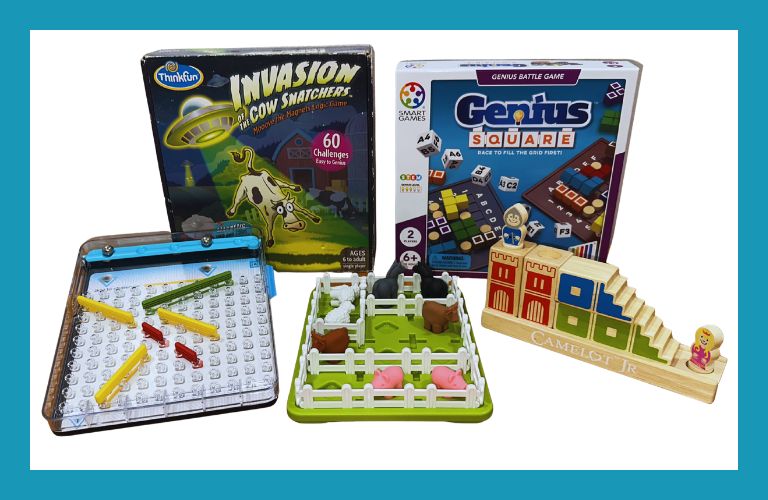
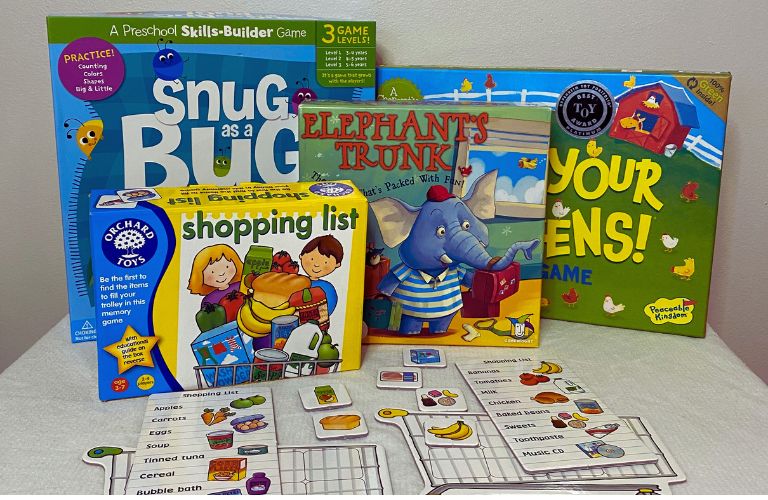
Here are just a few ideas of what you could use for this activity. Most things like bowls, measuring cups, spoons, and spices you’ll likely have around the house.
Extra Tips & Ideas
Extra Tips & Ideas
- A good book to go along with this activity is Rainbow Stew by Cathryn Falwell.
- If your child is a picky eater, this is a good way to give her exposure to new foods. Don’t force her to eat it, but let her explore the food with her hands.
Video Tutorial
Adapting to Different Stages of Play
Stages 1-4
At these stages, kids may or may not be very interested in other people yet. Our main focus is going to be attention, engagement, and simple circles of communication (even if it’s just 1-3 circles at a time).
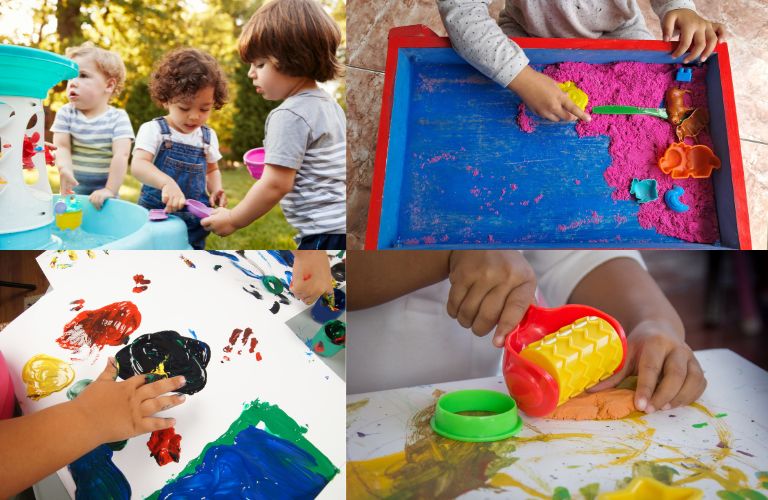
This activity is good for exploring, discovering, and tactile input.
GOALS:
- Increase attention to one activity
- Explore different textures
- Increase engagement
- Increase circles of communication
- Cause and effect
TIPS FOR THESE STAGES
- Don’t worry if your child isn’t interested, but give opportunities to come back to this later if he leaves
- Consider doing this at a child sized table so that your child can easily come explore more if he loses interest quickly
- If your child doesn’t like food, use this as an activity to explore foods with your hands or utensils without any expectations or pressure to eat any of it
- Imitate your child’s actions. If your child stirs, then you stir.
- Narrate. Talk about what you see, without giving directions.
- Kids at these stages may not be ready to share, so make sure everyone has their own supplies
Stages 4-5
These two stages are when kids are starting to be more interested in other kids. They may not be playing cooperatively yet, but they’re playing near each other and playing similar things.
GOALS:
- Increase the amount of time participating in an activity next to a peer
- Increase interaction with a peer
- Increase circles of communication with adults and peers
- Work on sequencing (motor planning) to executive an idea
- Take on roles such as a chef, mom, dad, server, etc. (this may be as simple as just saying “I’m mom”. More complex pretend play comes later.
- Our goals here are more engagement, pretend play, and circles of communication. Fight the urge to give a lot of instructions, we’re not working on following directions here.
TIPS FOR THESE STAGES
- Kids that are just beginning to participate in parallel play may not be ready to share yet, and that’s ok. Have separate supplies for each participant.
- Kids that are participating more in associative play may be more ready to share some (probably not all) of the supplies. So, have some things to share and some things that each kid can have.
- As kids start participating more in parallel play their imitation skills will typically increase as well. If you only have one child participating, then you can participate too.
- Don’t give too many directions, allow your child to explore and come up with ideas of their own. Make comments about their ideas. You can say things like “wow, I like how you added sugar to your stew, I’m going to do that too!”
- Instead of giving directions of what to do, you can narrate what you are doing and narrate what your child is doing as well. Remember, narrators don’t direct.
Stages 5-6
These stages are when kids are starting to interact more with each other, communicate with each other, and negotiate with each other. This is also when kids start to do more complex pretend play.
GOALS:
- Act as a character in role-play
- Create a drama that “make sense” with a beginning, middle, and end.
- Share ideas through conversation
- Give a turn to a peer when asked
- Ask for a turn
- Negotiate with an adult or peer
- Resolve conflicts
TIPS FOR THESE STAGES
- Allow your child to take the lead with the pretend play, but also throw in your ideas. Make it balanced.
- For kids who are at stage 6, it’s ok to throw in a little playful conflict. It’s good for them to practice with you because we all know it’s going to happen with peers. For example if they come up with an idea, challenge them by saying you’d rather do something else. Then try to negotiate.
- Before you start doing this activity, talk about what you want to do, maybe choose roles (I’ll the pastry chef, and you cook the main course)
- Have fun and get creative!
Developmental Skills
In this section, I will give you specific examples of what you can do in this activity to address specific areas of development.
Communication skills
Receptive Language
Receptive Language (Understanding language)
- If your child is working on receptive language and is able to understand some simple directions, you can naturally ask your child to pass you something. For example, “will you hand me the spoon?” Just be aware of how many questions you’re asking, and don’t over do it.
- Label what you see, or narrate what your child is doing with salient language. Emphasize words your child may be working on. “I like your BLUE spoon, you are mixing with that BLUE spoon.”
- If your child needs visual cues, take pictures of some of the things you’ll be using and show the pictures when you ask for something.
Expressive Language
Expressive Language (Using words, gestures, or writing to express oneself)
- When your child uses any means to communicate with you, accept it. Don’t discount your child’s efforts to communicate with you just because it’s not how you want them to communicate.
- If your child uses gestures, give those gestures words. For example if your child reaches for the food that you have, label the food and give it to your child or say something like “want carrots”
- Add a word to whatever your child says. If your child says one word, add to it by saying two words. If your child copies your two words, then add another word. If your child doesn’t have any words, then add one word. For example, your child says “peas” so you could say “green peas” or “want peas.”
- If your child is talking in paragraphs, then work on two-way communication
Two-Way Communication
Two-Way Communication (Continuous back and forth interactions)
- If you read the book before doing the activity, you can reflect back on the book and compare what you’re doing to what happened in the book
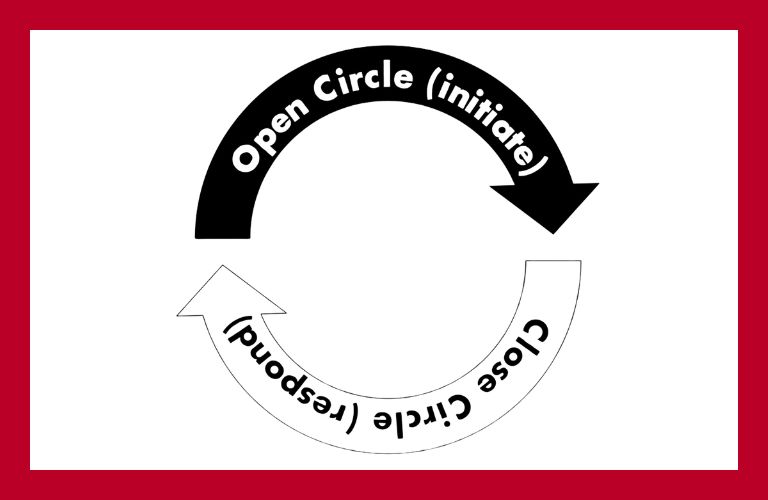
- Make sure the conversation isn’t one sided. Practice opening and closing circles with your child
Cognitive skills
Pre-Literacy Skills
- This is a fun activity to do when working on literacy skills.
- You could do a sequencing activity and do things in a similar order to what was in the book
- You could make “recipes” together before starting the activity, and then follow the recipes
- You can talk about the characters in the book and pretend to be those characters
Pre-Math Skills
- When you make “recipes” you can add numbers and count how many of each vegetable to add
- You can match colors. For example, add 3 green foods to your stew
- You can make two bowls and compare who has more stew
- You can put the bowls on a scale and see who’s weighs more
Perception & Concept
Perception and Concept (Examining differences and similarities)
- Compare the differences and similarities of the foods. Compare sizes, colors, shapes, textures
Executive Functioning skills
Perseverance
Perseverance (completing a task even if it’s difficult or non-preferred)
- Create recipes, and then follow-through to the end of the recipe
Organization
Organization (being able to keep track of information and materials)
- Have your child help gather all of the supplies and then put them away where they belong after the activity is over
Planning
Planning (Making a plan with at least a few steps and following through)
- If you’re playing pretend, create a plan of who is going to take on which role, what you’re going to “make” and what occasion it’s for
- Have your child take your order, and then make your stew with only the things you said you wanted in it
Response Inhibition
Response Inhibition (impulse control, being able to wait a turn, wait for directions, and think before going into action)
- Explain to your child what you’re going to do, but remind her not to touch anything until you’re ready
- When your child asks for a turn with something you have, don’t immediately hand it over. Take your turn with it and let him know he can have a turn when you’re done.
Attention
Attention (focusing and taking in information even when there are distractions or if it’s boring)
- Before a child is able to pay attention to non preferred activities, they need to be successful in attending to preferred activities. Make the activity fun, and find ways to cater it to your child’s interests.
- If attending to activities is difficult for your child, keep track of how long your child attends and participates before losing interest so you can see if she’s improving over time
Task Initiation
Task Initiation (being able to start a task in a timely manner)
- After giving instructions, let your child begin
- Some kids become very prompt dependent, so allow your child to initiate the task without you telling him to do so
Working Memory
Working Memory (the ability to remember information while performing a complex task)
- When your child takes your order, see if she can remember it and create it accurately
Motor Skills
Fine Motor Skills
Fine Motor (skills that involve the small muscles of the body)
- Cut some of the food into tiny pieces and encourage your child to pick them up one at a time
- With adult supervision allow your child to cut some of the vegetables
- Use spoons to transfer the food from one bowl to another
- When your child takes your order, have them write on a pad of paper (even if it’s just scribbles)
Perceptual Motor Skills
Perceptual Motor (coordinating senses and motor skills to interact with the environment)
–Bilateral Coordination (using both sides of the body together in one activity)
- Holding the bowl with one hand and stirring with the other hand
- Cutting vegetables-holding the food with one hand and the knife with another. If you don’t want your child using a knife, give scissors to cut some of the soft food like noodles
–Crossing Midline (moving one limb across midline to the other side of the body)
- Have your child only use his dominant hand to scoop food, and place the food on the opposite side of his body
–Motor Planning (being able to perform a sequence of movements to complete a task)
- Help your child plan the activity. What should we do first? Then what?
Social Skills
Social Skills
Group Activities
- You can definitely do this as a group activity
- Parallel play with everyone having their own supplies, or find ways for them to cooperate and do it together
- Read the book together and discuss it before starting the activity
- Have everyone take a different role, and then take turns with those roles
Peer Interaction
- Find ways to encourage communication between peers. If a child asks you for something, encourage her to ask a peer instead.
- Narrate what everyone is doing. “Susy is adding potatoes to her stew, and Jeff only has carrots.”
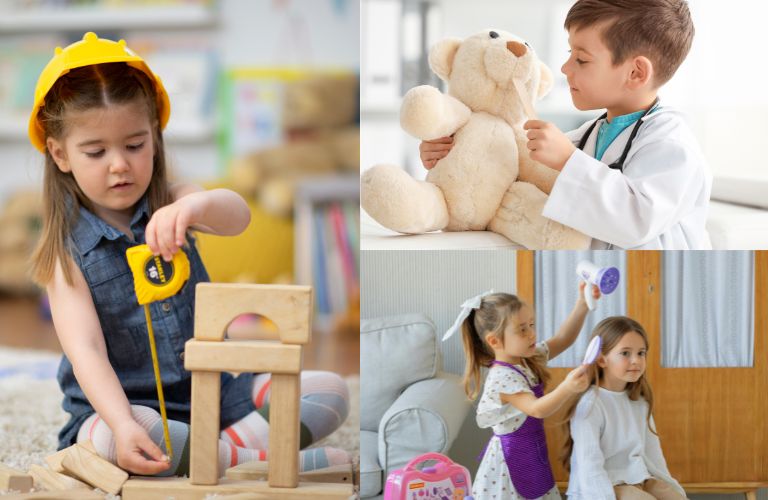
Pretend Play
- Imitative pretend play would be putting ingredients in the bowl and stirring
- One thematic pretend would be pretending to cook food for everyone. The child may not be pretending to be a chef yet, but they’re pretending to feed everyone.
- Two thematic pretend would be when the child is pretending to be a chef at a restaurant with customers.
- Act out the book
- Turn the play into a restaurant with a cook, server, and customers
- Pretend to be a family making dinner together
- Have a party with a bunch of stuffed animals
Self Concept & Social Role (having a sense of one’s own attributes, abilities, values, attitudes, and independence)
- As you narrate, make comments about your child’s abilities. “You are so creative, I like how you…” “Wow, did you do that all by yourself?” “That was good thinking, you figured it out”
Social Skills
- Work on taking turns
- Share different things with each other
- Share ideas with one another
- Negotiate
- Problem solve together
Adaptive Skills
Personal Responsibility
Personal Responsibility (taking responsibility for actions, taking care of belongings, and avoiding common dangers)
- If you’re allowing your child to cut some of the food, talk about safety
- Have your child help set up and clean up
Self-Care
Self-Care (taking care of basic needs independently)
- If your child is working on using utensils, you can use this as practice as they scoop and transfer food
- If your child spills, have your child help clean it up