Music is a powerful tool that helps many of us teach young kids all kinds of skills. You can teach colors, shapes, numbers, ABCs, social skills, language, motor skills, etc. all through music.
Whether you’re a parent, caregiver, therapist, or early childhood educator, incorporating simple songs, rhythms and movement can boost skills across multiple areas in a fun, low-pressure way.
Research shows that music engages the brain in unique ways. It lights up both hemispheres, stimulates multiple senses, and makes learning feel like play. Children often respond positively—even those who are hard to engage—because music is motivating, calming, and naturally repetitive.
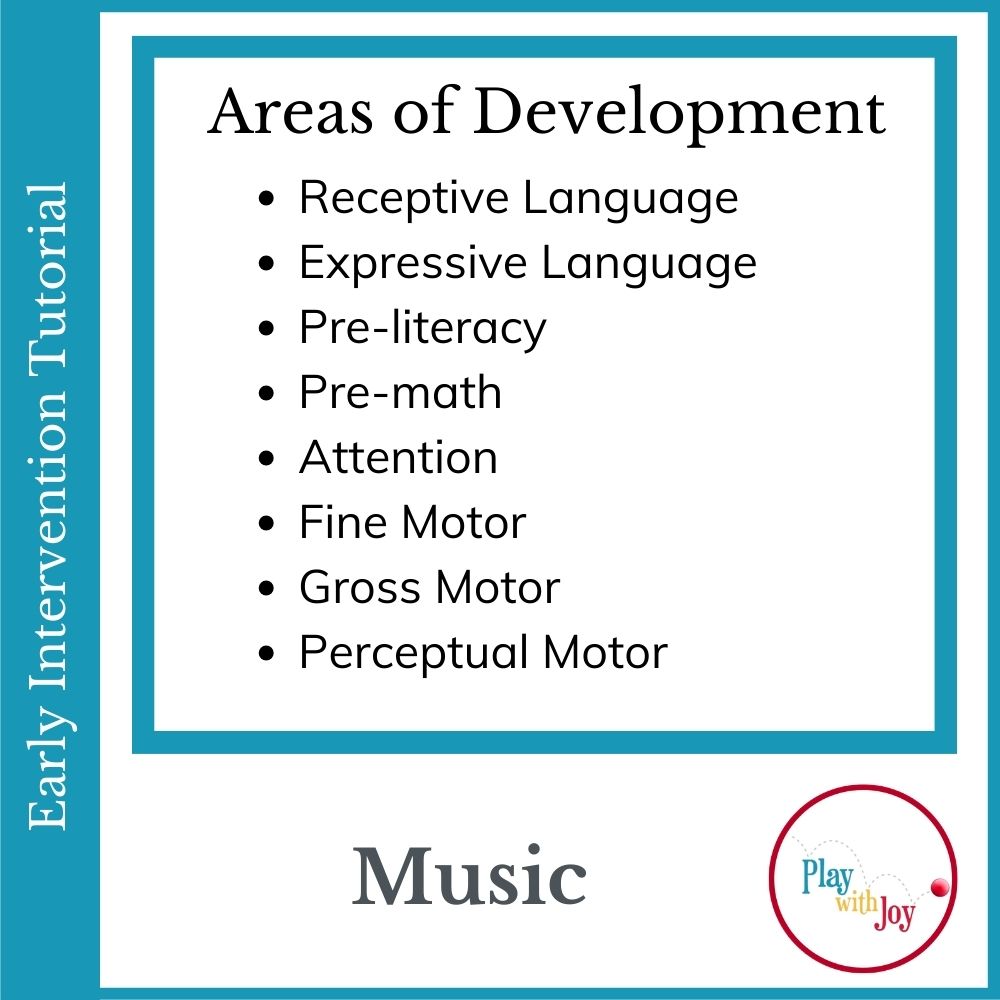
I’ll go more into detail of how you can use music to target different developmental skills in the Preschool Music Tutorial, but here is a list of all the areas of development that you can use music to help improve skills.
Receptive Language
Expressive Language
Pre-literacy
Pre-math skills
Executive Functioning Skills
Response Inhibition
Attention
Working Memory
Fine Motor Skills
Gross Motor Skills
Perceptual Motor Skills
Social-Emotional Skills
Adaptive Skills
That’s almost every area of development! Music is such a great tool whether you’re listening to music on your phone, playing musical instruments, singing directions, using music for transitions, or having a dance party.
I love music, and I love seeing how kids gravitate towards music too.
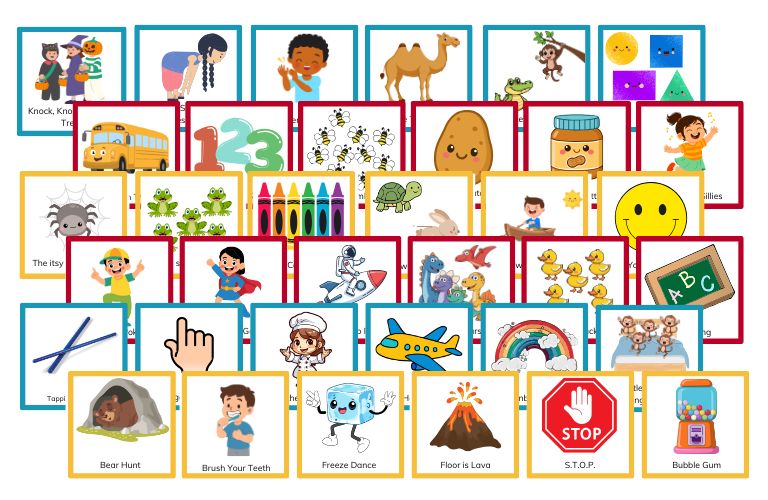
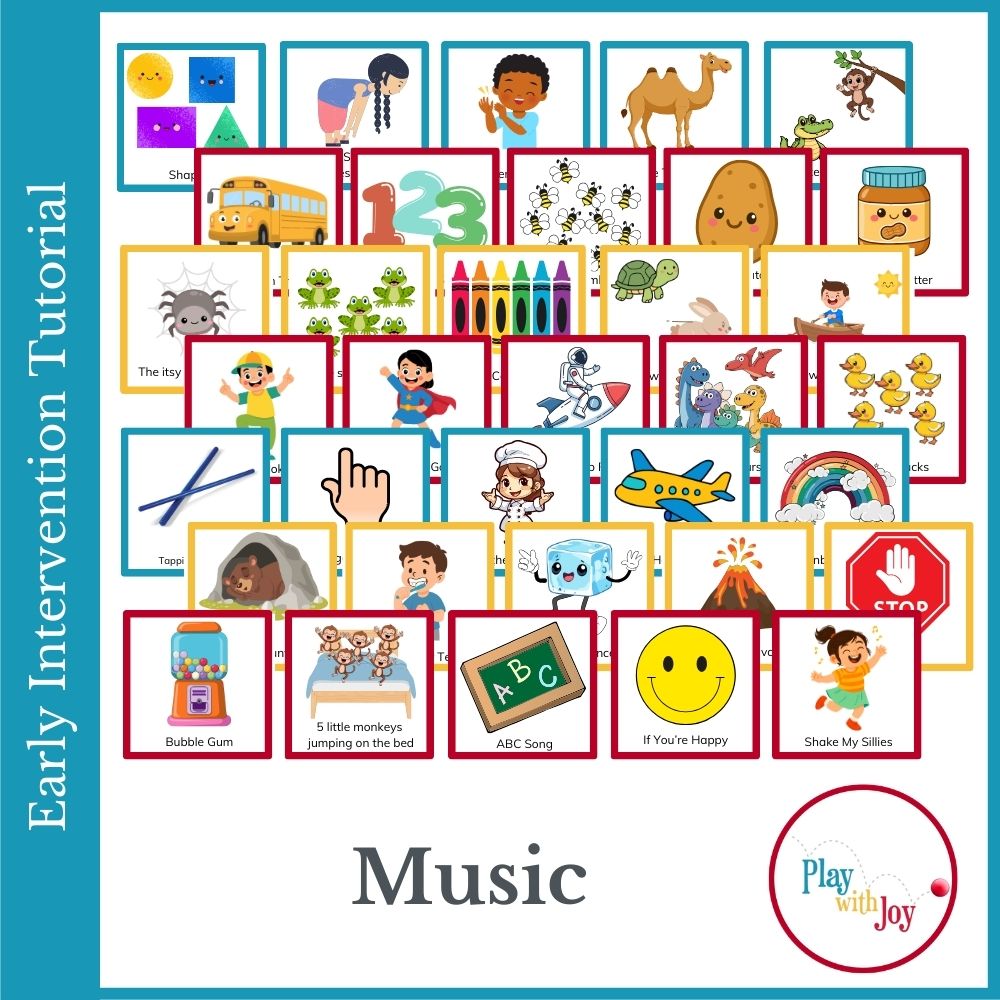
Included in the Preschool Music Tutorial, you will have access to a printable pdf of 36 song cards for kids to pick their favorite songs to play. I also share my spotify playlists including:
This activity includes: visual, auditory, vestibular, proprioception
Our senses include more than the usual 5 senses. Some kids may seek certain types of sensory input and/or avoid other types.
Visual: Sight
Auditory: Sound
Olfactory: Smell
Oral: Taste (Gustatory) and using the mouth to speak, make sounds, eat, chew, drink, etc.
Tactile: Touch
Vestibular: How we process information about movement, gravity, and balance. We receive this information through the inner ear.
Proprioceptive: How we process information about body position and body parts. We receive this information through our muscles, ligaments, and joints.
Areas of Development: Communication, Cognitive, Executive Functioning, Motor, Social, Adaptive
This activity is good for targeting the following developmental skills: communication, cognitive, executive functioning, motor, social, adaptive
These are the main areas of child development addressed in the Early Intervention Tutorials
Communication: receptive language, expressive language, listening, two-way communication
Cognitive skills: cause & effect, literacy, math, science, problem solving, perception and concept
Executive functioning: emotional control, flexibility, perseverance, self-monitoring, organization, planning, response inhibition, attention, task initiation, time management, working memory
Motor skills: fine motor, gross motor, perceptual motor
Social-emotional skills: peer interaction, self concept & social role, pretend play, behavior, group activities
Adaptive skills: self-care, personal responsibility
Supplies
Music
Spotify Playlists available in the following sections:
Pre-Literacy
Pre-Math
Motor Skills
Body Awareness
Social-Emotional
Adaptive
Instructions
Download the Song Cards to give your child choices of what he/she wants to sing. This is especially helpful for kids who are not yet talking.
Sing songs together
You’ll find songs in the different sections below
Extra Tips & Ideas
Extra Tips & Ideas
In each area of development listed below, I will share some of my favorite songs that help teach that skill
Just have fun! Most kids love music and dancing.
If you have a child that doesn’t like music, before you turn it completely off, try adjusting the volume. They might have sensitive ears. If they don’t like you singing, try singing at different levels of volume as well.
Music is a great way to teach academic skills while being interactive and fun
Video Tutorial
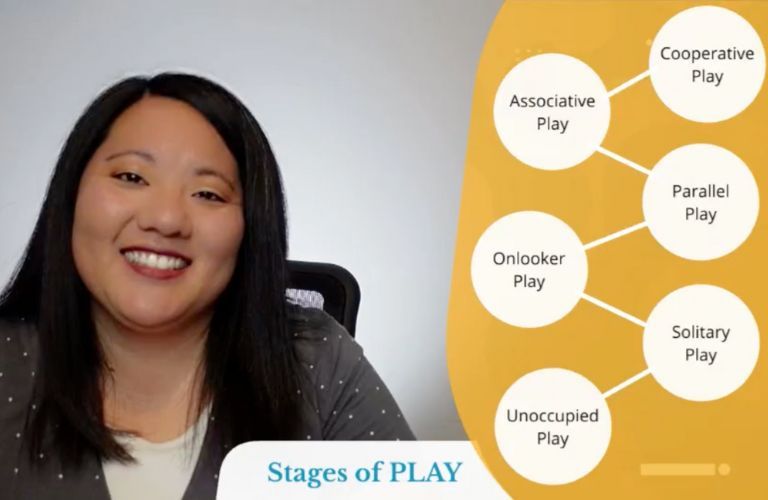
Adapting to Different Stages of Play
Stages 1-4
At stages 1-2 kids may not be very interested in other people yet. At stages 3-4, kids are typically starting to be interested in other kids, but aren’t engaging in play with them yet.
Our main focus at stages 1-4 is going to be attention, engagement, and simple circles of communication (even if it’s just 1-3 circles at a time).
This activity is good for
GOALS:
Increase attention to one activity
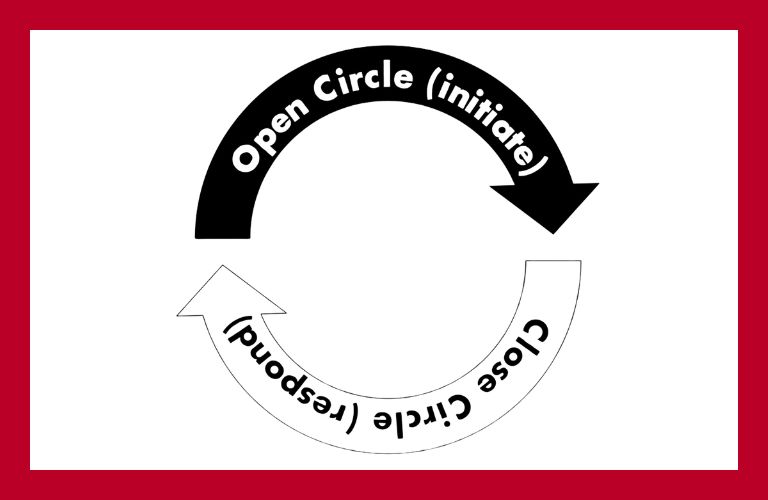
Initiate wants and needs through words, sounds, gestures, or facial expressions (open circles of communication)
Increase time participating in parallel play
Increase natural imitation
Participate in purposeful interactions
TIPS FOR PLAYING WITH A CHILD AT THESE STAGES
Rhythm and music is actually one of the PLAY Techniques 🙂
Instead of telling your child to “do this” just model the actions for them. Try to be so fun and entertaining they want to join in.
Music time doesn’t have to be done sitting down, encourage a lot of movement
Add as much vestibular and proprioceptive input as you can. Spin, jump, run, etc.
Give your child choices, let them choose the song. If it’s on your iPhone, see if they can point to the picture they want. You can also use the song cards, I like to print, laminate, and cut them out put velcro on them and put them on a board for the child to pick one.
Play the music and pause it every once in a while, then use expectant waiting for your child to initiate more.
Use props for the songs if you have them.
Stages 5-6
These stages are when kids are starting to interact more with each other, communicate with each other, and negotiate with each other. This is also when kids start to do more complex pretend play.
GOALS:
Imitate motor actions
Imitate pretend play
Follow one-step directions
Follow multi-step directions
Take turns
TIPS FOR THESE STAGES
Play songs that involve the imagination, where the child can pretend to be different things
Have little conversations about the songs
Decide together what the actions might be
To add flexibility, change the actions to the songs
Add some academic skills by learning songs about ABCs, colors, shapes, numbers, etc.
Developmental Skills
In this section, I will give you specific examples of what you can do in this activity to address specific areas of development.
Communication skills
Receptive Language
Receptive Language (Understanding language)
Sing songs that tell you an action to do
Sing songs that name a color, and touch that color
You could give a hint of which song you’re going to sing and have the child choose the right picture. For example, let’s sing a song about monkeys. Find the song about monkeys.
Sing a song like Old MacDonald Had A Farm, and name an animal and have the child find that animal before finishing the verse
You can work on all kinds of words with music. Body parts, ABCs, food, objects, etc.
Expressive Language
Expressive Language (Using words, gestures, or writing to express oneself)
Kids that love music will oftentimes connect words together as they’re singing more than when they’re talking. This is because they’re familiar phrases, and also adding a tune is helpful.
Sing your child’s favorite songs and pause and wait expectantly for him to finish the phrase. For example, “Row, row, row, your….” and then when your child says “boat” continue singing
Sing songs that your child can choose what comes next, for example “Old MacDonald had a…” your child can choose something different every time. You can either just let your child choose what comes next, or if you’re working on naming animals you can show a picture or puppet and have your child name it before going on with the song.
Let your child choose how you’re going to sing it. Should you be loud/quiet, silly, fast/slow, high/low, etc.
Cognitive skills
Pre-Literacy Skills
Here is my spotify list with some of the alphabet songs I like to use. You can hear samples here, or go to spotify to hear the full song.
Song Ideas For Literacy
Just your classic ABC song
There are a lot of songs to choose from for letter sounds
You can sing to the tune of Wheels on the Bus. “The A on the bus says A or a…” for whatever letter you’re working on
For a more interactive song, try Act Out The Alphabet. Jack Hartman has a lot of different alphabet songs to choose from. You can watch this video to learn the actions, or make up your own.
Patty Shukla has a phonics song with sign language that’s fun and interactive as well
This Usher and Muppets Song is a fun one to dance to and try to copy the actions
ABC Mouse has a song and video for every letter in the alphabet. I only put a few on the Spotify playlist. I think you have to pay for the ABC Mouse app, but you can watch the videos on youtube.
Kids love these videos, but they’re not very interactive.
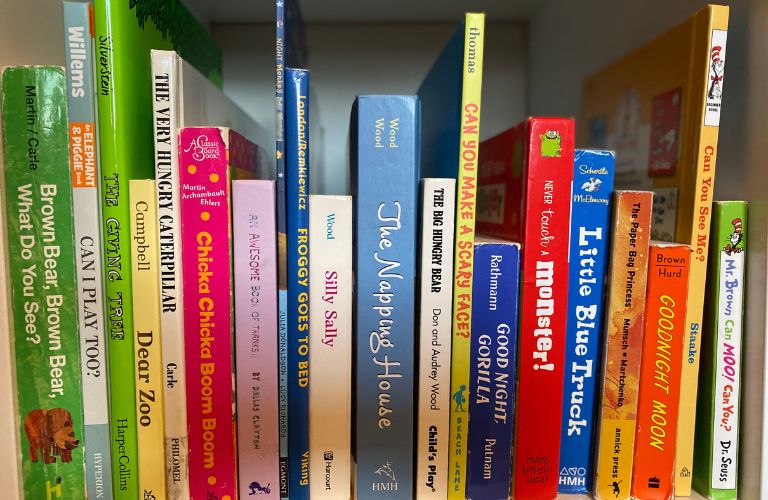
Another way you can work on literacy with music is to sing books to your child. Find books that you can sing to. Sometimes singing while you read can help some kids to engage longer.
As an Amazon affiliate, I earn from qualifying purchases at no cost to you.
Preschool math is going to include counting, number identification, colors, shapes
Number Songs
10 Little Bumblebees. I made little bumble bee gloves by getting knit gloves and putting yellow duct tape around the fingers. This is good for practicing putting gloves on, finger isolation for counting with your hands, and counting to 10
5 Little Ducks is another good finger play
Alice the camel. I put two versions on my playlist. One is just the regular one where Alice starts with 5 humps. The other one goes through different animals. It would be a good one to have pictures of the animals and count the things in the song.
Monkeys and the alligator. This is a fun song to do actions with, you can also get puppets or make pictures on a popsicle stick for the kids to hold.
5 Little Monkeys is a fun one to dance to and fall down with. Kids love jumping around
Shape Songs
Silly Shapes. I cut out shapes (listen to the song and you’ll know what I’m talking about) and then let the kids put it together as we sing the song. This is good for simple shape recognition.
Shapes song. This is a guessing game. You describe the shape in the song and then ask “what am I?”
Shapes are all around. This would be great to have some visuals, like a flipchart as you sing it.
Color Songs
The Rainbow Song. I like getting out ribbons for the kids to dance with while we sing this song.
What color are you wearing? This is a fun song for a group of kids. Everyone wearing a different color does a different action.
I don’t know why, but this is one of my favorite number songs. It’s probably because his voice is easy to listen to. After singing preschool songs for so many years, sometimes it’s hard to listen for too long 😉
Perception & Concept
Perception and Concept (Examining differences and similarities)
Bring in different ways of singing as you go
Loud/Quiet
Happy/Sad
High/Low
Slow/Fast-Kids like this slow, fast song by Hap Palmer
Executive Functioning skills
Response Inhibition
Response Inhibition (impulse control, being able to wait a turn, wait for directions, and think before going into action)
When working with kids on response inhibition, one of my favorite go tos is freeze dance. It’s fun, engaging, and kids can work on stopping what they’re doing in mid motion.
Here’s my spotify playlist of Freeze Dance songs
Attention
Attention (focusing and taking in information even when there are distractions or if it’s boring)
Music is a great way to work on increasing attention
Lots of times I will sing my instructions
Use music for transitions
Music is a good way to break up other activities as well to give kids the opportunity to make noise and move around
Music can also be a way for kids to be able to refocus and get regulated (for other kids it can also be dysregulating, just fyi)
Working Memory
Working Memory (the ability to remember information while performing a complex task)
Kids are strengthening their working memory when they learn words to songs or actions to songs
Have you ever noticed some kids love to listen to the same song over and over? It can drive you crazy, but it’s also how they’re learning
This song is a good one for following directions as well as memory. It introduces an action to a certain type of music, and then later in the song it doesn’t tell you what to do, you have to remember.
Motor Skills
Gross Motor Skills
Gross Motor (using our large muscles)
Any songs where you’re moving your body, you’ll be working on gross motor skills
Jumping, spinning, running, reaching, clapping, etc.
Music is perfect for working on gross motor skills. Kids won’t even know that’s what you’re doing.
Shake my sillies out
I’m really good
Hello Hello
STOP
Rocketship run
We are the dinosaurs
Perceptual Motor Skills
Perceptual Motor (coordinating senses and motor skills to interact with the environment)
–Bilateral Coordination (using both sides of the body together in one activity)
Clap your hands by They Might Be Giants
Roll your hands
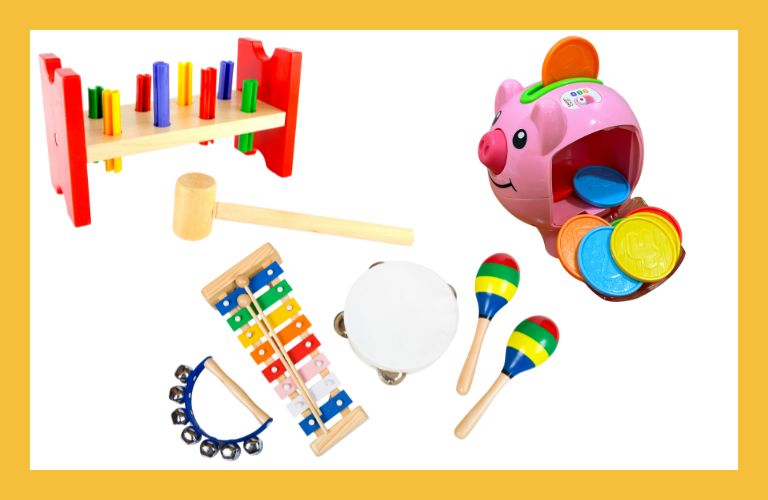
Tap your sticks
Tapping on my sticks
–Body Awareness (knowing body parts and where they are in a defined space)
Learning about body parts, and what makes up your body is something that you can use music for. It allows you to teach the names of body parts, but also how to move those body parts. It helps kids learn to control their bodies as they imitate different actions.
Icky sticky bubble gum
Head, shoulder, knees and toes
Hokey pokey
Simon says
–Motor Planning (being able to perform a sequence of movements to complete a task)
One finger one thumb
Slow and fast
Tooty ta
Social Skills
Social-Emotional
Group Activities
Music and dancing is a perfect group activity because kids can do it no matter what FDL they are at
Peer Interaction
If you have props, let the kids pass them out and share with their friends.
If it’s a small group, you can have one kid go around and ask kids what they want. For example “what color sticks do you want?”
Pretend Play
Songs where you can pretend to be or do different things are great for kids who are engaging in pretend play
My mother is a baker
I’m really good
From here to there
Knock knock trick or treat (yes, it’s a halloween song, but there is a lot of pretend going on in this song)
We’re going on a bear hunt
The animal song
You can also add animal actions to some of your freeze dancing songs
Emotions
If you’re happy and you know it
Emotions Hokey Pokey
Let everyone clap like me (in the song you pretend to be happy and sad)
Hello how are you?
Adaptive Skills
Self-Care
Self-Care (taking care of basic needs independently)
Brush your teeth. I like to help kids brush their teeth while listening to this song.
This is the way we brush our teeth. This song goes over brushing teeth, washing your face, combing hair, putting clothes on, put on shoes, drink milk, go to school
Let’s get dressed is a good song to play while (you guessed it) getting dressed
Peanut Butter is a fun song that talks about clothes. I like to use tapping sticks and act like we’re putting peanut butter on ourselves. It’s not really about self-care, but it’s a great song with clothes vocabulary
Tops and bottoms is the song I would use when washing hands. Sometimes we’d do it when we were playing with bubbles (dish soap and water) on the table.
There’s a bunch of potty songs. This one made me laugh, but the tune is catchy enough that you could probably sing it to your child when they’re going to the bathroom.
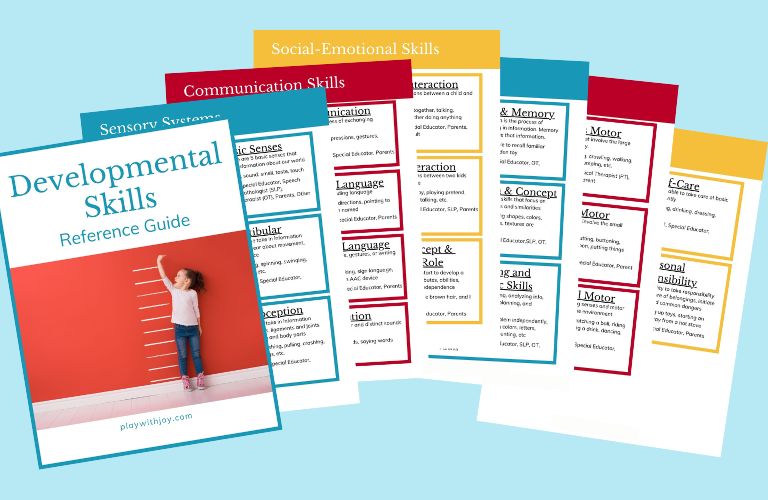
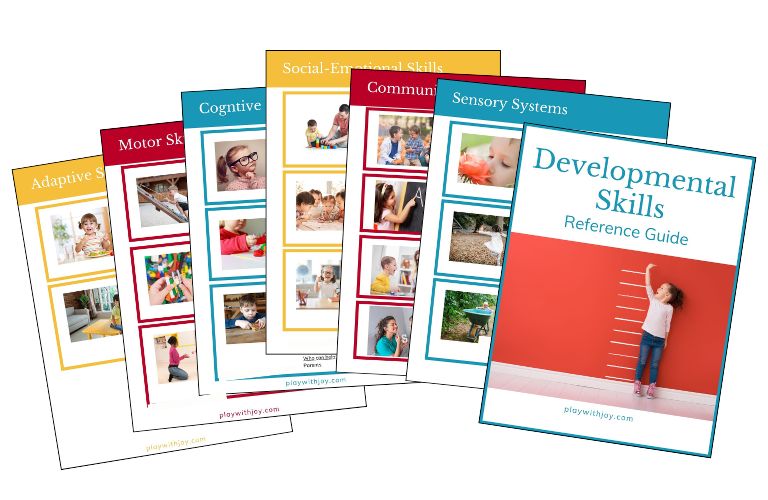
Get Your Free Developmental Skills Reference Guide
Parents, educators, and therapists – Add this to your toolbox to better understand key areas of child development. Plus get extra tips, activities and strategies to your inbox.
Unsubscribe at any time. See Privacy Policy for more details.