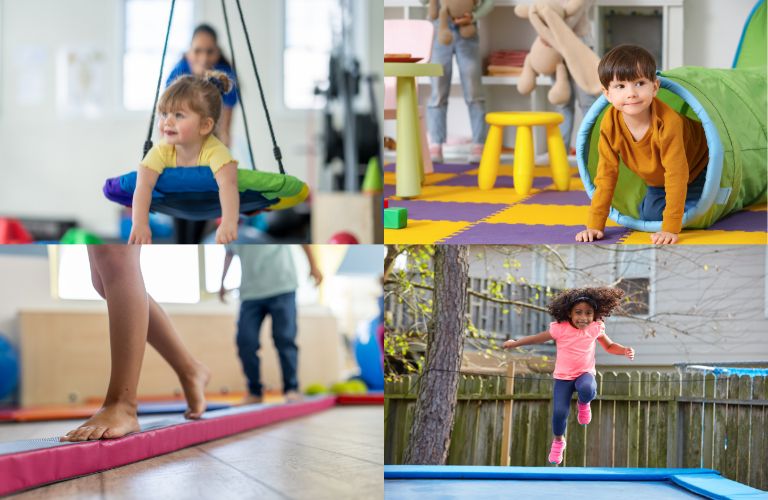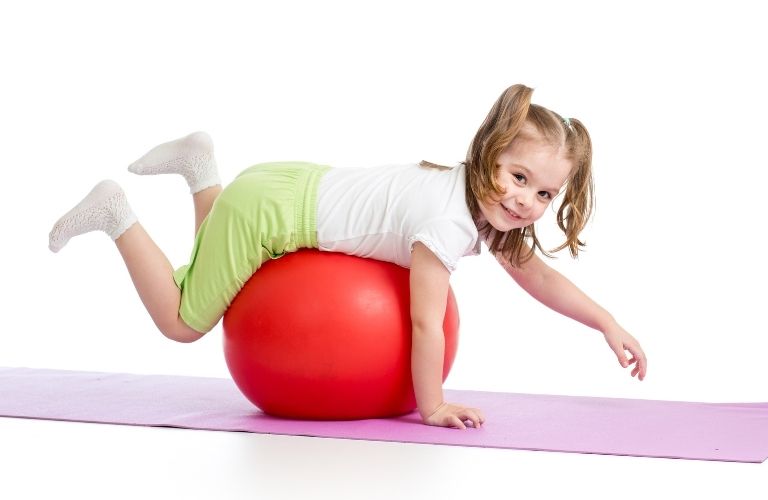
First off, what is a gross motor skill? Gross motor skills are activities that involve the large muscles of the body.
In child development, it’s so important to be exposed to activities that help develop all the muscles in their bodies. As adults we try implementing exercise regimens, but even as adults we have a really hard time with that.
So as always, we want to find fun and interactive ways to help kids succeed whether it’s academically or whether it’s in developing gross motor skills.
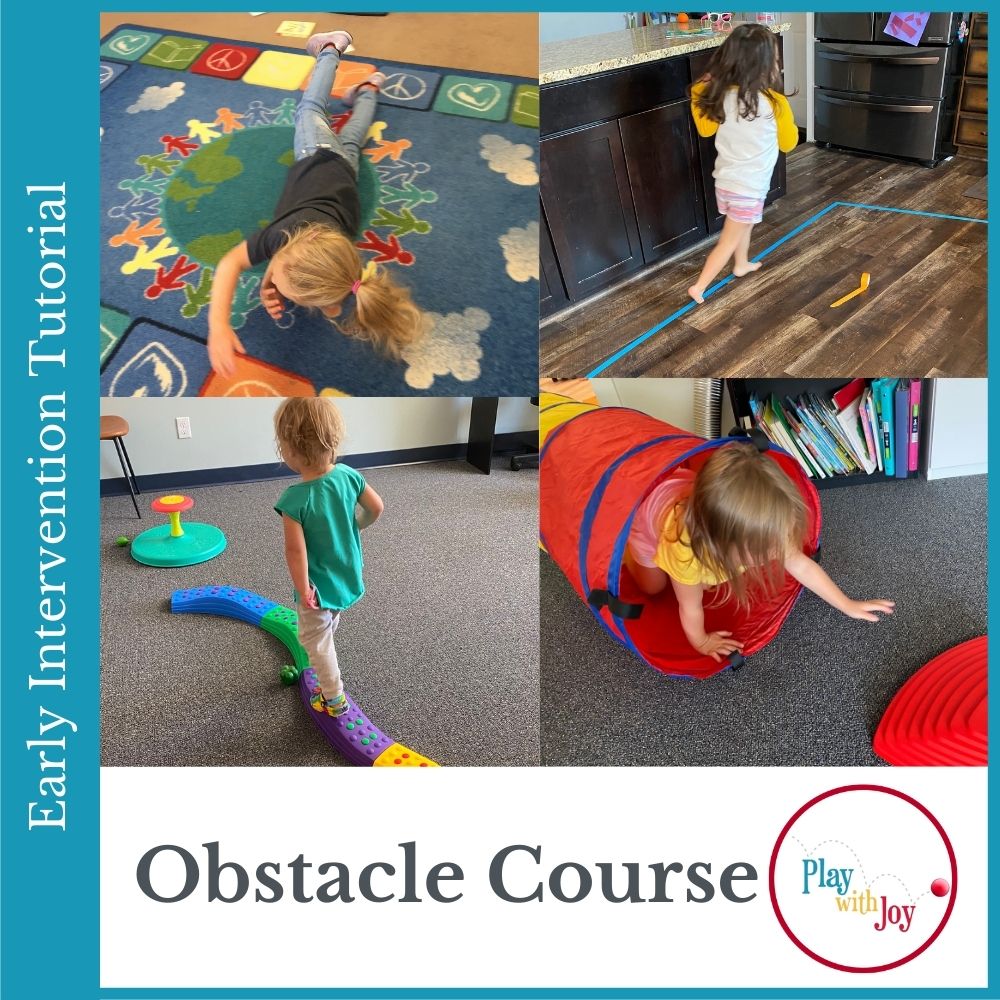
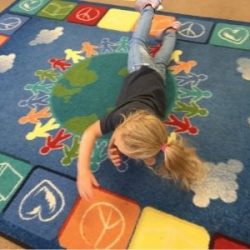
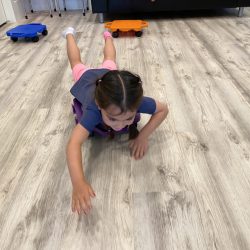
One of my favorite ways to implement gross motor skills is by creating an obstacle course. It really doesn’t matter how young or old someone is, kids of all ages love obstacle courses.
I literally make an obstacle course every week in my class.
One of the many things I love about obstacle courses are that they can be different every time. Kids can help create them too (which works on even more skills).
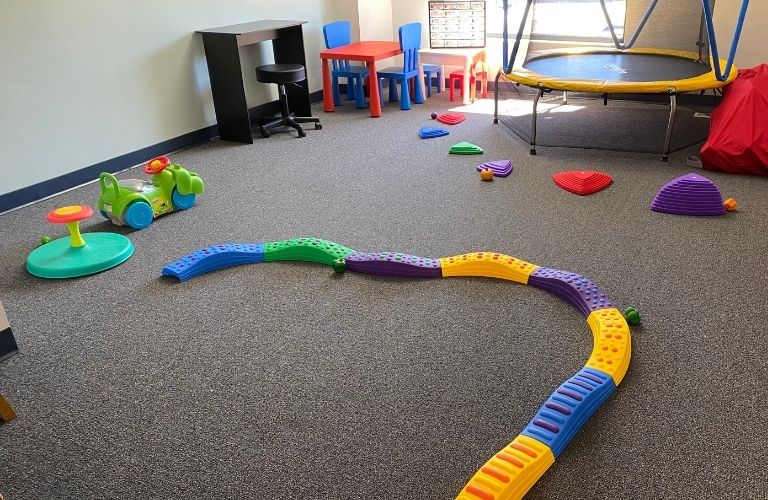
Another thing I love is that you can just use things around the house. I am fortunate enough to work at a clinic designed by an Occupational Therapist, so our equipment is pretty awesome, but it’s so easy to just use pillows, blankets, tape, chalk, or anything else at home to make an obstacle course.
What you want to think about when you’re making a course is what is your purpose? Here are some ideas of why you might want to do an obstacle course.
- Just for fun
- Gross motor skills
- Problem solving
- Language skills
- Engagement
- Circles of Communication
- Perceptual motor skills
- Executive functions
- Planning
- Attention
- Organization
- Response inhibition
- Math skills
Whether you’re working on gross motor skills, or if there’s a different developmental skill you want to target, this activity is great for so many reasons!
It’s adaptable, so be flexible depending on who you’re working with, and what stage of play the child is at.
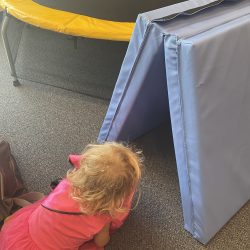
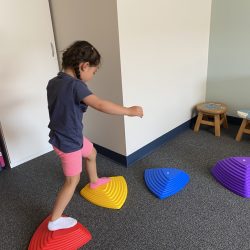
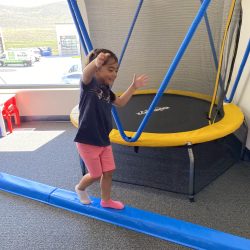
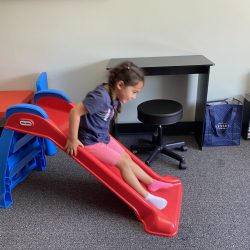
Obstacle Course Tutorial
Once you purchase the Obstacle Course Tutorial and log in, you will have full access to all the content below this section.
Functional Developmental Levels (FDLs): 5-6
This activity is great for kids at an FDL of: 5-6
The Functional Developmental Levels (FDL) are based on The PLAY Project and DIR/Floortime
- FDL 1: Self Regulation & Shared Attention
- FDL 2: Engagement & Relating
- FDL 3: Intentionality & Two-Way Communication
- FDL 4: Social Problem-Solving & Mood Regulation
- FDL 5: Creating Symbols & Using Words & Ideas
- FDL 6: Emotional Thinking, Logic & Sense of Reality
Stages of Play: 4-6
This activity is great for kids primarily participating in stages: 4-6
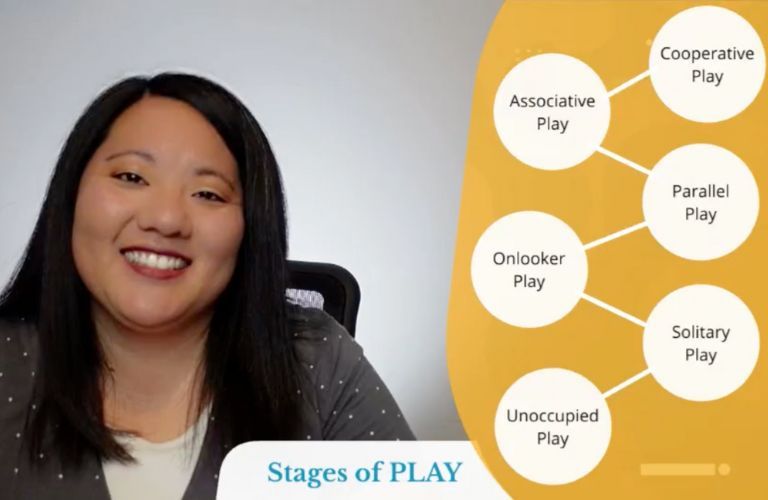
The Stages of Play come from Parten’s Stages of Social Play.
- Stage 1: Unoccupied Play
- Stage 2: Solitary Play
- Stage 3: Onlooker Play
- Stage 4: Parallel Play
- Stage 5: Associative Play
- Stage 6: Cooperative Play
Sensory Input: Vestibular, Proprioception
This activity includes: vestibular and proprioception
Our senses include more than the usual 5 senses. Some kids may seek certain types of sensory input and/or avoid other types.
- Visual: Sight
- Auditory: Sound
- Olfactory: Smell
- Oral: Taste (Gustatory) and using the mouth to speak, make sounds, eat, chew, drink, etc.
- Tactile: Touch
- Vestibular: How we process information about movement, gravity, and balance. We receive this information through the inner ear.
- Proprioceptive: How we process information about body position and body parts. We receive this information through our muscles, ligaments, and joints.
Areas of Development: Communication, Cognitive, Executive Functioning, Motor, Social
This activity is good for targeting the following developmental skills: communication, cognitive, executive functioning, motor, social
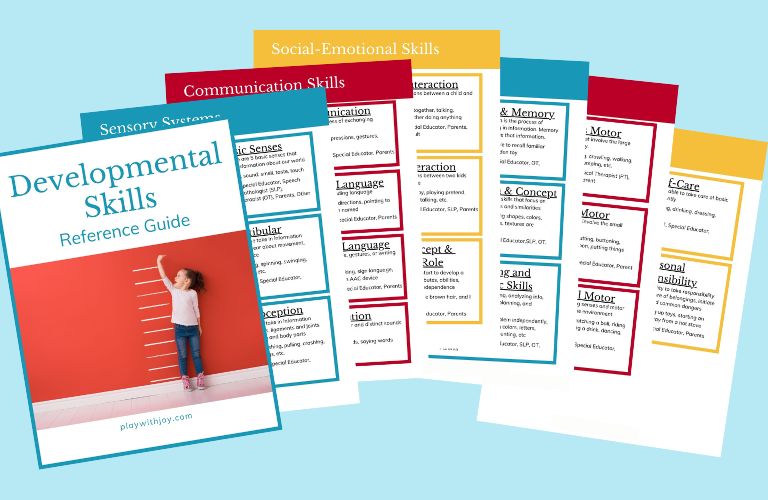
These are the main areas of child development addressed in the Early Intervention Tutorials
- Communication: receptive language, expressive language, listening, two-way communication
- Cognitive skills: cause & effect, literacy, math, science, problem solving, perception and concept
- Executive functioning: emotional control, flexibility, perseverance, self-monitoring, organization, planning, response inhibition, attention, task initiation, time management, working memory
- Motor skills: fine motor, gross motor, perceptual motor
- Social-emotional skills: peer interaction, self concept & social role, pretend play, behavior, group activities
- Adaptive skills: self-care, personal responsibility
Supplies
- Pillows
- Blankets
- Stepping Stones
- Hula Hoops
- Colored Tape
- Bubble Wrap
Instructions
- Have your child help gather supplies and help create the obstacle course. This will give some good heavy work, problem solving, and cooperation.
- Find ways to implement a variety of movement.
Links
As an Amazon affiliate, I earn from qualifying purchases at no cost to you.
Favorite Obstacle Course Toys
- Indoor Trampoline-If you have room for an indoor trampoline like this, I would highly recommend it. Great for bad weather days. We had one (same brand, different trampoline) at a clinic I worked at, and kids loved it.
- Little Tikes Trampoline-Here is a smaller option
- Roller Coaster Ride-These are so much fun! If you don’t want to spend as much money, check out FB Marketplace, I oftentimes see them there, but they go fast.
- Sit ‘n Spins are a fun vestibular toy and works on motor skills as well, including bilateral coordination, balance, and gross motor.
- Ball Pit Tunnel and Tent-I haven’t used this specific toy, but ball pits and tunnels in general are great proprioceptive activities
- Scooter Board-There’s so much you can do with a scooter. They’re great for motor planning, vestibular input, proprioceptive input, and more.
- Indoor slide
- Balance Pods-These are great for obstacle courses inside or out. I’m not sure what brand I have, but they look like this
- Balance Beam-You can set it up different ways kind of like a train track. These are great for a lot of different skills.
- Cones, rings, and beanbags-There’s a lot you can do with this yard game set
- Balance board
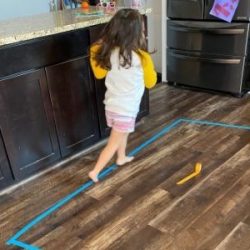
- Colored Masking Tape-Tape on the kitchen floor is an easy way to create an obstacle course. Balance on the red, spin on the blue, jump to the blue, etc.
- Sidewalk Chalk-Make an obstacle course in your driveway with sidewalk chalk. First, work on fine motor skills with drawing and then work on gross motor skills with running, jumping, spinning, and balancing.
- Hopper-If your child is bouncing off the walls (literally), these are fabulous for getting some of those wiggles out. It does require some coordination and body awareness though
- Large soft blocks-These are great for building and knocking down. You can knock them down by running into them or throwing a ball at them.
- Tunnel-Crawling is such a good and necessary activity for motor development. I don’t have this exact tunnel, but I have one that looks just like it 🙂 Any tunnel will do.
Extra Tips & Ideas
Extra Tips & Ideas
- Make an outdoor obstacle course using sidewalk chalk.
- Use painter’s tape on your kitchen floor
- Do it in one room, or go throughout the whole house. Use the stairs, beds, and tables as your props.
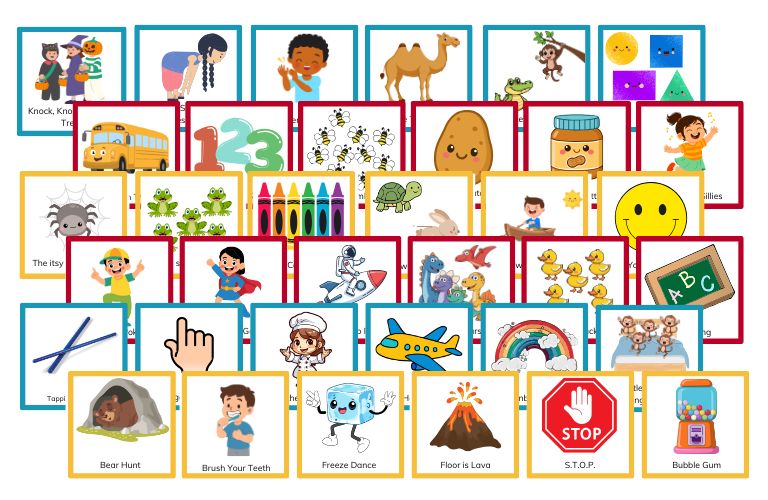
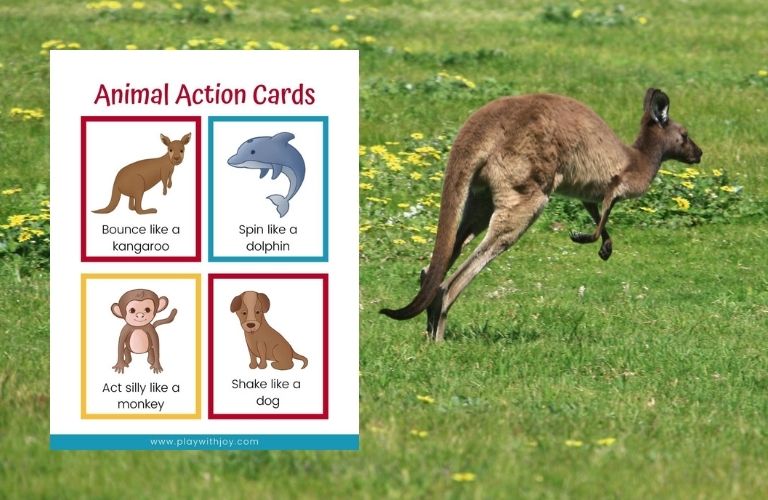
- Add animal action cards in your course. Then change where they are in the course when you’re ready for something new.
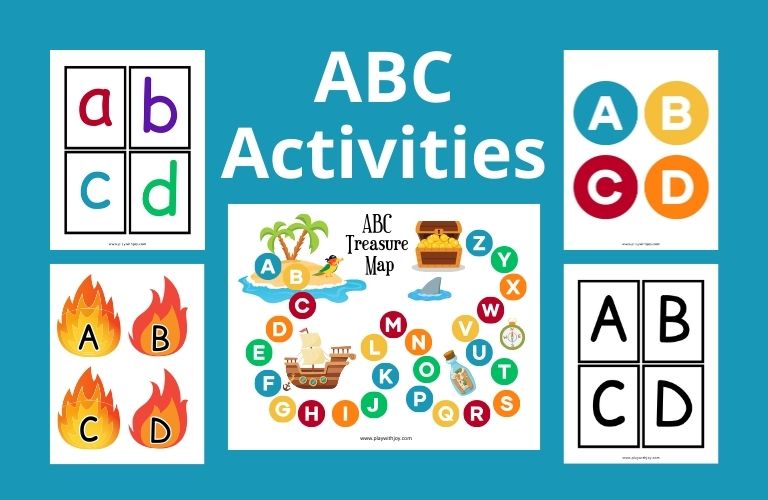
- There are a lot of different ways you can create an obstacle course. It can be different every time, which makes this a fun activity to do all the time. Below are some ideas for different motor activities, or you can download these obstacle course cards.
Jumping
- Jump from pillow to pillow
- Jump in one spot 5 times
- Jump to touch a target on the wall
- Jump on a trampoline 10 times
- Jump and do a trick at the same time
- Jump and touch your toes
- Jump over a stuffed animal
- Hop on one foot
- Jump like a frog
Crawling
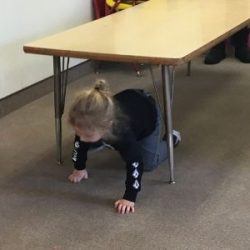
- Crawl under a table
- Crawl through a tunnel
- Crawl to the other side of the room
- Crawl and push a ball across the room with your nose
- Crawl under a rope
- Crawl over a pile of pillows or blankets
- Crawl up the stairs
Spinning
- Turn around 6 times
- Spin on a Sit n’ Spin
- Put your nose on a bat and spin around 3 times
- Run around a toy 4 times
- Spin on one foot
- Play a game of ring around the rosies
Balancing
- Put painter’s tape on the floor and walk across it
- Balance on one foot for 5 seconds
- Balance a toy on your child’s head and have her walk to the next obstacle
- Balance a gummy bear on a spoon while doing an obstacle
- Walk across a balance beam
Running
- Run around the couch 2 times
- Run like a cheetah
- Put a ball on one side of the room and a garbage can on the other side. Run and get the ball and put it in the can
- Put different colored paper around the room. Run and get all the red paper
- Run along a line of tape
- Put pictures of animals around the room and when you name one, have your child run to it
- Name a color and have your child run and touch something that color
Climbing
- Climb up a slide the right (or wrong) way
- Climb up the stairs
- Climb onto a bunk bead
- Climb a ladder to the trampoline
Video Tutorial
Adapting to Different Stages of Play
Stages 1-4
This activity is best for kids at stages 5-6, but you can also do it with kids at stages 1-4. It will just look different.
At stages 1-2 kids may not be very interested in other people yet. At stages 3-4, kids are typically starting to be interested in other kids, but aren’t engaging in play with them yet.
GOALS:
- Increase attention to one activity
- Engage in play with a familiar adult
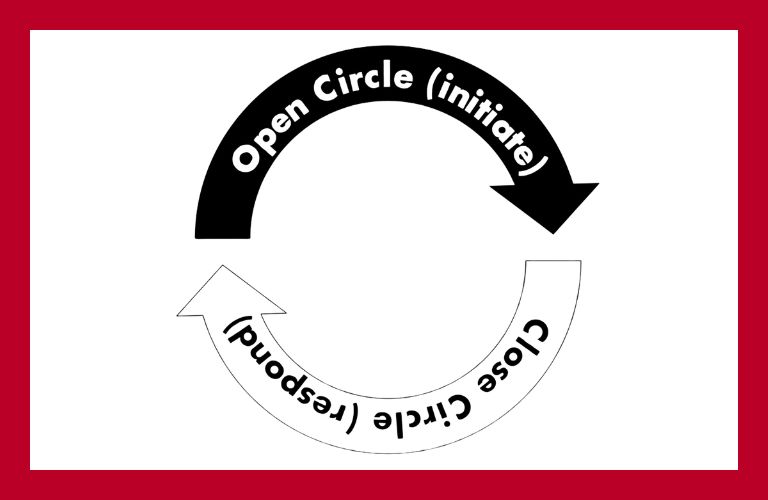
- Initiate wants and needs through words, sounds, gestures, or facial expressions (open circles of communication)
- Will respond when you open a circle of communication (close circles of communication)
- Increase time participating in parallel play (playing next to a peer with like materials)
- Increase natural imitation
- Participate in purposeful interactions
TIPS FOR PLAYING WITH A CHILD AT THESE STAGES
- Our main goal with this activity will be engagement and circles of communication, which means we’re not working on following directions.
- After you set up the obstacle course, don’t expect your child to do it in order or to do it how you expect. Let go of those expectations.
- This is a time for exploration and following your child’s lead.
- If your child loves a certain obstacle, but needs help, wait expectantly for your child to initiate more.
- Narrate what your child is doing, enjoy just being with your child
- Use salient language while you play. For example “Jump, jump, JUMP” or “You are SPINNING!”
- Instead of trying to get your child to imitate you, try imitating your child. Sometimes this helps pique your child’s interest in you
Stages 5-6
These stages are when kids are starting to interact more with each other, communicate with each other, and negotiate with each other. This is also when kids start to do more complex pretend play.
GOALS:
- Imitate motor actions
- Imitate pretend play
- Follow one-step directions
- Follow multi-step directions
- Increase time engaged in conversations
- Share ideas through conversation
- Act as a character in role-play
- Create a drama that “make sense” with a beginning, middle, and end
- Use magical powers
- Give a turn to a peer when asked
- Ask for a turn
TIPS FOR THESE STAGES
- Kids at these stages are developmentally ready to start following more directions. You can work on multi-step directions as you go through the course.
- Work on communication skills while planning the obstacle course together.
- Find out what your child’s ideas are rather than you coming up with all of the ideas
- Now is the time when it’s ok to ask questions and give some directions. No one likes being bossed around or quizzed during playtime though, so be careful how often you’re doing it. Be purposeful. Don’t ask questions you know the answers to, ask questions to find out what your child is thinking.
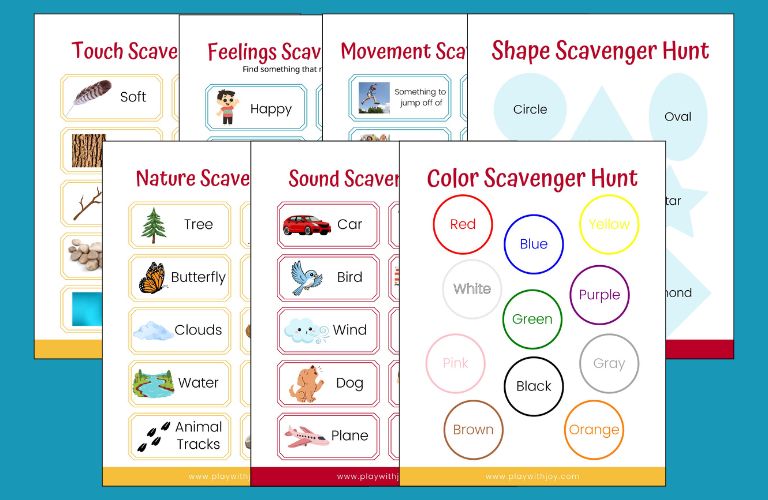
- You can turn the preparations into a scavenger hunt. You name something or describe something and your child goes and finds it. Or you can use the printable cards in the download section and draw cards for what comes next in your obstacle course. This can help with planning skills, problem solving, and creativity
- You can change the course up as much as you want. Adding this type of theme and variation can help increase the amount of time spent on the activity
- Turn it into pretend play. Imitative pretend pretend play would be having a stuffed animal jump on the pillows.
- One thematic pretend play would be pretending to be running in a jungle.
- Two thematic pretend play would be pretending to be explorers looking for a treasure in the jungle
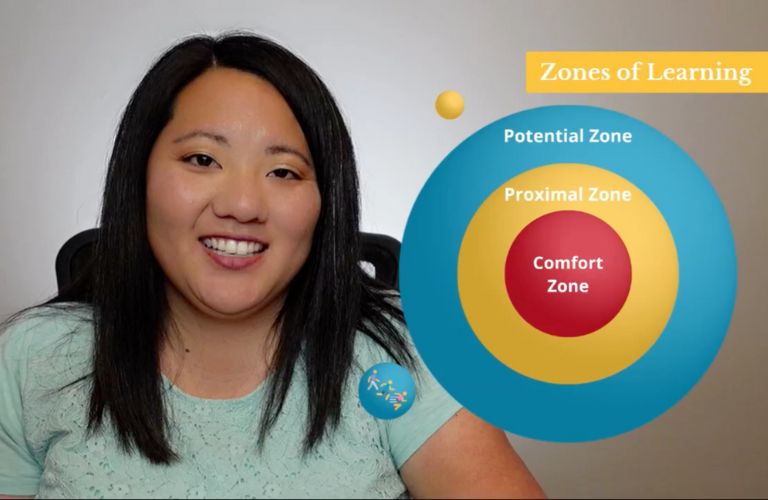
- However you add in pretend play, try to spend most of the time in your child’s proximal zone
- Find ways to problem solve during the obstacles
Developmental Skills
In this section, I will give you specific examples of what you can do in this activity to address specific areas of development.
Communication skills
Receptive Language
Receptive Language (Understanding language)
- For kids who are not using more than 1-2 word sentences independently, use salient language throughout this activity. This means you’re emphasizing certain words, or just using one word as you speak. You can easily narrate this activity using 1-2 word phrases. For example: “Jump!” “Run!” “Go!” “Crawl, crawl, crawl” etc.
- Instead of doing the obstacle in a particular order, give your child choices of what to do next.
- You may want to print some pictures for your child to point to or touch as you’re doing this activity. You could have a picture of swinging and one of bouncing. Then give your child a choice of what to do.
- You can work on different vocabulary during the obstacle course depending on what you’re currently targeting. You could hang up different colors at each activity and have your child find the a specific color. If you’re working on body parts, you could emphasize those words as you’re doing the activities. For example “your FEET are jumping” or “Put your HEAD in the tunnel first.”
- For kids who are able to follow directions, work on simple one step or multi-step directions. For example, “jump 3 times” or “stomp loudly” or “crawl through the tunnel.” For multi-step directions you could say things like “jump 3 times and then crawl through the tunnel” or “spin one time and then hop on one foot.”
Expressive Language
Expressive Language (Using words, gestures, or writing to express oneself)
- For kids who are working on initiating, set up the routine of starting and stopping swinging, maybe add a little “1,2,3 jump” or “1,2,3 go” in there. After this routine is set up, then pause and wait expectantly for your child to initiate that she wants more. This can be through a word, a gesture, eye contact. Whatever it is, take it as communication, give it a word, and start going again. With an obstacle course, there are many opportunities to stop and go.
- For kids who are using 1-2 word phrases, add a word to their sentences. Don’t force them to repeat you, but just model for them. For example if they say “run” then you might say “run fast” or if they say “jump” you might say “you jump high!”
- For kids who are able to use more words, expect more when they initiate. You can use some playful obstruction and do the wrong thing or act dumb. If you do this in a fun and playful way, you can help encourage more communication.
- For kids who are able to have conversations, start pretending. Pretend that a monster is coming to get you and you have to go through all these obstacles. Or you could pretend to go on a bear hunt. Have conversations as you do the activity.
Two-Way Communication
Two-Way Communication (Continuous back and forth interactions)
- For kids who are working on initiating, focus on getting multiple circles of communication. Get as many back and forth interactions as you can between each activity.
- As your child is able to communicate more, and you are getting 20+ back and forth circles, then start working on the quality of circles. First quantity, then quality.
Cognitive skills
Pre-Math Skills
- Give each part of the course a number. For example: jump 10 times, go through the tunnel 2 times, spin around 4 times, etc.
- For number identification you could put pieces of paper or number puzzle pieces in a bag and have your child draw a number before each part of the course and do it that many times.
- Put a picture of a shape at each obstacle, then draw a map. Have your child find the next obstacle on the map by matching shapes. You could do the same thing with colors.
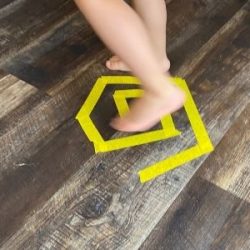
- Use painter’s tape and make shapes on the ground. Call out a shape and have your child jump to that shape.
Problem Solving
For kids who are at stages 1-4, work on social problem solving by throwing in little obstacles that require your help to participate.
This increases circles, but also helps them problem solve how to get you to help them.
For example:
- swinging in a blanket
- throwing them onto the bed
- pulling them across the floor on a blanket
- balancing on a balance beam
For kids at stages 5-6 you can add things to the obstacles like rescuing a stuffed animal that they have to problem solve how to find it.
Executive Functioning skills
Flexibility
Flexibility (being able to switch between different topics or activities easily)
- You can work on flexibility by changing the obstacle course up, making it different each time
- You can also make up new rules, then 10 minutes later change the rules
- You change the order of the obstacle course several times during play
Organization
Organization (being able to keep track of information and materials)
- You can have your child help you build the obstacle course, have them help find the materials you need, and then help put them away.
- You can have your child keep track of what order to do the obstacle course in
- Add little tasks for your child to do to work on organizational skills
Planning
Planning (Making a plan with at least a few steps and following through)
- Make a plan before you build the obstacle course
- Use the printable below to help plan what types of activities you’re going to do, and then make a specific plan. For example, if you draw the jumping card, then decide together which jumping activity would be good for your obstacle course
- Help your child follow through with the plan. Try to keep to the original plan before you change things up. If your child wants to immediately change the plan, then show them the plan and say that you can change it up in 5 minutes, but first do the original plan
- Make a check list of items that you need for the obstacle course and have your child find the items throughout the house and then check them off
Response Inhibition
Response Inhibition (impulse control, being able to wait a turn, wait for directions, and think before going into action)
- When the obstacle course is set up, it can be really hard not to try everything out before you’re ready. If your child is working on response inhibition, help your child to wait until you say go
- Even if there aren’t any other peers, take turns with each other doing the obstacle course. Help your child remember that when it’s someone else’s turn that they can’t be on any of the obstacles yet.
Attention
Attention (focusing and taking in information even when there are distractions or if it’s boring)
- This is a great activity to work on increasing attention because it’s fun and engaging. Find things that your child enjoys and use those to help build attention.
- As your child gets better at the obstacle course, you can try to add in some distractions to see if they can finish it even with distractions
- Obstacle courses are also good for following multiple step directions because they have to remember what to do at each section
Working Memory
Working Memory (the ability to remember information while performing a complex task)
- Rather than telling your child what to do at each step, give directions at the beginning and see if your child can remember where to next and what to do at each obstacle
- You can also use working memory skills when you’re creating the obstacle course. Draw a few action cards (from the printable), then have your child find items for a few obstacles at a time without reminding her what they were.
- You can also put the cards in a certain order, and see if your child can set up the obstacle course in the correct order without the visual or verbal cues.
Motor Skills
Gross Motor Skills
Gross Motor (skills that involve the large muscles of the body)
- Obstacle courses are the perfect activity for sensory motor play.
- Obstacle courses are all about gross motor skills. If there is a specific skill you are trying to target, make sure that there are multiple activities that address that skill in the course.
- Check out the Obstacle Course Cards in the Downloads section for ideas of activities.
Perceptual Motor Skills
Perceptual Motor (coordinating senses and motor skills to interact with the environment)
–Bilateral Coordination (using both sides of the body together in one activity)
- Catch a ball with two hands
- Sit on a scooter and pull a rope with two hands to get to the other side
- Sit on a scooter on your stomach and scoot across the floor using both hands to move the scooter
- Use a sit n’ spin
- Build with blocks (small or large)
–Body Awareness (knowing body parts and where they are in a defined space)
- Crawl through a tunnel
- Balance on a balance beam
- Crash on the couch
–Crossing Midline (moving one limb across midline to the other side of the body)
- Throw beanbags at different targets, use the same hand to throw no matter what side of the body the target is on
- Put a blue dot on one hand and a red dot on the other. Hit a balloon, but say which hand to use (blue or red) each round.
- Put pillows on the ground to crawl across. Put objects on one side and a basket on the other side. Have your child put the objects in the basket as they crawl across the pillows. Whatever hand they pick the object up with, they have to use the same hand to put it in the basket.
–Directional Awareness (left/right, up/down, in/out, top/bottom, front/back)
- Make a course that has a lot of different directions and use those directional words as your child goes through the course.
- Turn left down the hallway
- Turn right into the kitchen
- Go up the stairs
- Go down the slide
- Go in the tunnel
- Go out of the room
- Go on top of the couch
- Slide to the bottom of the stairs
- Spin in front of the fridge
- Crawl behind the couch
–Eye-hand Coordination
- Play catch
- Hit a target with a beanbag
- Pop bubbles
- Throw a crumpled paper into a waste basket
–Motor Planning (being able to perform a sequence of movements to complete a task)
- Have your child help create the obstacle course
- Have your child save his favorite stuffed animal. First he has to go through all the obstacles to get to the animal.
- Put obstacles in the way, but don’t tell your child how to get through them, let him figure it out.
–Visual-Spatial Perception (being able to tell where objects are in a defined space)
- Have your child find different shapes throughout the course and then sort them at the end
- Add puzzle pieces to the course, and when your child finds them he has to put them where they belong
Social Skills
Social-Emotional
Group Activities (these ideas are mostly for kids at stages 5-6)
- Obstacle courses are great for groups, you can make teams to race through the obstacles or just do it individually
- You can have each group create an obstacle course for the other group
- Plan together as a group what they would like to do in the obstacle course, and then build cooperation by building it together
Peer Interaction
- Work on turn taking
- Practice cheering for each other, and encouraging each other
- Practice being a good sport
Pretend Play
- Add pretend play into the obstacle course
- Pretend you’re running away from a dragon or that you’re trying to rescue someone
- Create rivers to cross and forests to run through
- Pretend the floor is lava
- Pretend to be animals and do animal actions throughout the obstacle course