How to Increase Expressive Language With a Simple Balloon
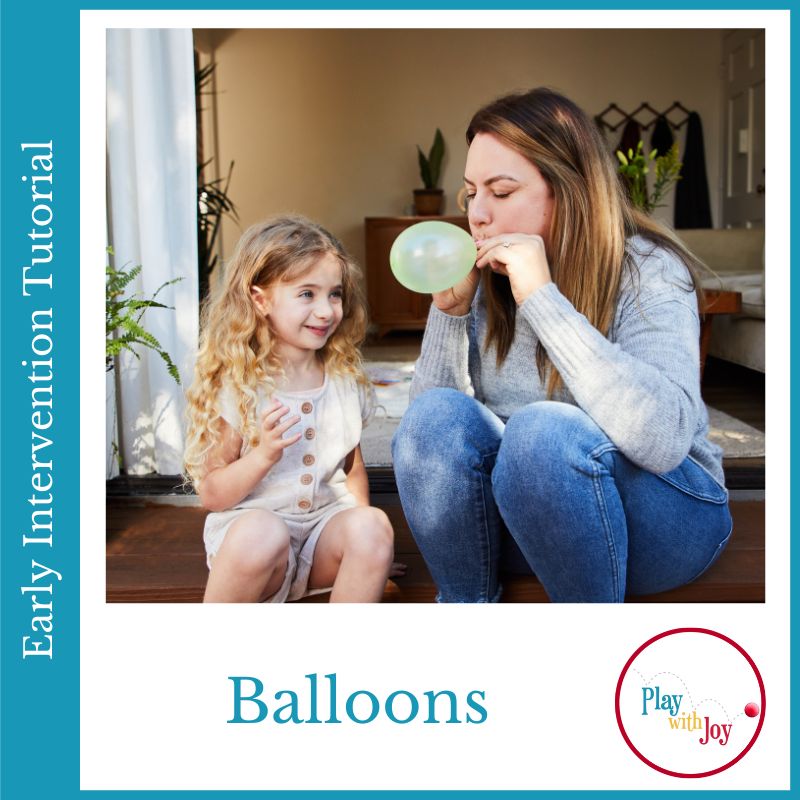
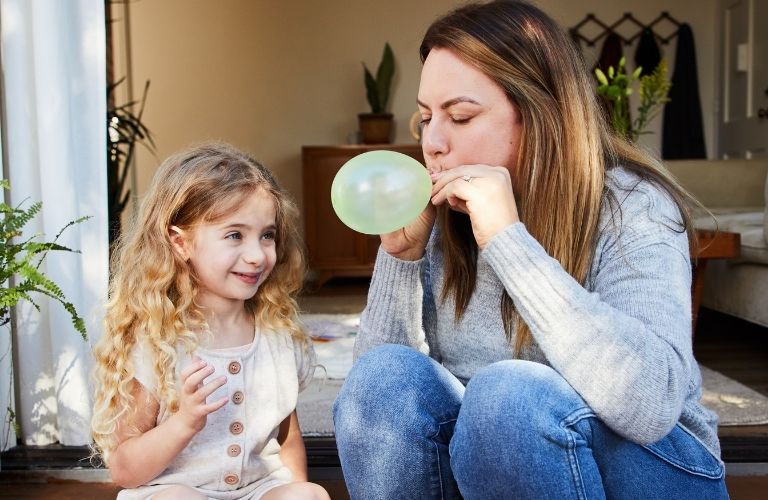
I always love activities that can target multiple developmental skills at the same time—and balloon play is one of those. This simple, play-based activity can support engagement, attention, communication skills, and both fine and gross motor development. Whether you’re a parent, teacher, or therapist, playing with balloons offers an easy, low-prep way to build important developmental skills through fun and movement.
In this post, I’m going to focus on communication skills, however there are so many other skills that you can target with a balloon. And I’ll cover the other areas of development in the full tutorial at the bottom.
Receptive Language
Receptive language is being able to understand language. When you’re working on receptive language in a more structured way, it may sound like this “find red” or “give me the pig.” It’s the ability of the child to understand what a word means.
Let’s talk about some ways to work on the same skill in a more playful and natural way.
- Salient language
- An easy way to work on receptive language is to use a lot of salient language. For kids who are not using more than 1-2 word sentences independently, emphasize certain words. For example, you might say things like “balloon” “red balloon” “ready, set, go!” “fly” “more” “bigger” Just narrate as you go. Model language for your child.
- Teaching body parts
- Let’s say you’re working on body parts. Instead of just saying “where’s your hands?” you can get a balloon, blow it up and start blowing air on different body parts. As you’re letting air out of the balloon, you can say “I’m going to get your hair!” and then “I’m going to get your hands”
- After you’ve set up this sequence, then start to pause. You’ll be looking for your child to either move that body part away or towards you. So if you say “I’m going to get your ear!” and your child covers her ears, then you know she’s understanding what you’re saying. Also if she puts her ear to you for you to do it, you know she’s understanding.
- My and Yours. With the same game of blowing the air on your body, you can practice “my hand” and “your hand” then “my hair” and “your hair”
- Following directions
- For kids who are able to follow directions, work on simple one step or multi-step directions
- If you’re working on circles of communication, don’t give too many instructions.
- If you’re specifically working on following directions, then go ahead and give simple one or multi-step directions. For example, “get the balloon” “give me the red balloon” “where did it go?” “kick it” “hit it” “pass it to me” etc.
Expressive Language
Expressive language is using words, gestures, or writing to express oneself. So let’s now talk about how to work with kids that are in the beginning stages of being able to initiate or say simple words.
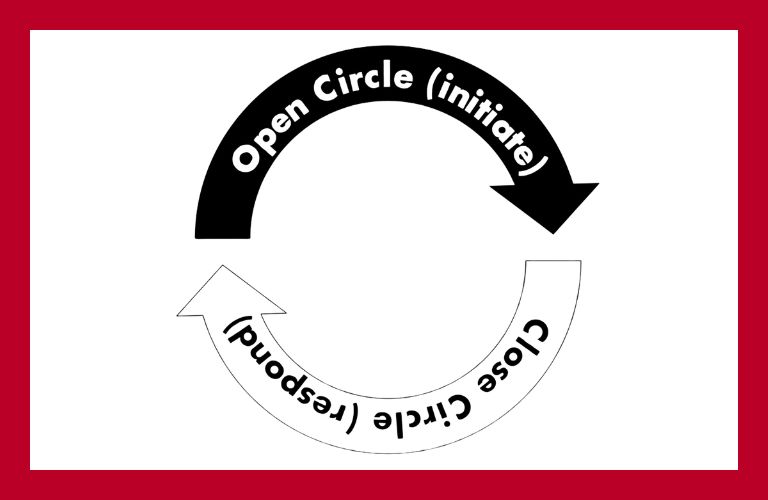
- Opening circles of communication.
- Set up a simple sequence. For example, blow up a balloon and let it fly. Go get it, then blow it up and let it fly again. Do this 3-4 times until you know your child is engaged and having fun.
- Once the sequence is established, pause and wait for your child to initiate for it to go (expectant waiting). This can be through a word, a gesture, or eye contact. Whatever it is, take it as communication (if you’re working on communication, don’t discount your child’s attempt at communicating just because it’s not how you wan your child to communicate), give it a word, and let the balloon go.
- You can also use expectant waiting after the balloon flies and wait for your child to go get it without telling your child to go get it. When your child goes and gets the balloon and brings it to you, this is a big opening of a circle.
- Add a 1,2,3 Go sequence whether it’s when you’re blowing up the balloon or letting the balloon fly. Pause right before “go” and wait for your child to initiate for you to go.
- Use playful obstruction by playing dumb or doing the wrong thing in order to get more circles.
- Act like you can’t find the balloon after if flies away, and make looking for the balloon it’s own activity. You could say “balloon, balloon where are you?” this is a way to model language.
- Find the wrong things and try to blow them up like a balloon, get silly.
- When your child hands you the balloon to blow it up, put it on your head or try to blow it up from the wrong side. See if your child will correct you (this is another circle).
These are just a few examples of early intervention activities you can do to work on language and communication. As kids progress, you can adapt the activity to the skills they’re currently working on if this is a high interest activity. Get creative and find as many ways you can play with a balloon as possible (this is called Theme and Variation). Have fun, and share some of your ideas, I’d love to hear them!
Balloons Tutorial
Once you purchase the Balloons tutorial and log in, you will have full access to all the content below this section.
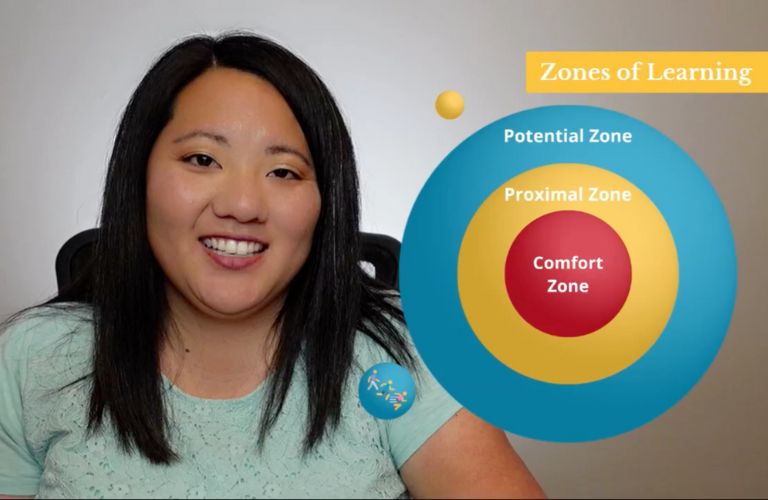
Functional Developmental Levels (FDLs): 1-6
This activity is great for kids at an FDL of: 1-6
The Functional Developmental Levels (FDL) are based on The PLAY Project and DIR/Floortime
- FDL 1: Self Regulation & Shared Attention
- FDL 2: Engagement & Relating
- FDL 3: Intentionality & Two-Way Communication
- FDL 4: Social Problem-Solving & Mood Regulation
- FDL 5: Creating Symbols & Using Words & Ideas
- FDL 6: Emotional Thinking, Logic & Sense of Reality
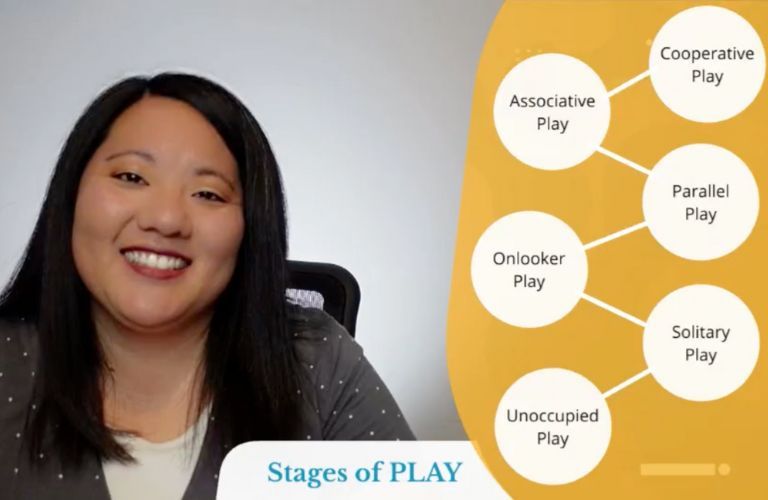
Stages of Play: 1-6
This activity is great for kids primarily participating in stages: 1-6
The Stages of Play come from Parten’s Stages of Social Play.
- Stage 1: Unoccupied Play
- Stage 2: Solitary Play
- Stage 3: Onlooker Play
- Stage 4: Parallel Play
- Stage 5: Associative Play
- Stage 6: Cooperative Play
Sensory Input: Vestibular, Proprioception
This activity includes: vestibular and proprioception
Our senses include more than the usual 5 senses. Some kids may seek certain types of sensory input and/or avoid other types.
- Visual: Sight
- Auditory: Sound
- Olfactory: Smell
- Oral: Taste (Gustatory) and using the mouth to speak, make sounds, eat, chew, drink, etc.
- Tactile: Touch
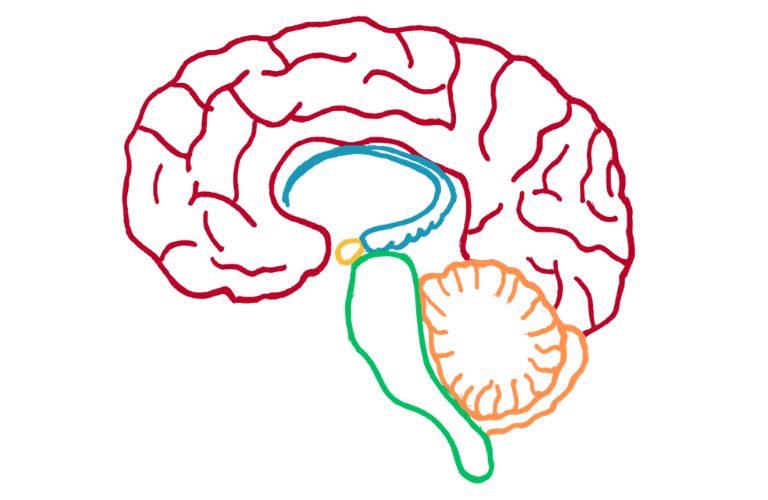
- Vestibular: How we process information about movement, gravity, and balance. We receive this information through the inner ear.
- Proprioceptive: How we process information about body position and body parts. We receive this information through our muscles, ligaments, and joints.
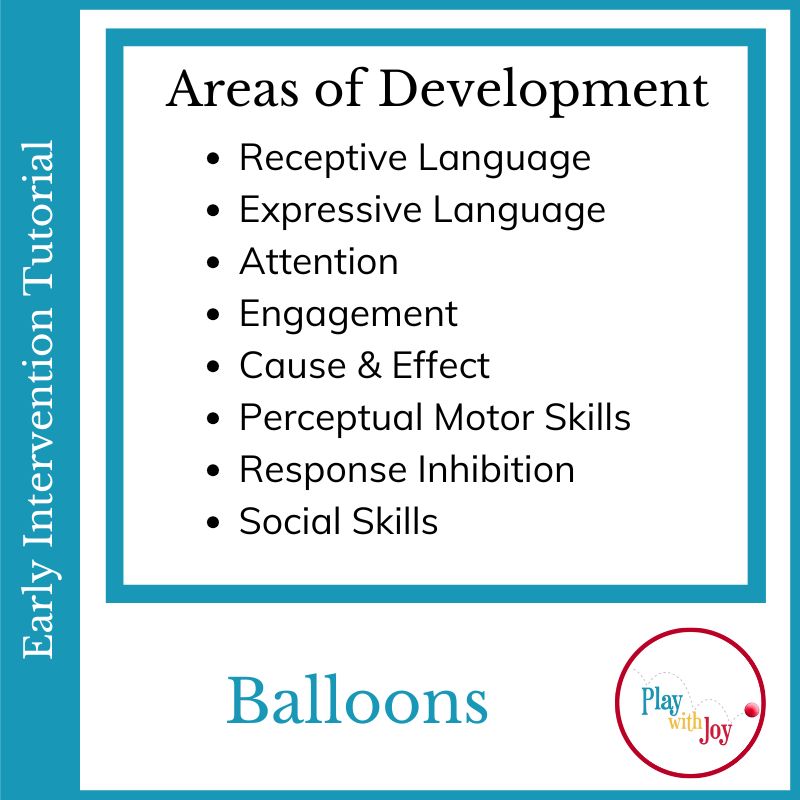
Areas of Development: Communication, Cognitive, Executive Functioning, Motor, Social
This activity is good for targeting the following developmental skills: communication, cognitive, executive functioning, motor, social
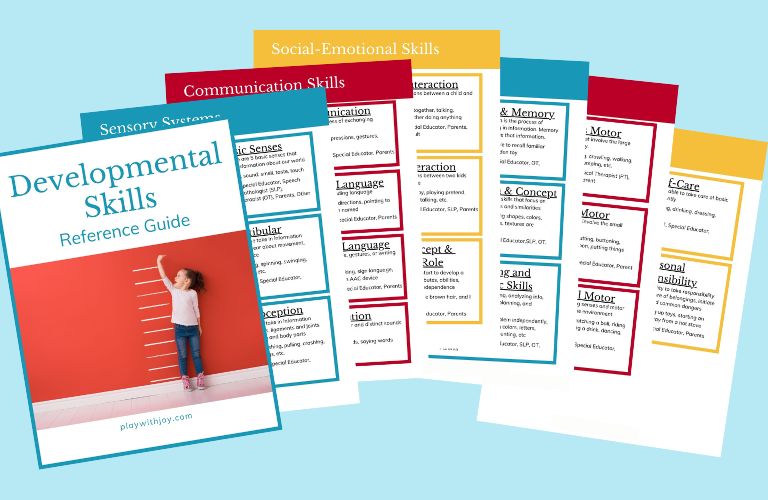
These are the main areas of child development addressed in the Early Intervention Tutorials
- Communication: receptive language, expressive language, listening, two-way communication
- Cognitive skills: cause & effect, literacy, math, science, problem solving, perception and concept
- Executive functioning: emotional control, flexibility, perseverance, self-monitoring, organization, planning, response inhibition, attention, task initiation, time management, working memory
- Motor skills: fine motor, gross motor, perceptual motor
- Social-emotional skills: peer interaction, self concept & social role, pretend play, behavior, group activities
- Adaptive skills: self-care, personal responsibility
Supplies
- Balloon
Instructions
- There are a lot of different ways to play with a balloon. Check out the sections below for more specifics.
- Play catch with a balloon
- Blow it up and let it fly
- Make a funny noise with the balloon
- Don’t let the balloon touch the ground
Links
As an Amazon Affiliate, I earn from qualifying purchases at no cost to you.
- Colored Balloons-These are great for color identification
- Punch Balloons-These are always fun and you can work on motor skills and coordination with kids that are able to follow directions
- Balloon Zoom-Kids love this toy and it’s great for cause and effect and response inhibition
Extra Tips & Ideas
Extra Tips & Ideas
- First decide what your goals are before deciding how to play with the balloon
- If you’re working on opening and closing circles, then choose a cause and effect type of activity.
- If you’re working on cooperative play, choose a game like don’t let the balloon touch the ground
- See more ideas in the following sections.
Video Tutorial
Adapting to Different Stages of Play
Stages 1-4
At stages 1-2 kids may not be very interested in other people yet. At stages 3-4, kids are typically starting to be interested in other kids, but aren’t engaging in play with them yet.
Our main focus at stages 1-4 is going to be attention, engagement, and simple circles of communication (even if it’s just 1-3 circles at a time).
GOALS:
- Increase attention to one activity
- Engage in play with a familiar adult
- Initiate wants and needs through words, sounds, gestures, or facial expressions (open circles of communication)
- Will respond when you open a circle of communication (close circles of communication)
- Participate in cause and effect activities
- Participate in purposeful interactions
TIPS FOR PLAYING WITH A CHILD AT THESE STAGES
Our goals at these stages are attention, engagement, and circles of communication. Try playing without giving any directions or asking any questions. Instead, narrate what’s happening. Instead of saying “go get the balloon” you can say something like “Wow! That flew so high! That was so much fun!”
- Build a routine or sequence out of the activity to begin. For example, blow it up and let it fly. Go get it, then blow it up and let it fly. Do this 3-4 times until you know your child is engaged and having fun.
- There are a lot of ways you can use expectant waiting in your play.
- Once your child is engaged and you can easily predict that she wants more, then blow it up, let it fly, and then wait expectantly. See if your child will initiate on her own going and getting the balloon and bringing it to you (opening a circle)
- When your child hands you the balloon, wait expectantly for your child to open one more circle by gesturing, pushing it towards your mouth, or saying a word/sentence
- Make blowing up the balloon a sequence. 1,2,3, Go! Once you count to 3, wait for your child to say go or use a gesture
- If your child tries to blow up the balloon on her own, wait for her to ask for help before offering help. Don’t tell her she needs help, let her figure it out on her own.
- Use playful obstruction to get more circles.
- Act like you can’t find the balloon after it flies away, and make looking for the balloon it’s own activity. You could say “balloon, balloon where are you?” this is a way to model language
- Find the wrong things and try to blow them up like a balloon, get silly
- When your child hands you the balloon to blow it up, put it on your head or try to blow it up from the wrong side. See if your child will correct you (another circle).
- Use Theme and Variation by doing different things with the balloon.
- Blow it up and let it fly
- Blow it up and make it squeak as it lets air out
- Let the air blow in your child’s hair, on their arms, on their legs. Then let your child initiate where the air should blow. Great for working on body parts.
- Play catch
- Kick the balloon
- Play basketball with it
- Play hide and seek with it
- Play with lots of balloons
- Blow it up just a little at a time and every time your child initiates more you can say “bigger!”
Stages 5-6
These stages are when kids are starting to interact more with each other, communicate with each other, and negotiate with each other. This is also when kids start to do more complex pretend play.
GOALS:
- Imitate pretend play
- Follow one-step directions
- Follow multi-step directions
- Share ideas through conversation
- Act as a character in role-play
- Give a turn to a peer when asked
- Ask for a turn
TIPS FOR THESE STAGES
- Playing with a balloon is great for cause and effect play, but you can adapt the play to pretend play and cooperative play as well. Kids love balloons so it can be very motivating.
- Playing with balloons can be great for turn taking with a peer. Do something simple like hitting the balloon to each other.
- Turn the balloon into a baby by drawing a picture on it, and play pretend family
- I give more ideas for stages 5-6 in the following sections:
- Cognitive skills
- Social skills
Developmental Skills
In this section, I will give you specific examples of what you can do in this activity to address specific areas of development.
Communication skills
Receptive Language
Receptive Language (Understanding language)
- For kids who are not using more than 1-2 word sentences independently, use salient language throughout this activity. This means you’re emphasizing certain words, or just using one word as you speak. For example you might say things like “balloon” “red balloon” “ready, set, go” “fly” “more” “bigger”
- Give choices. “I have a red balloon and a green balloon.” Then when your child motions towards one or the other, label it “Green balloon!”
- You can let the air blow on different parts of your child’s body. You can turn it into a little simple pretend by saying “I’m going to get your hand.” And see if your child either moves their hand towards you or away from you. Either way, they’re understanding the word “hand”
- With the same game of blowing the air on your body, you can practice “my hand” and “your hand” then “my hair” and “your hair”
- For kids who are able to follow directions, work on simple one step or multi-step directions. If you’re working on circles of communication, don’t give too many instructions. If you’re specifically working on following directions, then go ahead and give simple one or multi-step directions. For example, “get the balloon.” “give me the red balloon” “where did it go?” “kick it” “hit it” “pass it to me” etc.
Expressive Language
Expressive Language (Using words, gestures, or writing to express oneself)
- For kids who are working on initiating, set up the routine/sequence as I explained in Stages 1-4 section. Start a 1,2,3 Go sequence with letting the balloon fly. Once the sequence is established, pause and wait for your child initiate for it to go. This can be through a word, a gesture, eye contact. Whatever it is, take it as communication (if you’re working on communication, don’t discount your child’s attempt at communicating just because it’s not how you want your child to communicate), give it a word, and let the balloon go.
- For kids who are able to use more words, expect more when they initiate. If they just say “go”, then do some playful obstruction and do the wrong action, instead of letting the balloon go, put it on your head. Or instead of blowing it up, just throw it in the air.
- For kids who are able to have conversations, start pretending. I’ll put some examples in the Social-Emotional Section.
Two-Way Communication
- For kids who are working on initiating, focus on getting multiple circles of communication. Get as many back and forth interactions as you can while you play.
- As your child is able to communicate more, and you are getting 20+ back and forth circles, then start working on the quality of circles. First quantity, then quality. With quantity, it doesn’t matter if it’s a micro circle or a big circle. With quality, we’re working more on making the child work and finding out the child’s ideas
Cognitive skills
Cause & Effect
Work on cause and effect by helping your child learn that his words/actions mean something. When your child says “go” you blow up the balloon or you let it go.
Different ways to incorporate cause and effect.
- blowing it up
- letting it fly
- letting it blow in your child’s hair
- kicking it
- hitting it
- there’s a fun balloon car toy that I put below in the links which is also a great cause and effect activity.
Pre-Literacy Skills
- Use balloons for letter/sound/word recognition. Put different letters/words on the balloons. When you say the letter/sound/word you can have them do different things. Here’s some examples:
- have your child find the matching balloon and put it in a basket.
- play outside, and have your child spray the correct balloon.
- throw two balloons up in the air and say a letter and have your child hit the correct letter with a pool noodle
- Put letters up on a wall with a piece of tape (double sided) on it. Have your child match balloons with letters on them to the letters on the wall.
- Say the alphabet as you hit the balloon
Pre-Math Skills
- Count as you hit the balloon back and forth
- Have a bunch of balloons on the floor, say a number and the child gathers that many balloons and puts them in a basket
- Put numbers on the balloons and say a number and the child then hits the balloon that many times
- Work on color identification
- Draw a shape and number on a balloon. Name a shape, number, or color and see who can find it first
Perception & Concept
Perception and Concept (Examining differences and similarities)
- Hit the balloons and identify which one was the highest and which one was the lowest
- Compare sizes
- Hit the balloon hard and hit the balloon gently
- Which color of balloon is there the most of and the least of
- Do smaller balloons go higher or do bigger balloons go higher?
- Can you kick the balloon farther or hit it farther?
- Draw pictures on the balloons, put them in a big pile and play a guessing game where you give clues and the child has to guess what balloon you’re talking about. Then give your child a turn to give clues (this will mostly be for FDL 6)
Executive Functioning skills
Flexibility
Flexibility (being able to switch between different topics or activities easily)
- Play a variety of games with the balloon and change the rules up. First play it where you can only hit it with your hands, then play a round where you can’t use your hands.
- Let each person come up with one rule, and the second round you can’t use any of the previous rules
- Everyone has a balloon and someone calls out what to do with it. For example “hit it” “kick it” “hug it” “pass it to someone else” and everyone has to follow the directions
Response Inhibition
Response Inhibition (impulse control, being able to wait a turn, wait for directions, and think before going into action)
- Play a game where you hit the balloon to each other and you can’t hit it more than twice in a row. This helps your child to allow you to have a turn and to hold back even if she wants to hit it again.
- Throw multiple colored balloons in the air and say a color that your child should hit.
- Play freeze where everyone hits a balloon, but when they hear “freeze” they have to stop even if they’re about to hit a balloon.
- Add music and when the music is playing you can’t let the balloon fall, but when the music stops you have to freeze and hold the balloon
Attention
Attention (focusing and taking in information even when there are distractions or if it’s boring)
- This is a great way to help a child who struggles with attention especially if you’re working on cognitive skills. Bring in activities that use the whole body and use activities that the child already loves.
- If your child doesn’t like balloons, then this probably won’t help. It’s all about trying lots of different things.
- If your child loves balloons, and you’re working on attention, then do everything you can to help your child increase the amount of time they spend playing with balloons with you.
- It really just depends on what your goals are. If it’s just attention and engagement, then follow your child’s lead and just have fun. If your child is working on cognitive skills, add balloons to it in a fun way. If your child is working on paying attention to directions, use the balloons to give fun directions, for example hit the balloon 3 times, then hide it.
Motor Skills
Gross Motor Skills
Gross Motor (skills that involve the large muscles of the body)
- Hit the balloon with one hand
- Hit the balloon with two hands
- Make a basket with the balloon
- Kick the balloon
- Jump to catch the balloon
- Hit the balloon with a pool noodle
- Catch the balloon with two hands
- Catch two balloons
Perceptual Motor Skills
Perceptual Motor (coordinating senses and motor skills to interact with the environment)
–Bilateral Coordination (using both sides of the body together in one activity)
- Catch the balloon with two hands
- Throw the balloon with two hands
- Hold a balloon in each hand and try to catch another balloon
–Body Awareness (knowing body parts and where they are in a defined space)
- Play the game where you let the balloon blow air on different parts of the body
- Throw the balloon and tell your child which body part to hit it with, or play a whole game where you can only use certain body parts. For example, this round we’re only going to use our elbows and our knees to hit the balloon.
–Crossing Midline (moving one limb across midline to the other side of the body)
- Put a red mark on one hand and a blue mark on the other hand. Then have a red and blue balloon. You can only hit the balloon with the matching hand. Toss the balloons to the child one at a time.
- Get two baskets and put one on each side of your child. Toss a balloon to your child and have her put it in the left or right basket, alternating which one she does each time.
–Directional Awareness (left/right, up/down, in/out, top/bottom, front/back)
- Have your child follow different directions.
- Throw the balloon up
- Put the balloon in the basket
- Take the balloon out of the basket and put it on your head.
–Eye-hand Coordination
- Catching the balloon
- Hitting the balloon
- Kicking the balloon
- Hitting the balloon with a pool noodle
- Tossing the balloon in a basket
- Put balloons on balloon sticks and put them in the grass. Then use them as target practice with a spray bottle. (I did this for my daughter’s birthday party and the kids loved it!)
–Motor Planning (being able to perform a sequence of movements to complete a task)
- All of the above activities also works on motor planning. Because most of these balloon games involve moving the body, you’ll also be working on motor planning.
–Visual-Spatial Perception (being able to tell where objects are in a defined space)
- Catching the balloon
- Kicking it
- Spray balloons with a spray bottle
- Place balloons throughout the room, then give directions like “get the balloon that is up high” “kick the balloon that is on the pillow” “punch the balloon that is under the table.”
Social Skills
Social-Emotional
Group Activities (these ideas are mostly for kids at stages 5-6)
- Play a game with a group. Keep the balloon up without touching the ground.
- Play basketball
- If there are a lot of kids, have half of the kids put the balloons in a bunch of laundry baskets and the other kids have to take the balloons out. Set a timer and when the timer goes off see if there are more balloons in the baskets or out.
- Have a bunch of balloons in the middle of the room. Say a color and everyone runs to the middle to grab that color.
- Get in groups of two and have the kids hit the balloon to each other. See which group can hit the balloon the most times.
Peer Interaction
- Play pretend together, get everyone’s ideas on what to do.
- Work on turn taking
Pretend Play
- Pretend it’s a rocket ready to go to space.
- Pretend that it’s a monster coming after you.
- Give the balloon a voice.
- You could also pretend that it’s a pet that’s trying to get away from you, and then when you let it go act like it got away and bring different emotions into it. “Oh no! He got away! We need to find him! Put him back in his cage!”
- Get some pool noodles and pretend that they’re swords and you’re fighting off the bad guys while hitting the balloons.
- Don’t let the balloon touch the ground, but get stuffed animals to have them hit the balloon and play the game.