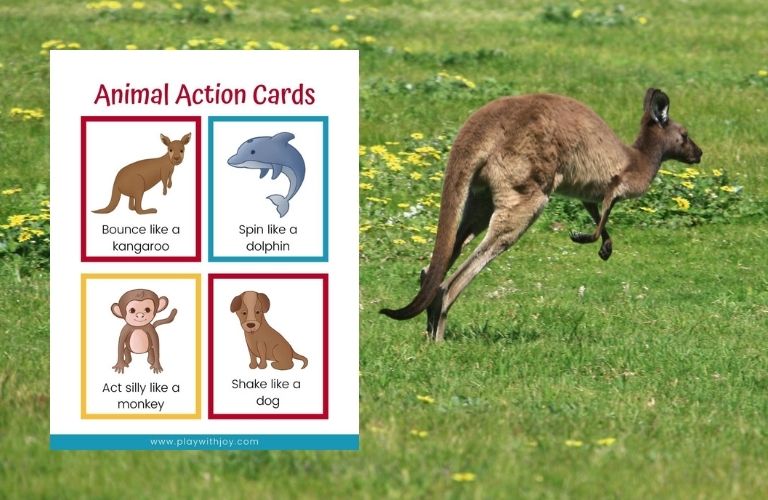
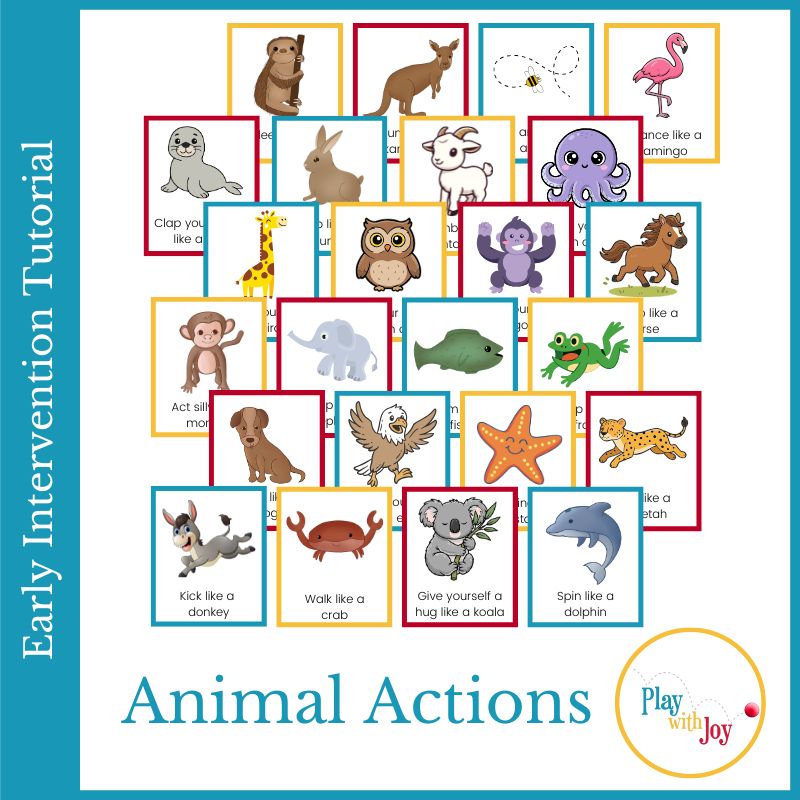
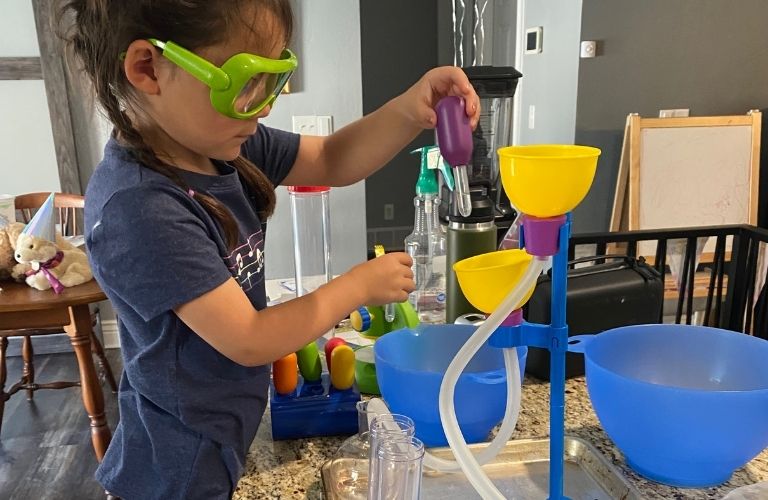
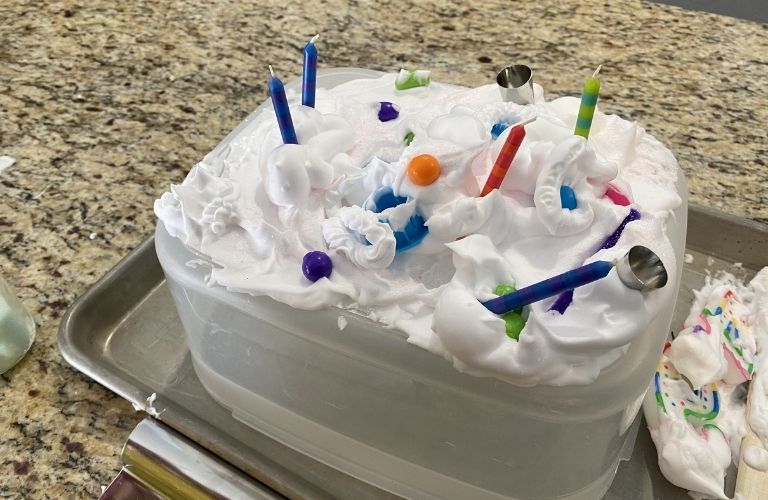
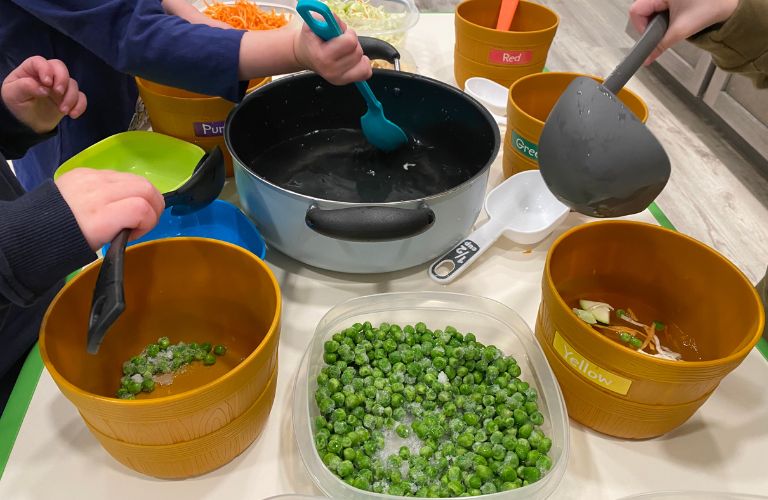
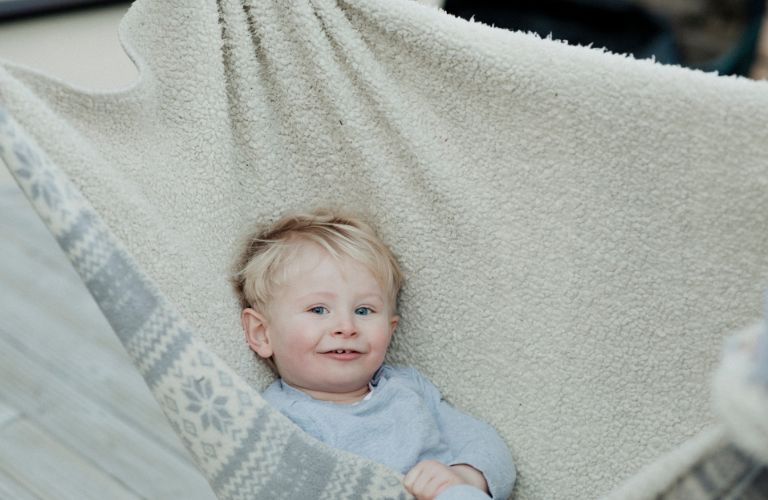
This is one of my favorite early intervention activities because it supports so many areas of child development all at once. It can help build language skills, cognitive skills, executive functioning, social skills, and motor development. In this post, I’m going to focus on perceptual motor skills, but I also want you to know how easily this simple activity can be adapted to support many other developmental skills through play.
Perceptual Motor Skills
Perceptual motor skills are how we coordinate our senses and motor skills to interact with the environment.
There are different areas of development within perceptual motor skills. The ones I’m going to focus on are
bilateral coordination (using both sides of the body together in one activity)
body awareness (knowing body parts and where they are in a defined space)
motor planning (being able to perform a sequence of movements to complete a task.)
Bilateral Coordination
You may find that you will naturally incorporate bilateral coordination into this activity. If you’re wanting to intentionally focus on bilateral coordination, then you can think about the different movements that involve both sides of the body and then get creative in what animal might do an action like that. Your kids won’t even know that’s what you’re working on.
Here are some examples:
Leap like a frog on a lily pad (crouch down to the ground an leap from pillow to pillow)
Talk about your body as you do this activity to bring greater body awareness. Make comparisons, for example, a dog has 4 legs, how many legs do you have? Asking questions and having a conversation will be for kids at FDLs 4-6. For kids that are not engaging in a lot of back and forth interactions, just label and model the language for them.
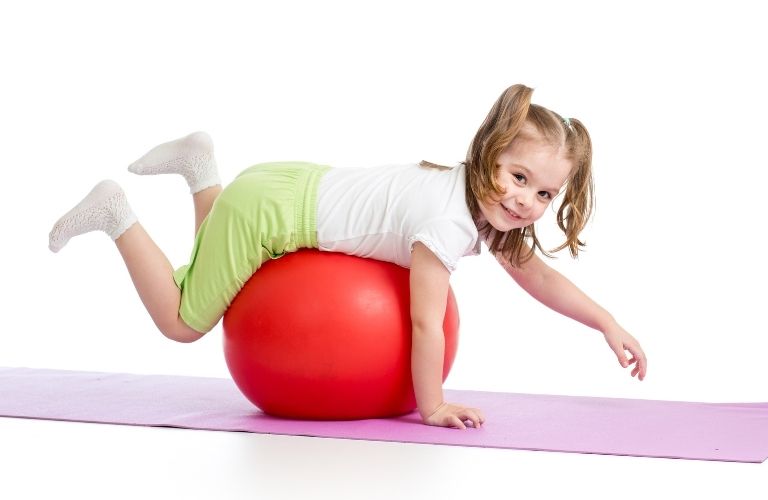
To bring more body awareness, when you give an instruction, focus on a specific body part. Here are some examples:
Kick your leg like a horse
Thump your chest like a gorilla
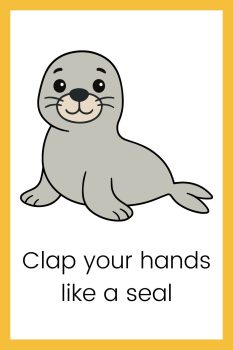
Clap your hands like a seal
Motor Planning
Motor planning is just a natural part of this activity as your child decides how he thinks each animal would move and then coordinating his body to move in that way.
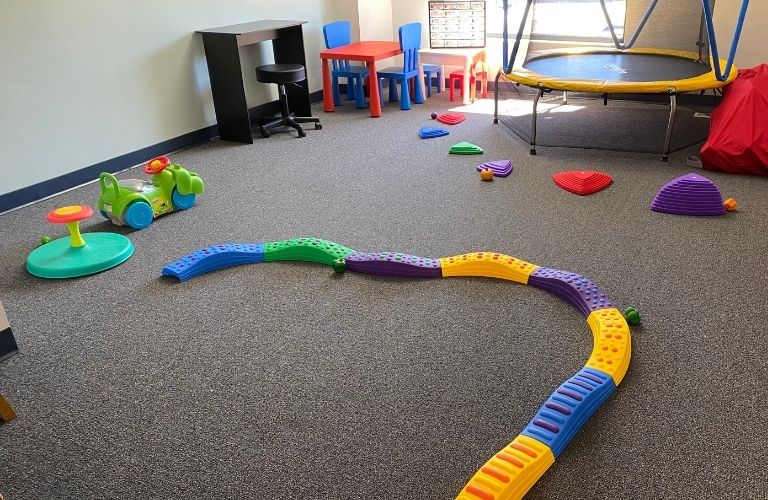
If you want an extra activity that will help with motor planning, you can create an obstacle course. Throughout the obstacle course you can add animal actions into it. Here are some examples:
Climb up the stairs like a mountain goat
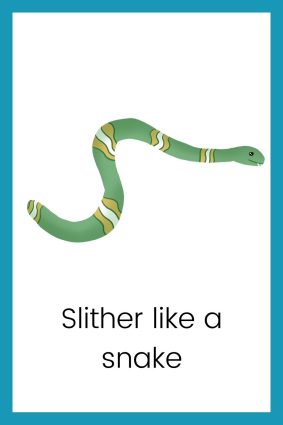
Slither across the kitchen like a snake in the desert
Burrow through a pile of pillows like a rabbit
I hope you’ll get creative and have fun with this activity. You can make it as simple or elaborate as you want! The best thing is that you can change it up as much as you and your child want to while working on so many different developmental skills.
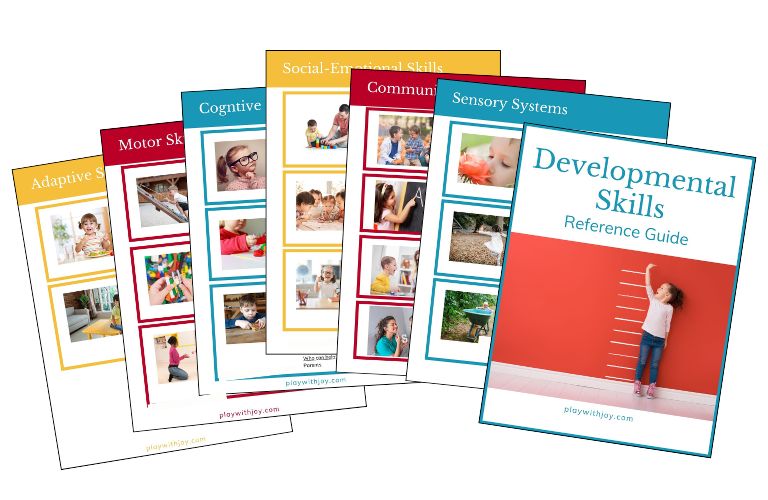
Get Your Free Developmental Skills Reference Guide
Parents, educators, and therapists – Add this to your toolbox to better understand key areas of child development. Plus get extra tips, activities and strategies to your inbox.
Unsubscribe at any time. See Privacy Policy for more details.