Early intervention is all about giving extra help and support to a child that has developmental delays. Every child is different and needs different supports. It’s important to be aware of where the child is developmentally so that you can help in the best way possible.
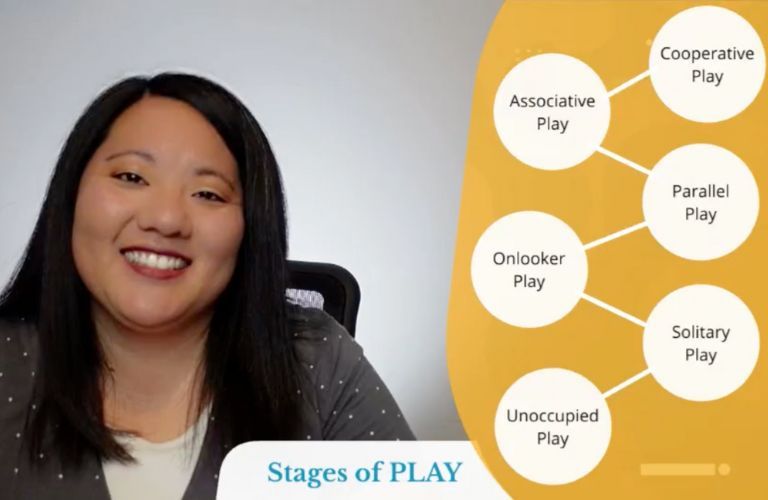
For today I’m going to primarily focus on kids that are participating in associative play and/or cooperative play.
You can obviously still play with a flashlight with kids who are at stages 1-4 of play, but the play will be different than what I’m going to focus on in this post. For ideas on how to do this activity with a child at stages 1-4, you can find more info in the Flashlight Games Tutorial.
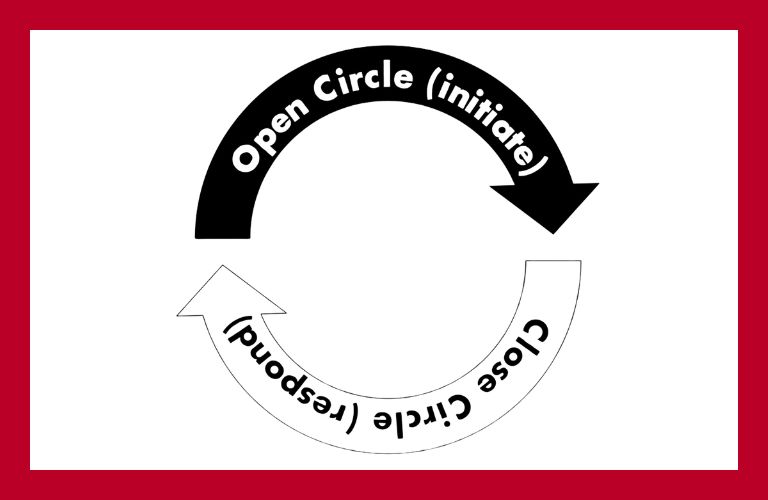
When a child is participating in associative and cooperative play, it generally means that the child is able to have continuous back and forth (circles of communication) interactions with others. They are also at a stage where they can follow some mutli-step directions, and are able to answer some questions.
Most of the activities I’ll be suggesting are on the premise that the child you’re playing with is able to do those things. It’s always important to make sure you’re playing at the right level if you want the most progress. If things are too easy or too difficult you won’t see as much growth.
The first game is a simple game of I-spy. I know that you may or may not live in the United States, and this may not be a familiar game, so I’m going to briefly explain it.
I-Spy
One person thinks about an object in the room and the others have to guess what it is
The first person will say “I spy with my little eye (or light in this game), something…(then the person gives one descriptive word. It could be a color, shape, size, texture, etc.)
Then the other person/people start making guesses by shining their light on objects in the room.
If your child is working on receptive language skills, this game is perfect. If your child is working on recognizing the color green, then make sure that when you play, you spy something green. Then your child has so many opportunities to identify green objects in the room by pointing to them in the room.
If your child is working on expressive language, this is also great. If your child is working on naming colors, then when it’s your child’s turn, you can take the opportunity to guess the wrong things and see if your child will tell you what color it is instead.
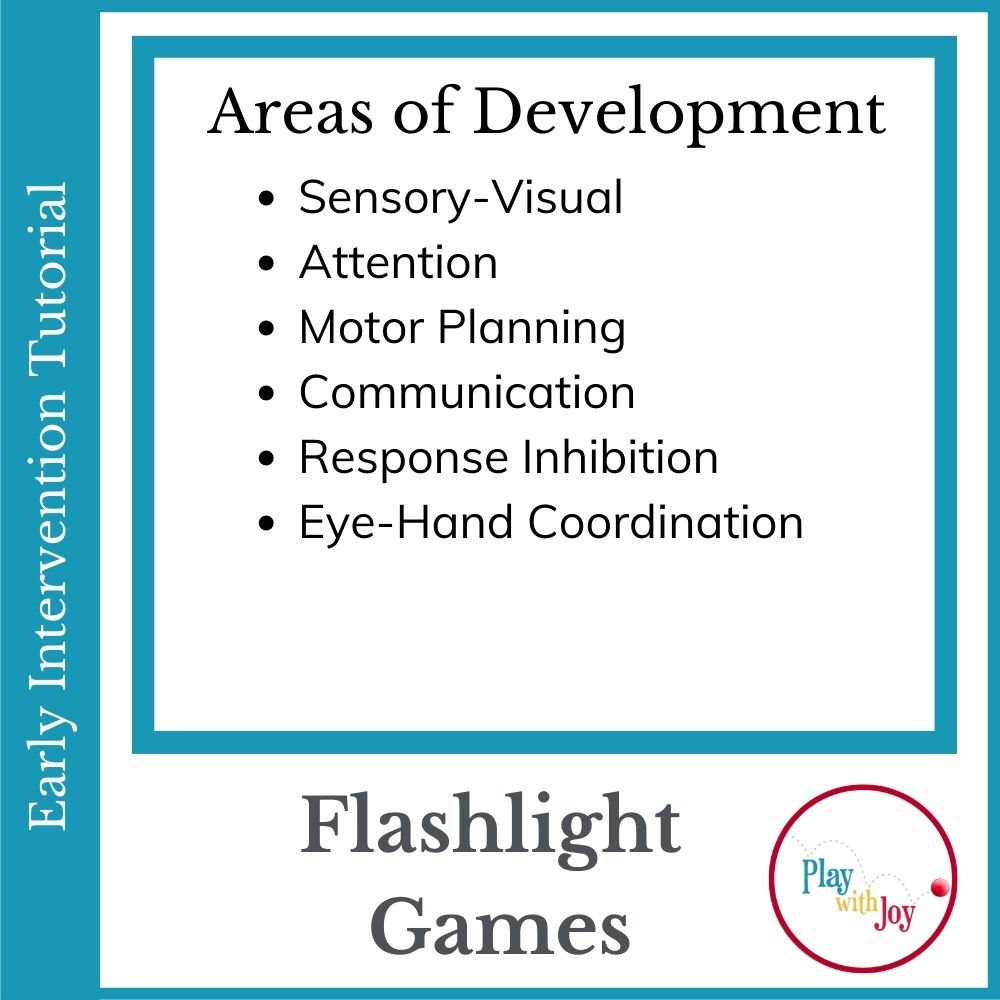
This game is also great for
eye-hand coordination
working memory
perception and concept
attention
Shine A Light Books
Another activity I wanted to share with you are these awesome books. They’re called Shine A Light Books. There are hidden pictures throughout the book that you have to shine a flashlight behind the page to discover what it is. Kids love it, and you can make it a fun interactive game as you read together. I’ll post links at the below so you can find them. These books are great for
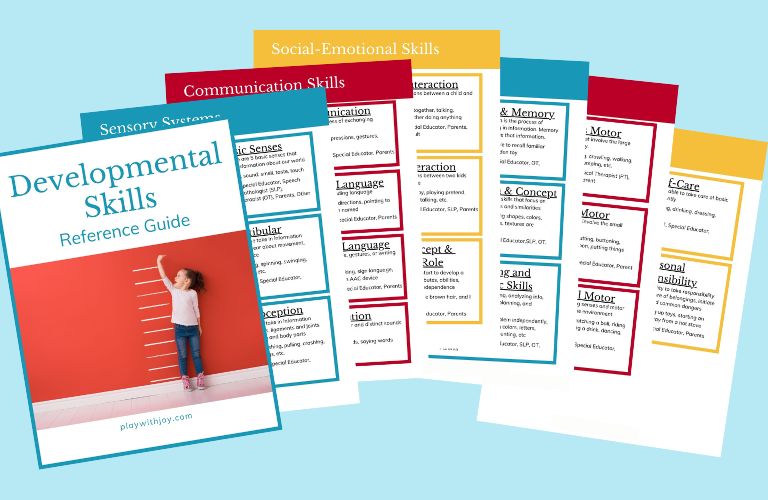
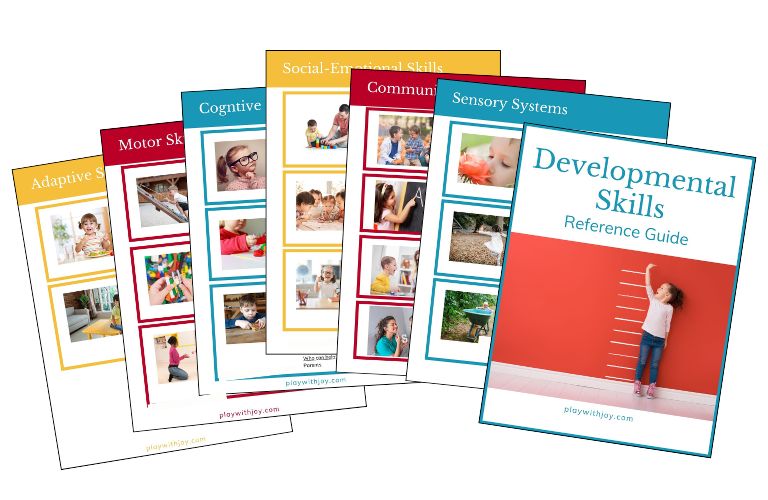
Get Your Free Developmental Skills Reference Guide
Parents, educators, and therapists – Add this to your toolbox to better understand key areas of child development. Plus get extra tips, activities and strategies to your inbox.
Unsubscribe at any time. See Privacy Policy for more details.