Rainbow Stew

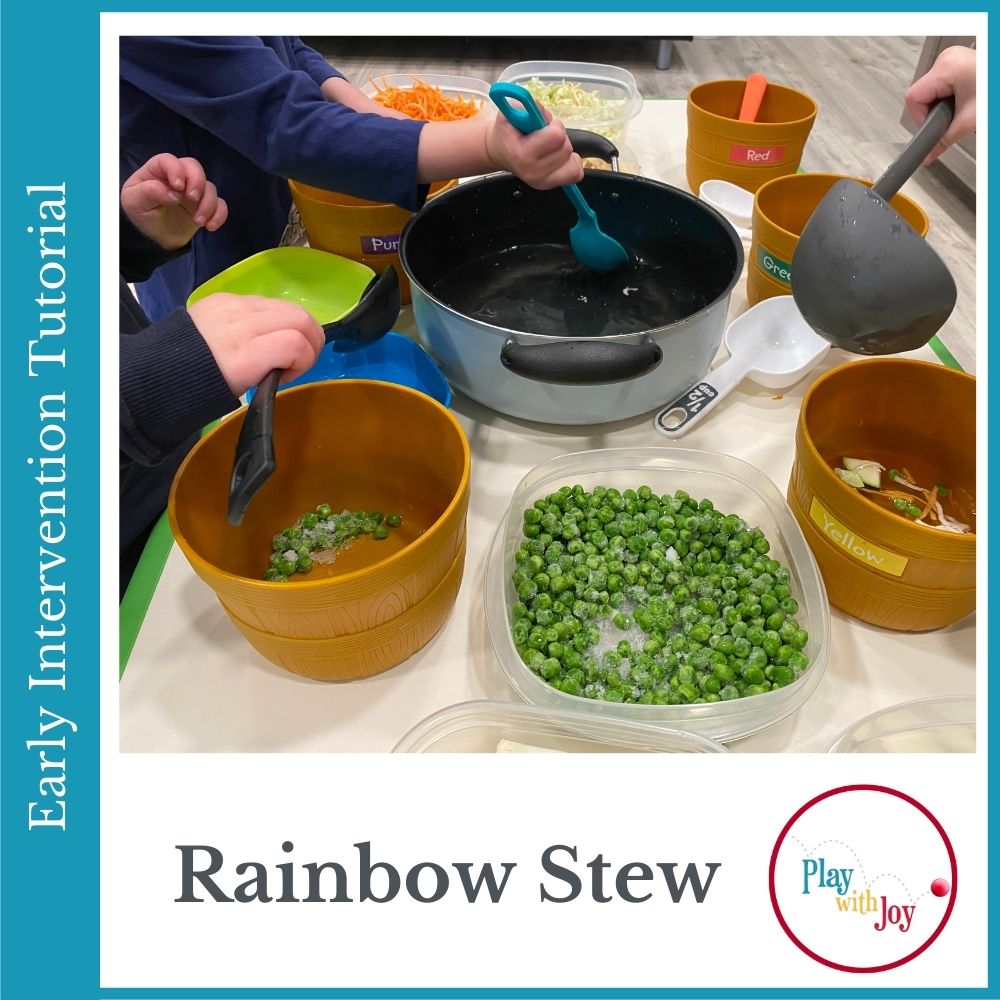
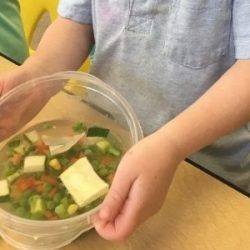
Rainbow Stew is a fun, no-pressure way to work on so many different skills like motor skills, social skills, sensory play and more!

Here are the things I like about this activity

  • You can make the book come alive (pre-literacy)
  • It’s a way to expose kids to different kinds of foods without putting pressure on them to eat it (especially for kids who have food aversions)
  • Kids can explore and create however they want to
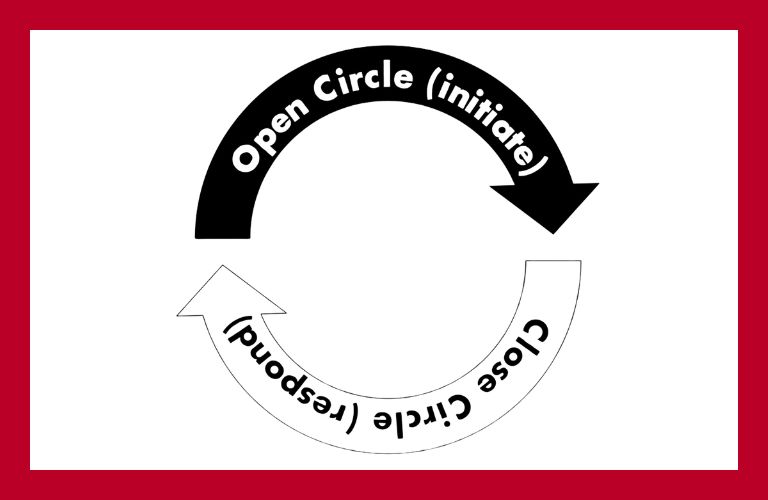
  • You can work on communication skills during this activity
  • You can do this as a group incorporating social skills
  • Fine motor is embedded
  • You can also target executive functioning skills, cognitive skills, and adaptive skills

The book I like to use with this activity is Rainbow Stew by Cathryn Falwell. It’s about some kids that get to spend the day with their grandfather. They go explore outside and pick foods from the garden. Then they get to make stew with all the colorful vegetables they picked.

The book can be a bit wordy, so when I’m working with younger kids or kids that have a difficult time attending for long periods of time, I just make up my own words. You can just label pictures, or say simple things like “I see something green. It’s a green zucchini. Let’s pick the zucchini for our stew.”

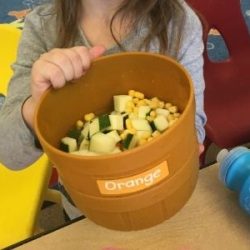
After reading the book you can either have the food ready for your child to create a stew, or you can go search for the food together. You can hide the food around and do it like an egg hunt, or you can just search in the fridge. If you have a garden, even better! 

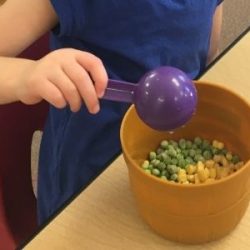
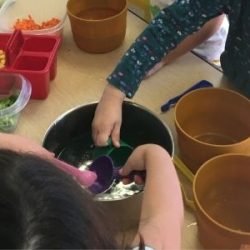
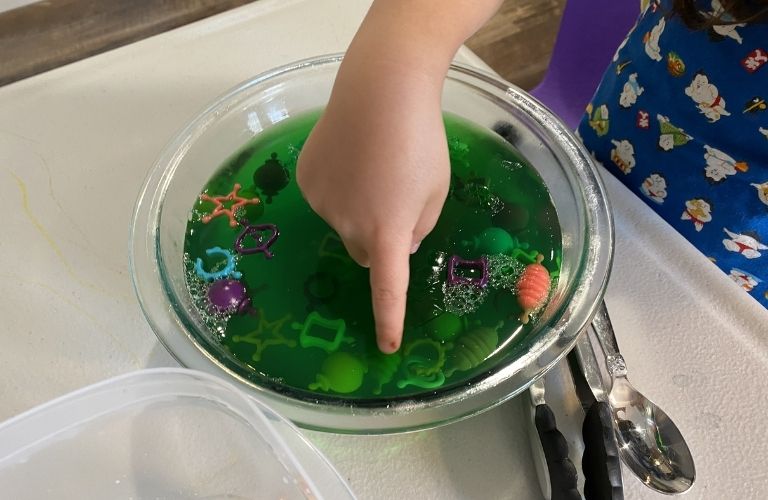
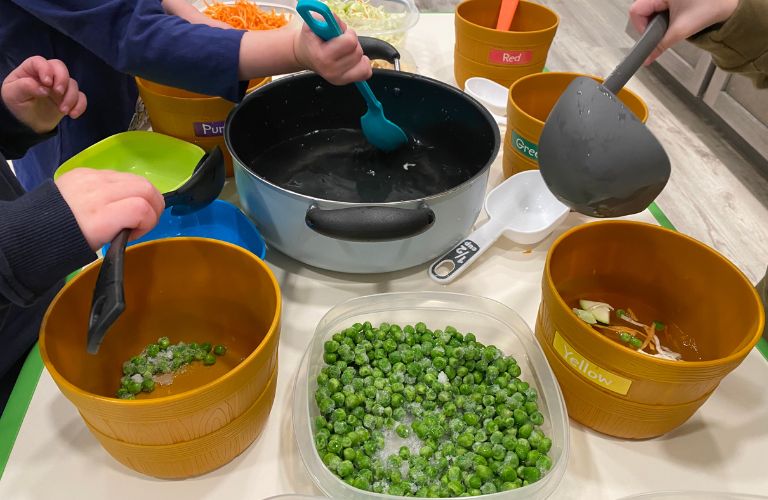
Scooping is fun (and great for fine motor), so put out a big bowl of water and some measuring cups for your child to do his own scooping.

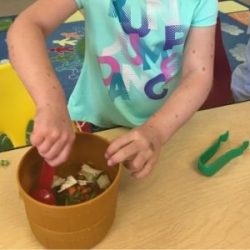
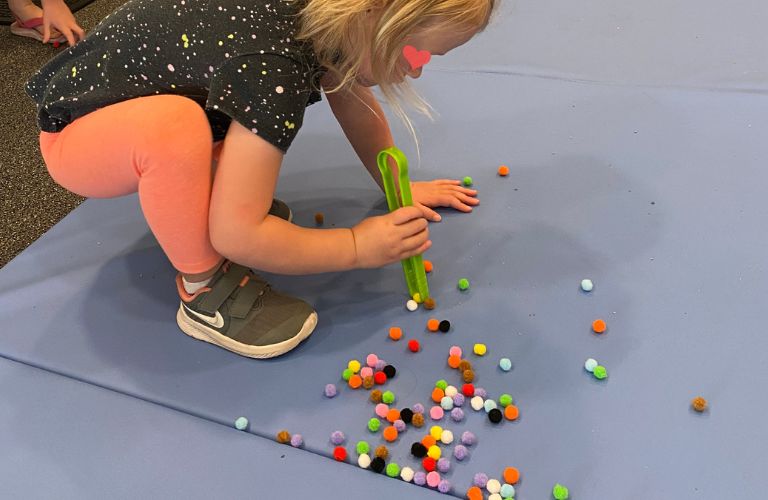
You can add some more fine motor by adding different types of utensils to use. You can get some kid tweezers (I’ll post a picture at the bottom so you know what I’m talking about), you can have different sized spoons, add some spices and measuring spoons. Get creative and allow your child to get creative too! That’s what’s so fun.

If you’re able to do this as a group activity, it’s really great for working on social skills. Here are a few skills you can work on.

  • Sharing (only have one container per food item for the kids to share)
  • Waiting for a turn
  • Offering a turn
  • Making a comment to a peer
  • Parallel play
  • Cooperative play
    • Act out the story, everyone takes a specific role
    • Play restaurant
    • Play house
    • Play school lunch
    • Play gardeners

When I do this with my preschool classes, they love it! It’s fun to see how proud they are when they create their very own stew.

Rainbow Stew Tutorial

Once you purchase the Rainbow Stew Tutorial, you will have full access to all the content below this section.
This activity is great for kids at an FDL of: 1-6

The Functional Developmental Levels (FDL) are based on The PLAY Project and DIR/Floortime

  • FDL 1: Self Regulation & Shared Attention
  • FDL 2: Engagement & Relating
  • FDL 3: Intentionality & Two-Way Communication
  • FDL 4: Social Problem-Solving & Mood Regulation
  • FDL 5: Creating Symbols & Using Words & Ideas
  • FDL 6: Emotional Thinking, Logic & Sense of Reality

This activity is great for kids primarily participating in stages: 1-6

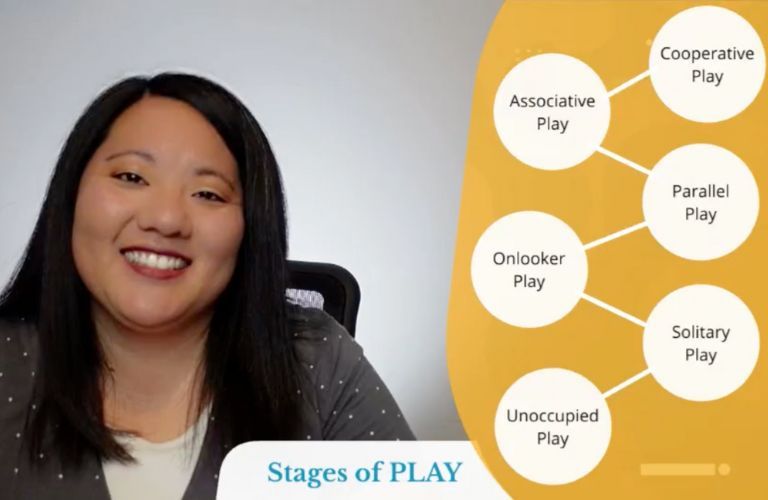
The Stages of Play come from Parten’s Stages of Social Play.

  • Stage 1: Unoccupied Play
  • Stage 2: Solitary Play
  • Stage 3: Onlooker Play
  • Stage 4: Parallel Play
  • Stage 5: Associative Play
  • Stage 6: Cooperative Play

This activity includes: olfactory, oral, tactile

Our senses include more than the usual 5 senses. Some kids may seek certain types of sensory input and/or avoid other types.

  • Visual: Sight
  • Auditory: Sound
  • Olfactory: Smell
  • Oral: Taste (Gustatory) and using the mouth to speak, make sounds, eat, chew, drink, etc.
  • Tactile: Touch
  • Vestibular: How we process information about movement, gravity, and balance. We receive this information through the inner ear.
  • Proprioceptive: How we process information about body position and body parts. We receive this information through our muscles, ligaments, and joints.

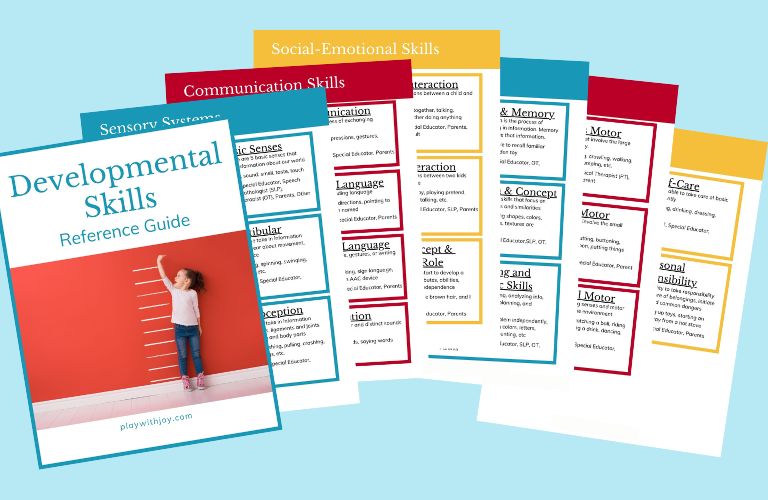
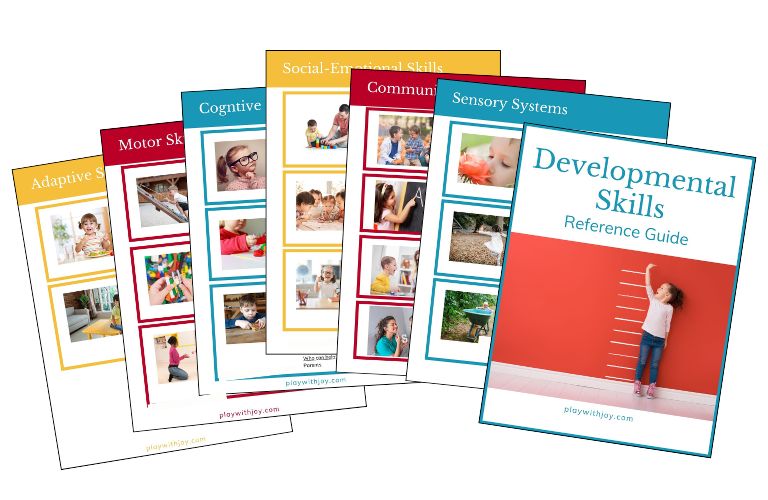
This activity is good for targeting the following developmental skills: communication, cognitive, executive functioning, motor, social, and adaptive

These are the main areas of child development addressed in the Early Intervention Tutorials

  • Communication: receptive language, expressive language, listening, two-way communication
  • Cognitive skills: cause & effect, literacy, math, science, problem solving, perception and concept
  • Executive functioning: emotional control, flexibility, perseverance, self-monitoring, organization, planning, response inhibition, attention, task initiation, time management, working memory
  • Motor skills: fine motor, gross motor, perceptual motor
  • Social-emotional skills: peer interaction, self concept & social role, pretend play, behavior, group activities
  • Adaptive skills: self-care, personal responsibility

Ingredient Ideas

  • Chopped carrots
  • Chopped peppers
  • Chopped celery
  • Frozen peas
  • Frozen corn
  • Seasonings
  • Bowls
  • Spoons
  • Water

Instructions

  • Chop a variety of veggies and put them in individual containers
  • Set out a bowl of water with a ladle or large spoon
  • Set out seasonings
  • Give your child a small mixing bowl or a small pot to make their stew
  • Allow your child to explore and create his own rainbow stew
  • Disclaimer: Young children may choke on small pieces, make sure food is cut small. Adult supervision recommended.

Links

As an Amazon affiliate, I earn from qualifying purchases at no cost to you.

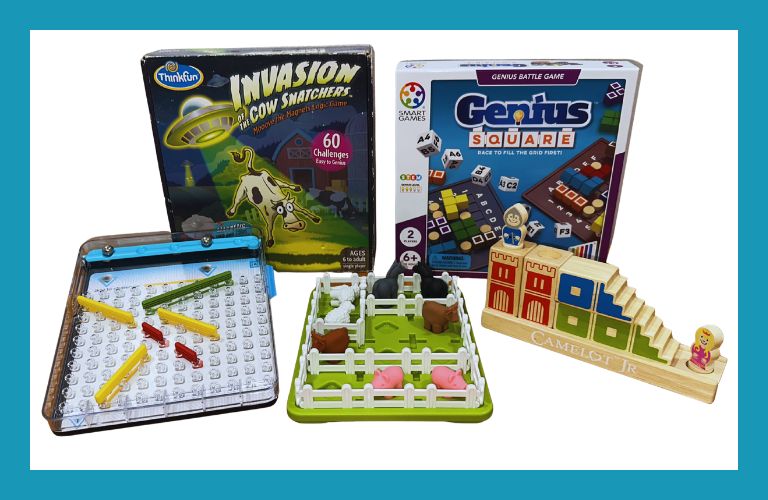
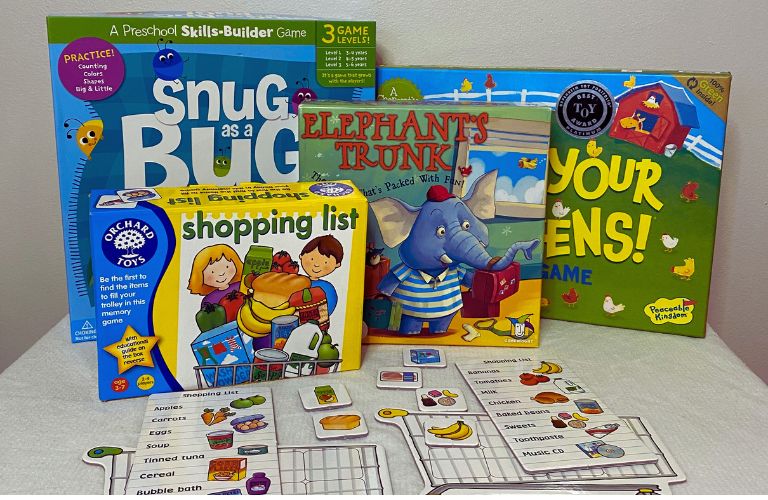
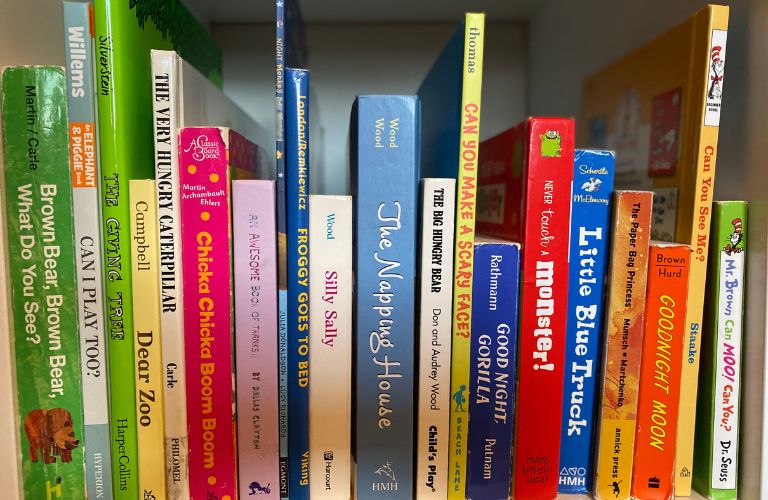
Here are just a few ideas of what you could use for this activity. Most things like bowls, measuring cups, spoons, and spices you’ll likely have around the house.

Extra Tips & Ideas

Adapting to Different Stages of Play

Developmental Skills

In this section, I will give you specific examples of what you can do in this activity to address specific areas of development.

Communication skills

Cognitive skills

Executive Functioning skills

Motor Skills

Social Skills

Adaptive Skills

More Blog Posts

Leave a Reply

Your email address will not be published. Required fields are marked *

Login to access your content