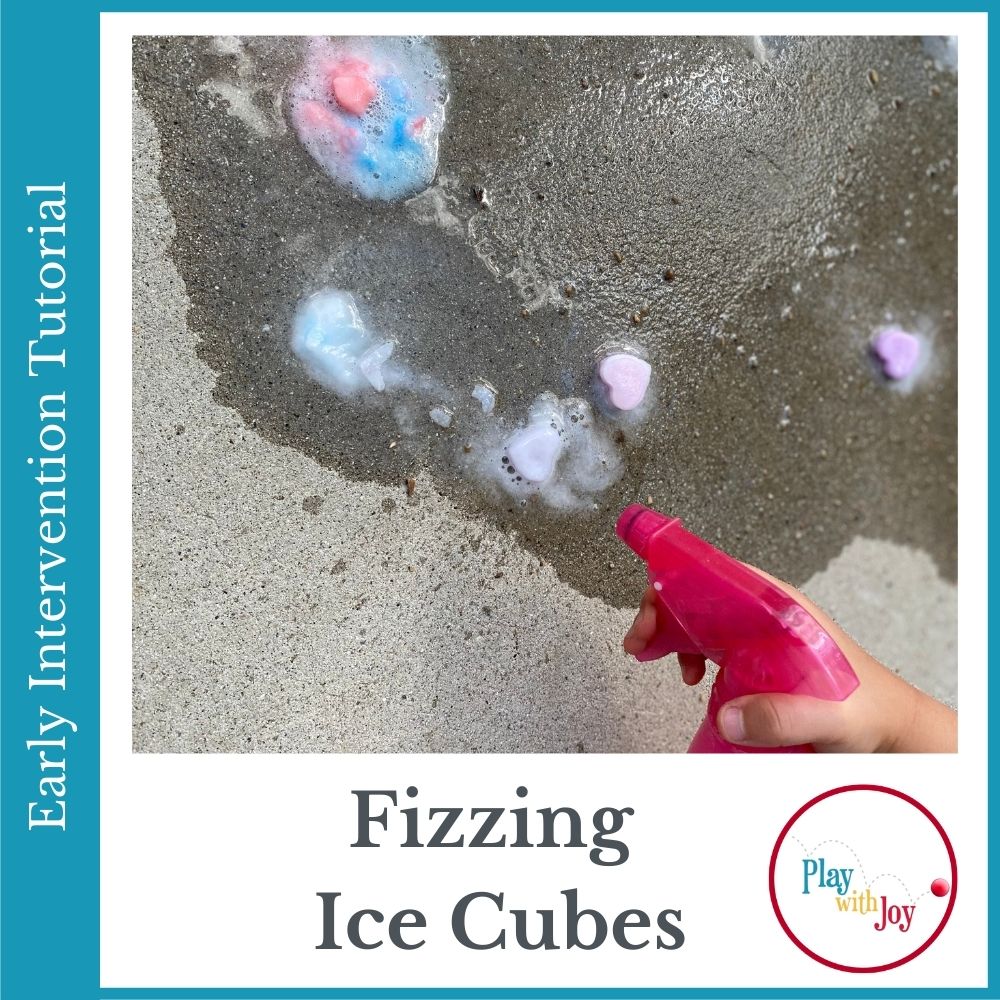
Fizzing ice cubes makes for a great preschool science activity, but in this post I want to talk about using this science activity for eye-hand coordination. If you want more information on how to adapt this to different developmental skills, check out the Fizzing Ice Cubes Tutorial.
I love activities that can be adapted to target a variety of skills. You can use this activity for cause and effect, color recognition, counting, language skills, fine motor skills, literacy and more!
This is a great activity to pair with academics because it’s highly motivating. Kids love spraying spray bottles, and watching things fizz.
So, let’s talk about eye-hand coordination. When I think about eye-hand coordination often times I immediately think about sports. Baseball, basketball, football, soccer, tennis, golf, they all take a great amount of eye-hand coordination.
What if a child isn’t interested in sports, and may never be interested? Does it really matter? That’s a definite yes.
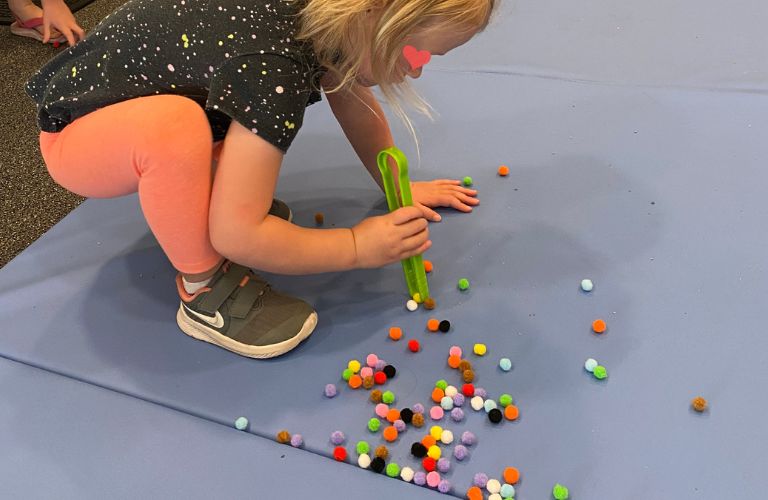
Eye-hand coordination involves so many things. Think about the things you do on a daily basis that require good eye-hand coordination. That means everything you do that you use your hands and your sight for. Eating, brushing your teeth, tying your shoes, writing your to-do list, unlocking the door, putting on your seatbelt, driving, zipping your coat. So many things.
For some kids the coordination of using your vision and hands at the same time comes pretty naturally. For others it’s something that they may need some extra help with.
If it doesn’t come natural, it may not be fun and easy either. So, finding motivating activities to help your child is important. If you can’t keep your child engaged, it can be hard to target the skill needed.
Now that being said, this activity will obviously be very engaging for some kids and not at all for others. It’s the same for every other activity.
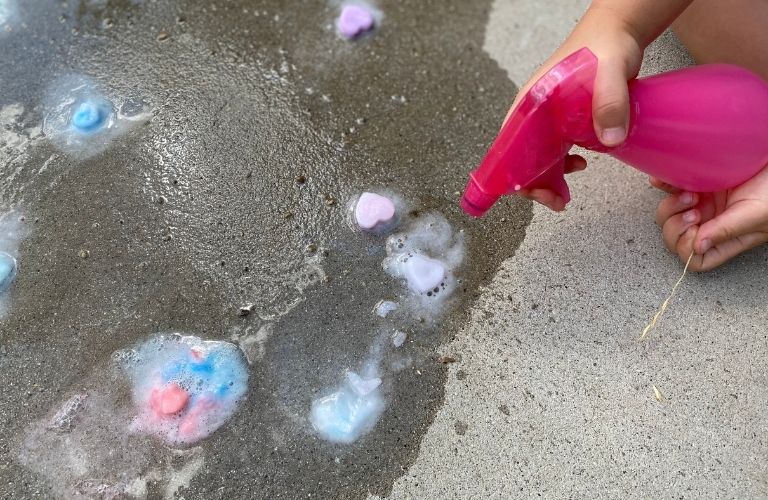
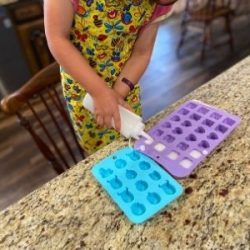
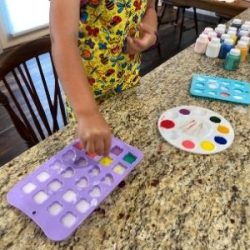
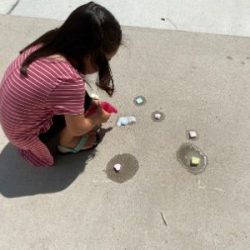
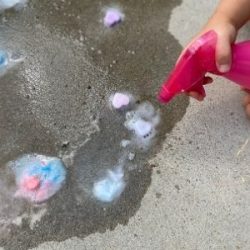
Try it out, adjust it, and just have fun with it. As your child works on squirting the spray bottle to hit the ice cubes and watch them fizz, they won’t even know they’re working. That’s the beauty of play, even though it’s child’s work, it doesn’t feel like work at all.
The Functional Developmental Levels (FDL) are based on The PLAY Project and DIR/Floortime
FDL 1: Self Regulation & Shared Attention
FDL 2: Engagement & Relating
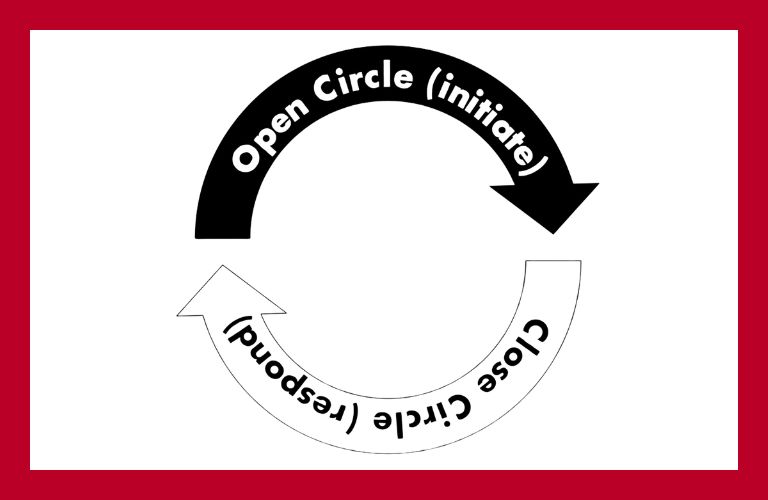
FDL 3: Intentionality & Two-Way Communication
FDL 4: Social Problem-Solving & Mood Regulation
FDL 5: Creating Symbols & Using Words & Ideas
FDL 6: Emotional Thinking, Logic & Sense of Reality
Stages of Play: 1-6
This activity is great for kids primarily participating in stages: 1-6
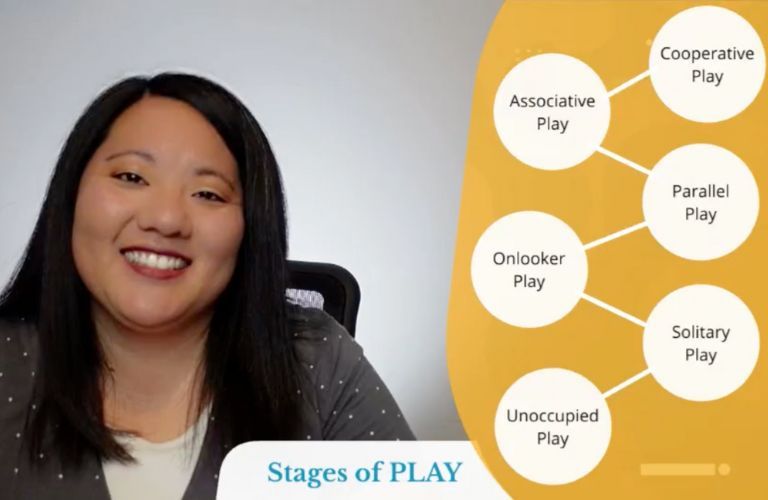
The Stages of Play come from Parten’s Stages of Social Play.
Stage 1: Unoccupied Play
Stage 2: Solitary Play
Stage 3: Onlooker Play
Stage 4: Parallel Play
Stage 5: Associative Play
Stage 6: Cooperative Play
Sensory Input: Visual, Auditory, Tactile
This activity includes: visual, auditory, tactile
Our senses include more than the usual 5 senses. Some kids may seek certain types of sensory input and/or avoid other types.
Visual: Sight
Auditory: Sound
Olfactory: Smell
Oral: Taste (Gustatory) and using the mouth to speak, make sounds, eat, chew, drink, etc.
Tactile: Touch
Vestibular: How we process information about movement, gravity, and balance. We receive this information through the inner ear.
Proprioceptive: How we process information about body position and body parts. We receive this information through our muscles, ligaments, and joints.
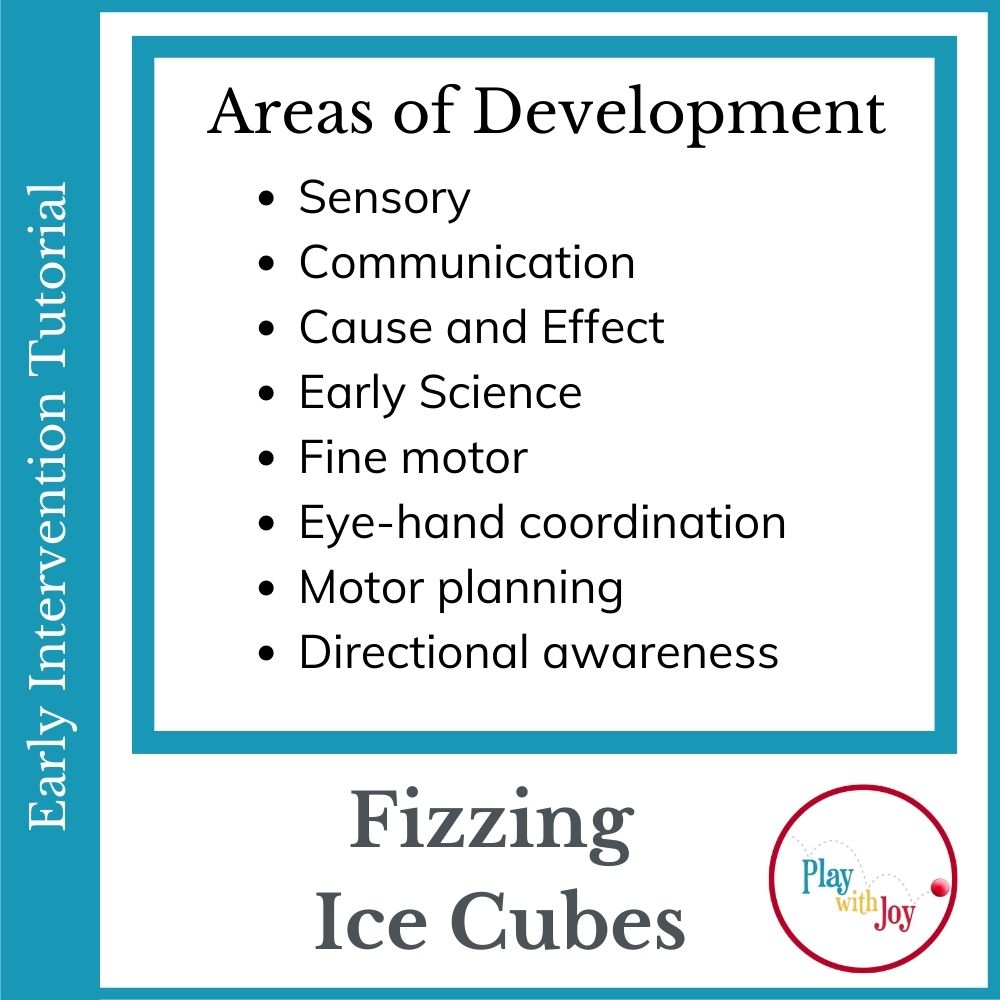
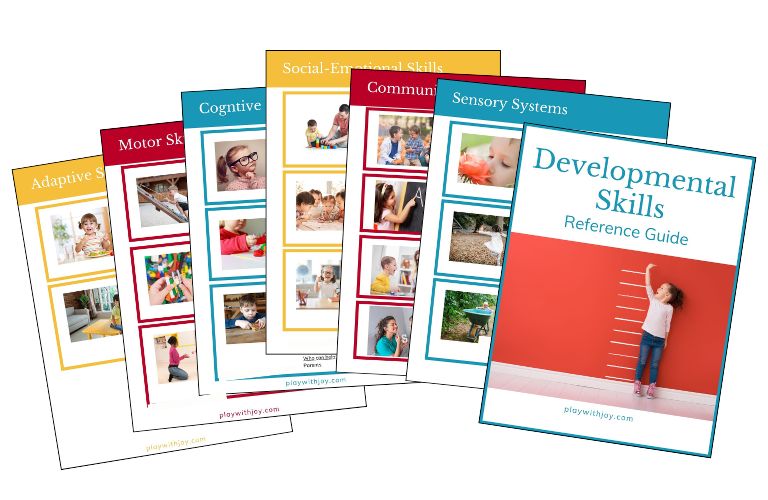
Areas of Development: Communication, Cognitive, Motor
This activity is good for targeting the following developmental skills: communication, cognitive, motor
These are the main areas of child development addressed in the Early Intervention Tutorials
Communication: receptive language, expressive language, listening, two-way communication
Cognitive skills: cause & effect, literacy, math, science, problem solving, perception and concept
Executive functioning: emotional control, flexibility, perseverance, self-monitoring, organization, planning, response inhibition, attention, task initiation, time management, working memory
Motor skills: fine motor, gross motor, perceptual motor
Social-emotional skills: peer interaction, self concept & social role, pretend play, behavior, group activities
Adaptive skills: self-care, personal responsibility
Supplies
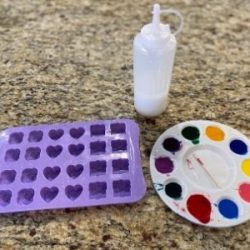
Ice cube tray
Vinegar
Baking Soda
Washable Paint or Food Coloring
Water
Spray Bottle
Instructions
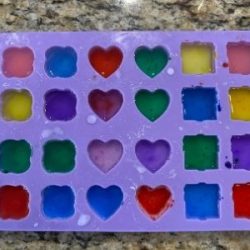
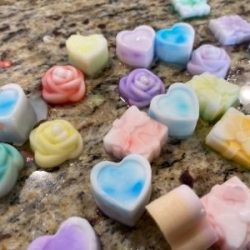
Combine equal parts baking soda and water. Add washable paint or food coloring. Mix well (If you like multiple colors, then add the coloring after you put the baking soda mixture in the ice cube tray. Having only one colors saves a lot of time though)
Pour mixture into ice cube tray
Freeze
Pour vinegar into a spray bottle. You may dilute it with water 50% if you’d like
When the ice cubes are frozen, put them somewhere you don’t mind getting messy (i.e., outside, on a plastic covering, or in a bin)
Spray the ice cubes and see what happens
Links
As an Amazon affiliate, I earn from qualifying purchases at no cost to you.
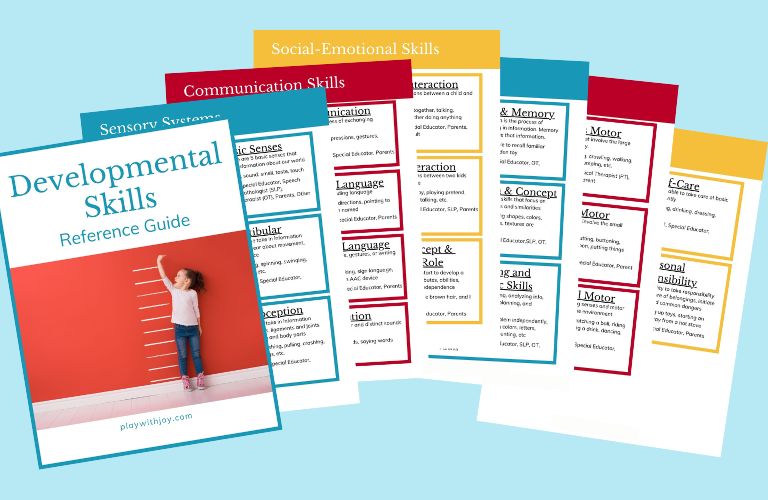
Get Your Free Developmental Skills Reference Guide
Parents, educators, and therapists – Add this to your toolbox to better understand key areas of child development. Plus get extra tips, activities and strategies to your inbox.
Unsubscribe at any time. See Privacy Policy for more details.