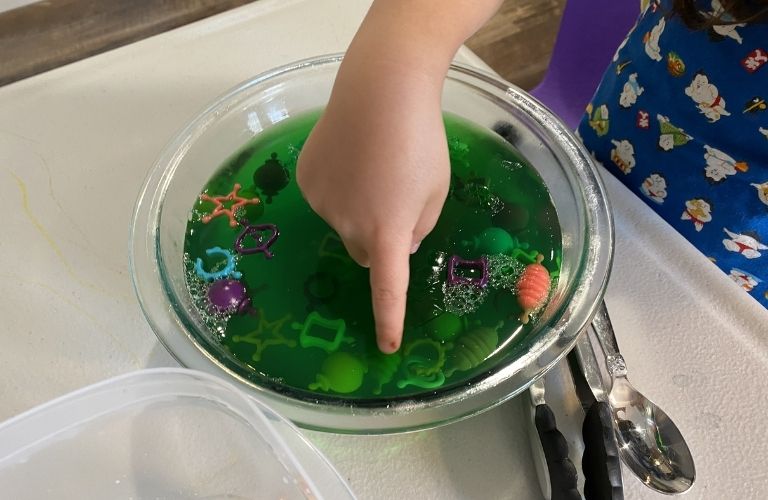
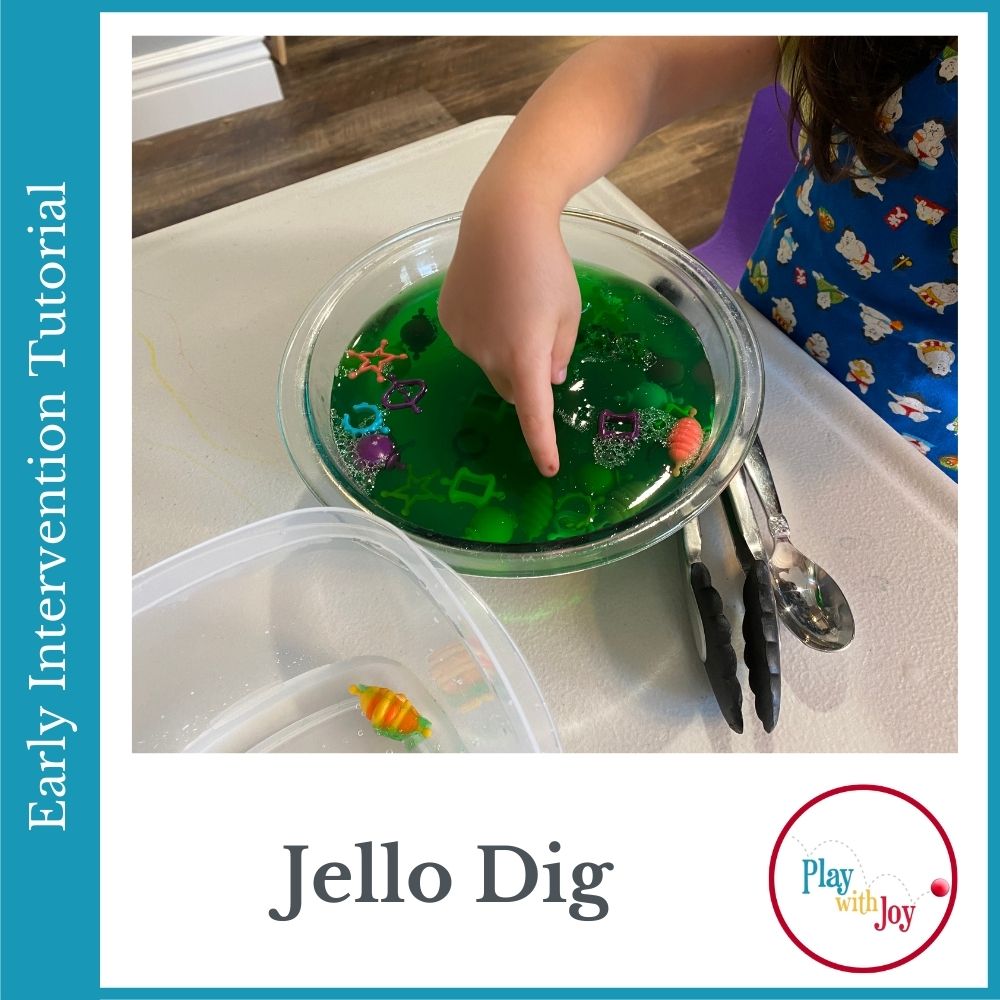
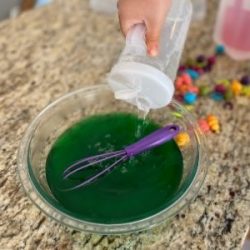
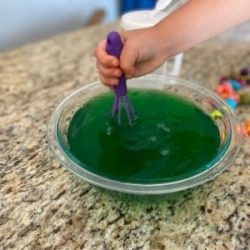
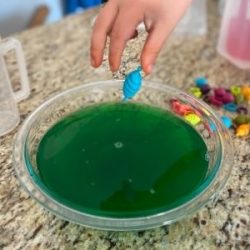
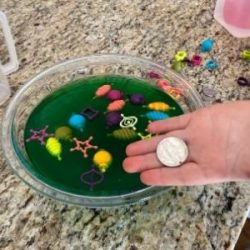
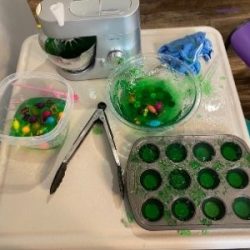
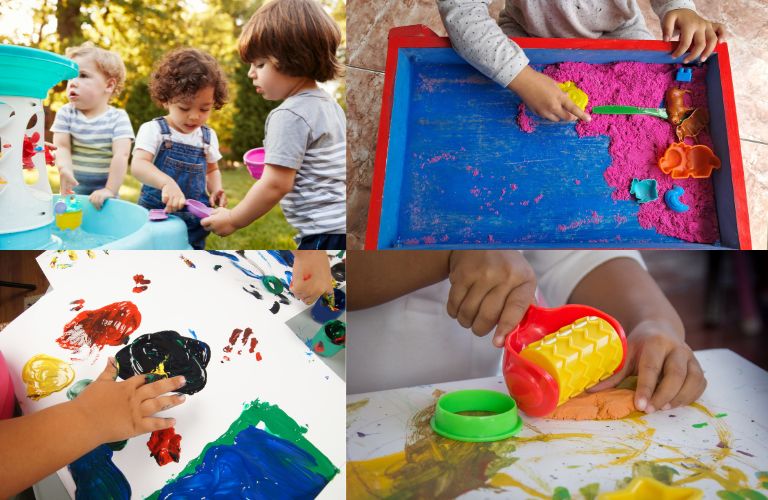
If you have a child that enjoys touching slimy textures, is working on fine motor skills, and likes to make a mess, this activity is for you!
I did this activity with my class of 2-year-olds, I also did it with my daughter who was 4 at the time, and it was a hit. This is one of those activities that can turn into multiple activities.
Here are just some ideas you can use to create multiple activities from one main activity.
Go on a treasure hunt looking for objects you can put in the jello.
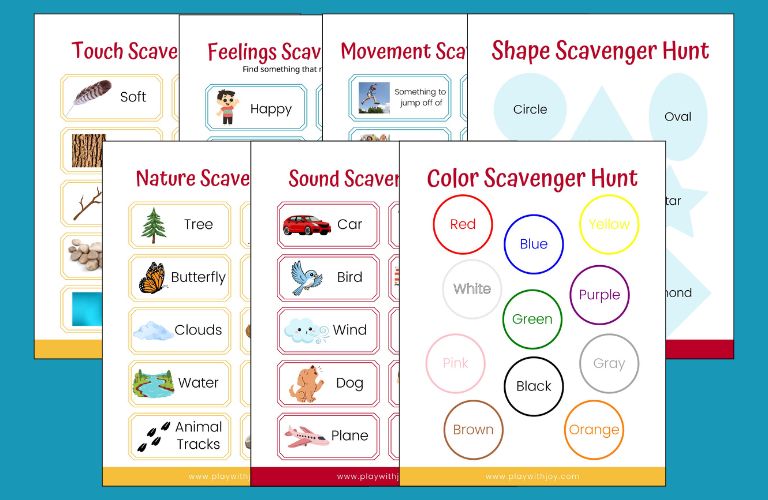
Make a list of colors and find objects that are those colors
Make a picture list and find the matching object
Find objects of different sizes and compare them
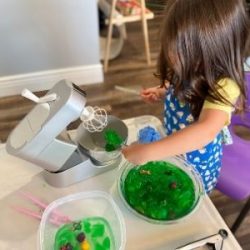
Make the jello together
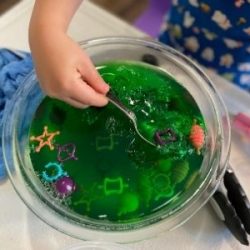
Do the jello dig
Fill the sink with soapy water, get a washcloth and wash all the objects after the jello dig
You can adapt this activity to include more fine motor experiences, which is good for all young kids to work on.
What are fine motor skills? Fine motor skills are the skills that involve the small muscles of the body. In this activity, that means using the muscles your fingers. Fine motor skills are essential for so many different activities including writing, cutting, zipping, tying, feeding, etc.
Here’s how you can add a little extra fine motor exploration in this activity.
Use small objects (make sure they’re safe for your child’s age and development)
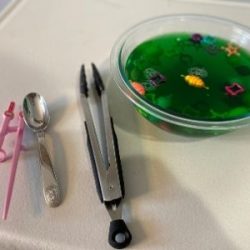
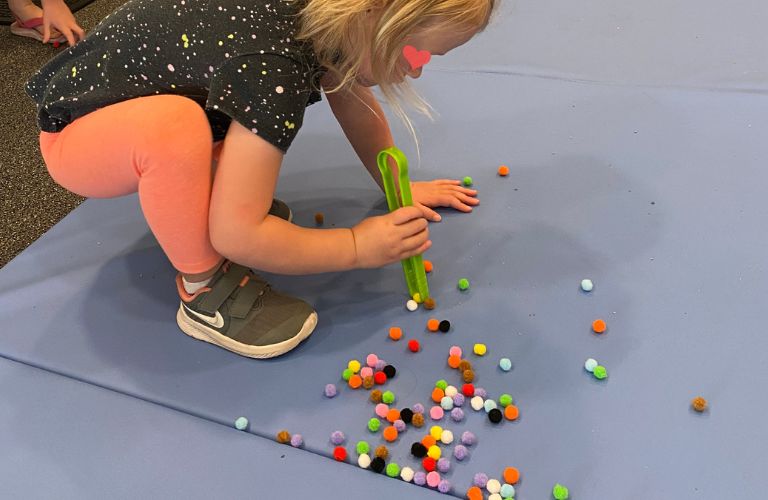
Use different utensils
Different sized spoons
Tongs
Tweezers
Put coins in (if it’s safe for your child), get an old container and put a hole in it for your child to put the coins in after they find them in the jello
The Functional Developmental Levels (FDL) are based on The PLAY Project and DIR/Floortime
FDL 1: Self Regulation & Shared Attention
FDL 2: Engagement & Relating
FDL 3: Intentionality & Two-Way Communication
FDL 4: Social Problem-Solving & Mood Regulation
FDL 5: Creating Symbols & Using Words & Ideas
FDL 6: Emotional Thinking, Logic & Sense of Reality
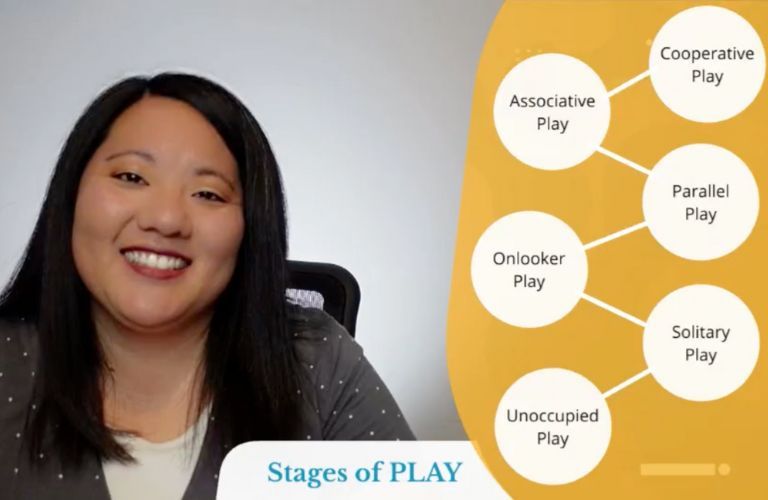
Stages of Play: 1-6
This activity is great for kids primarily participating in stages: 1-6
The Stages of Play come from Parten’s Stages of Social Play.
Stage 1: Unoccupied Play
Stage 2: Solitary Play
Stage 3: Onlooker Play
Stage 4: Parallel Play
Stage 5: Associative Play
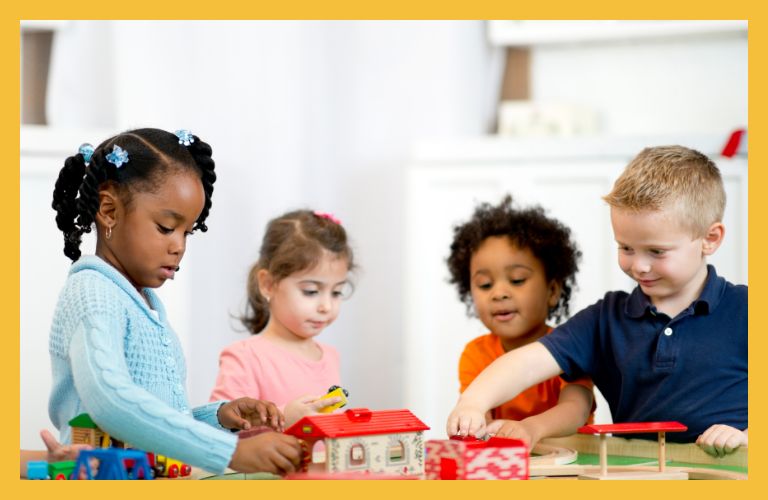
Stage 6: Cooperative Play
Sensory Input: Visual, Tactile, Olfactory
This activity includes: visual, tactile, olfactory
Our senses include more than the usual 5 senses. Some kids may seek certain types of sensory input and/or avoid other types.
Visual: Sight
Auditory: Sound
Olfactory: Smell
Oral: Taste (Gustatory) and using the mouth to speak, make sounds, eat, chew, drink, etc.
Tactile: Touch
Vestibular: How we process information about movement, gravity, and balance. We receive this information through the inner ear.
Proprioceptive: How we process information about body position and body parts. We receive this information through our muscles, ligaments, and joints.
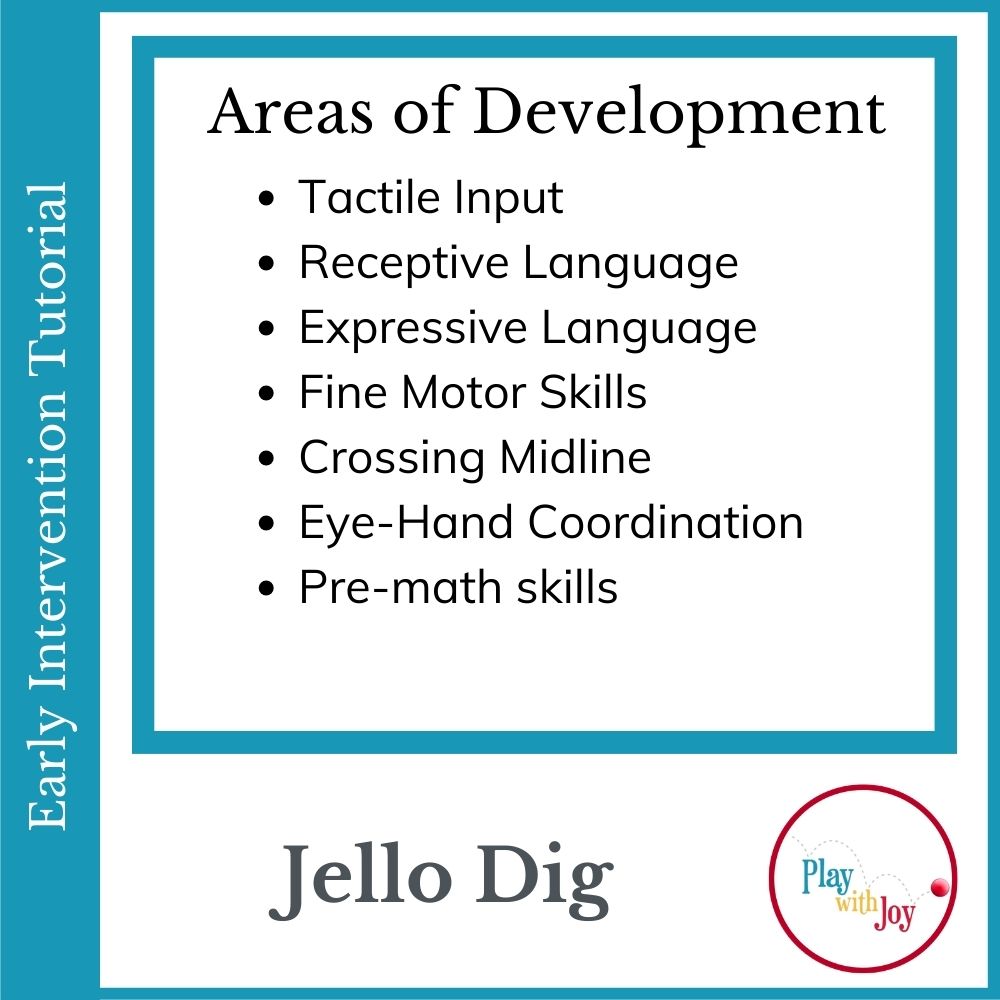
Areas of Development: Communication, Cognitive, Motor
This activity is good for targeting the following developmental skills: communication, cognitive, motor
These are the main areas of child development addressed in the Early Intervention Tutorials
Communication: receptive language, expressive language, listening, two-way communication
Cognitive skills: cause & effect, literacy, math, science, problem solving, perception and concept
Executive functioning: emotional control, flexibility, perseverance, self-monitoring, organization, planning, response inhibition, attention, task initiation, time management, working memory
Motor skills: fine motor, gross motor, perceptual motor
Social-emotional skills: peer interaction, self concept & social role, pretend play, behavior, group activities
Adaptive skills: self-care, personal responsibility
Supplies
3-4 packs of jello
Small toys or objects
bowl
spoon
Instructions
Follow the directions on the pack of Jello
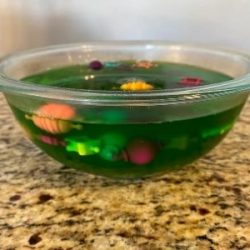
Add small toys/objects in the jello while it is a liquid. Depending on how deep your dish is, you may want to do the jello in layers to disperse the toys.
make all of the jello
put half of the jello and toys in the bowl
refrigerate and let set.
leave the rest of the jello out of the fridge
when the jello in the fridge is set, add the rest of the jello and toys
put it back in the fridge
When the jello has set, give your child a spoon and let him dig for the items
Disclaimer: Young children may choke on small objects, choose objects that will be appropriate for your child. Adult supervision is recommended.
Links
As an Amazon affiliate, I earn from qualifying purchases at no cost to you.
Jumbo Tweezers-You’ll see that I recommend these a lot. It’s because you can use them with a lot of different activities, and they’re great for fine motor. Plus, kids think they’re fun.
Measuring Worms-These would be fun to use with the tweezers. You can hide them in the jello. Any manipulatives will do.
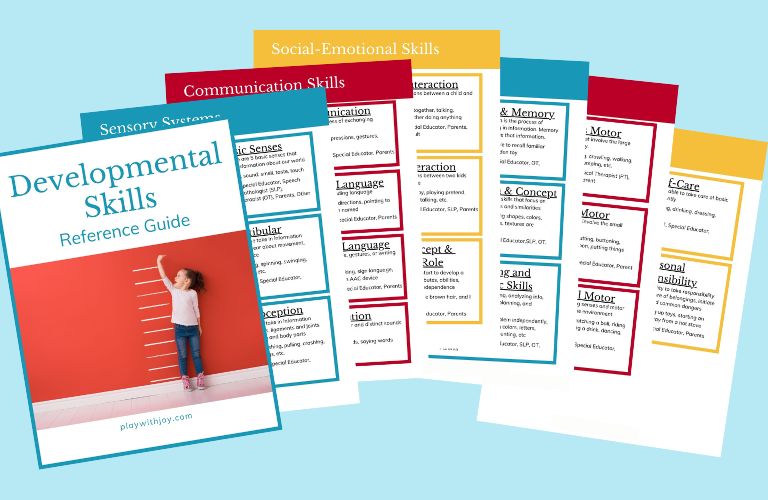
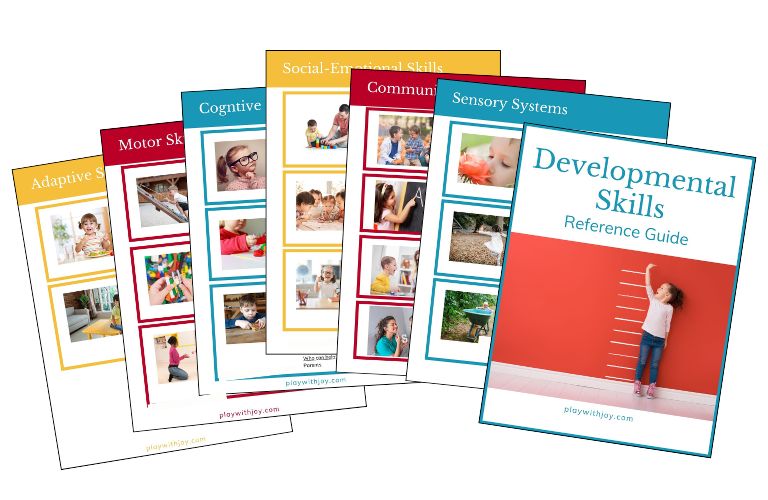
Get Your Free Developmental Skills Reference Guide
Parents, educators, and therapists – Add this to your toolbox to better understand key areas of child development. Plus get extra tips, activities and strategies to your inbox.
Unsubscribe at any time. See Privacy Policy for more details.