Preschool Music

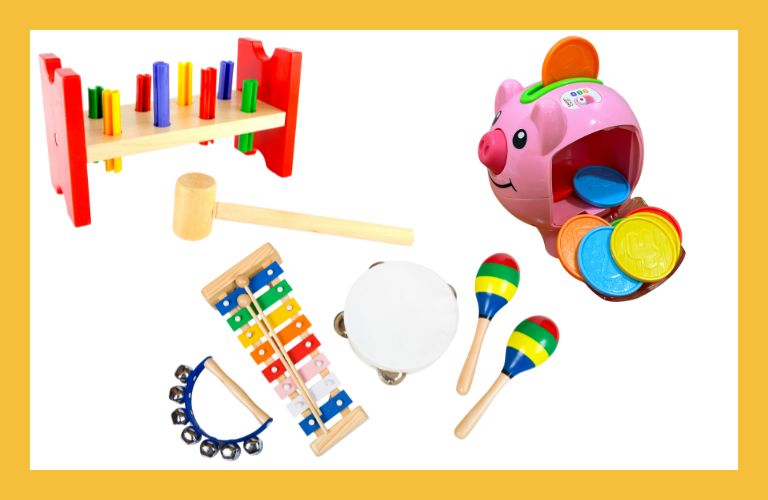
Music is a powerful tool that helps many of us teach young kids all kinds of skills. You can teach colors, shapes, numbers, ABCs, social skills, language, motor skills, etc. all through music.

Whether you’re a parent, caregiver, therapist, or early childhood educator, incorporating simple songs, rhythms and movement can boost skills across multiple areas in a fun, low-pressure way.

Research shows that music engages the brain in unique ways. It lights up both hemispheres, stimulates multiple senses, and makes learning feel like play. Children often respond positively—even those who are hard to engage—because music is motivating, calming, and naturally repetitive.
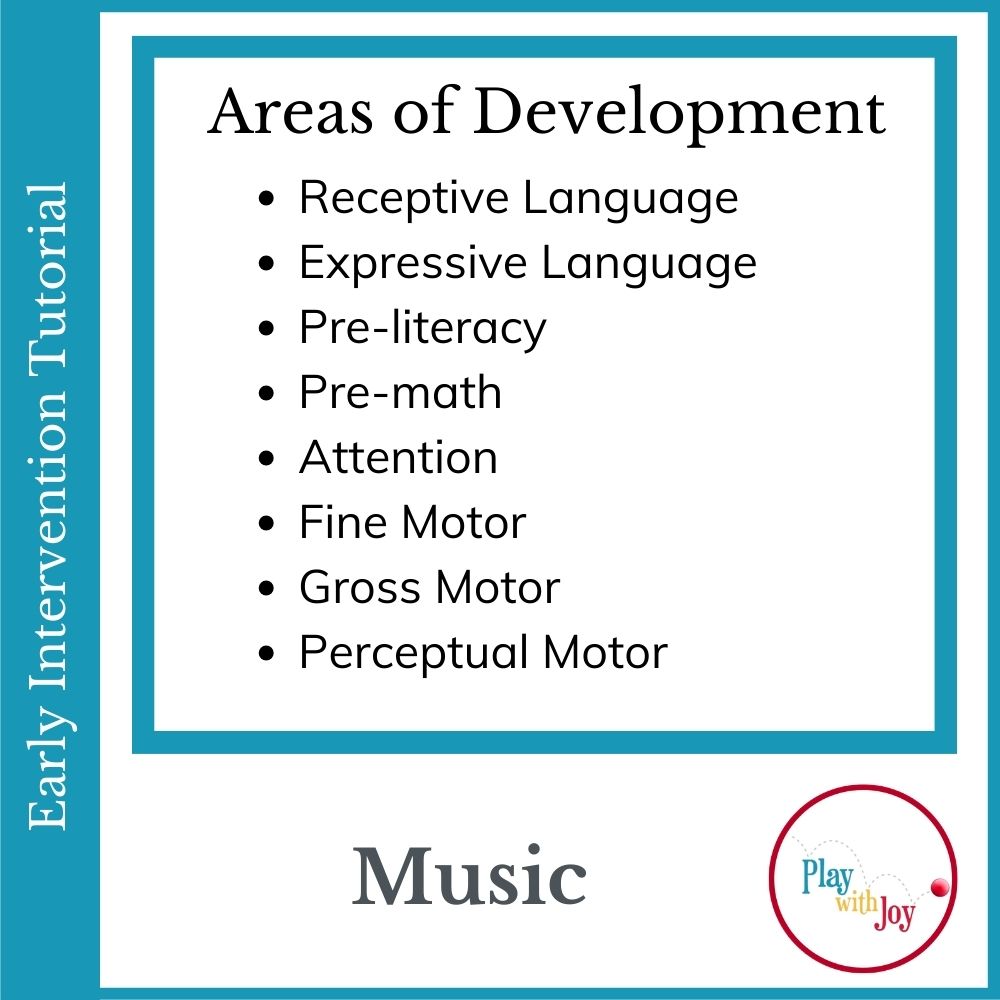
I’ll go more into detail of how you can use music to target different developmental skills in the Preschool Music Tutorial, but here is a list of all the areas of development that you can use music to help improve skills.

  • Receptive Language
  • Expressive Language
  • Pre-literacy
  • Pre-math skills
  • Executive Functioning Skills
  • Response Inhibition
  • Attention
  • Working Memory
  • Fine Motor Skills
  • Gross Motor Skills
  • Perceptual Motor Skills
  • Social-Emotional Skills
  • Adaptive Skills

That’s almost every area of development! Music is such a great tool whether you’re listening to music on your phone, playing musical instruments, singing directions, using music for transitions, or having a dance party. 

I love music, and I love seeing how kids gravitate towards music too.

Preschool Music Tutorial

Once you purchase the Preschool Music Tutorial and log in, you will have full access to all the content below this section.

This activity is great for kids at an FDL of: 1-6

The Functional Developmental Levels (FDL) are based on The PLAY Project and DIR/Floortime

  • FDL 1: Self Regulation & Shared Attention
  • FDL 2: Engagement & Relating
  • FDL 3: Intentionality & Two-Way Communication
  • FDL 4: Social Problem-Solving & Mood Regulation
  • FDL 5: Creating Symbols & Using Words & Ideas
  • FDL 6: Emotional Thinking, Logic & Sense of Reality

This activity is great for kids primarily participating in stages: 1-6

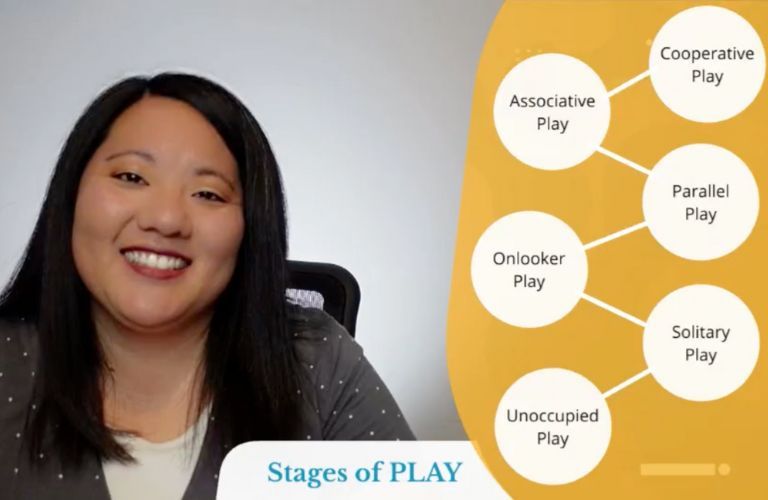
The Stages of Play come from Parten’s Stages of Social Play.

  • Stage 1: Unoccupied Play
  • Stage 2: Solitary Play
  • Stage 3: Onlooker Play
  • Stage 4: Parallel Play
  • Stage 5: Associative Play
  • Stage 6: Cooperative Play

This activity includes: visual, auditory, vestibular, proprioception

Our senses include more than the usual 5 senses. Some kids may seek certain types of sensory input and/or avoid other types.

  • Visual: Sight
  • Auditory: Sound
  • Olfactory: Smell
  • Oral: Taste (Gustatory) and using the mouth to speak, make sounds, eat, chew, drink, etc.
  • Tactile: Touch
  • Vestibular: How we process information about movement, gravity, and balance. We receive this information through the inner ear.
  • Proprioceptive: How we process information about body position and body parts. We receive this information through our muscles, ligaments, and joints.

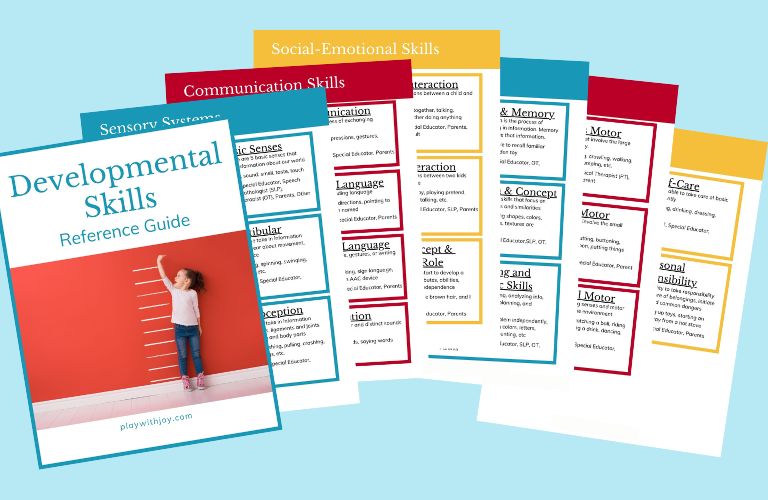
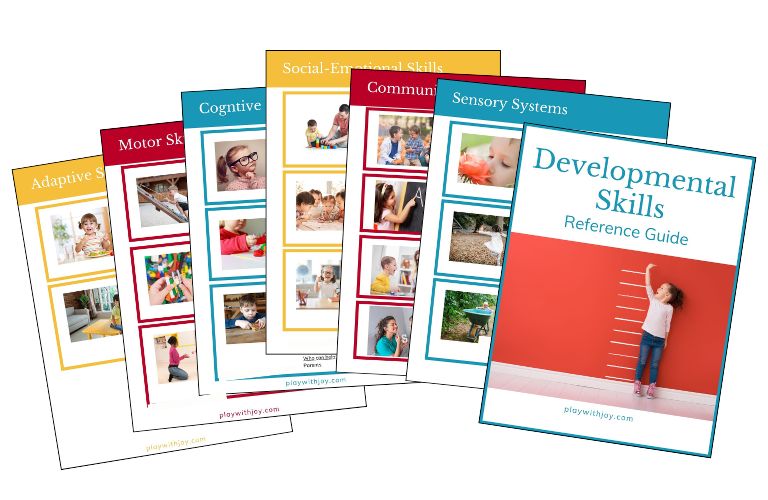
This activity is good for targeting the following developmental skills: communication, cognitive, executive functioning, motor, social, adaptive

These are the main areas of child development addressed in the Early Intervention Tutorials

  • Communication: receptive language, expressive language, listening, two-way communication
  • Cognitive skills: cause & effect, literacy, math, science, problem solving, perception and concept
  • Executive functioning: emotional control, flexibility, perseverance, self-monitoring, organization, planning, response inhibition, attention, task initiation, time management, working memory
  • Motor skills: fine motor, gross motor, perceptual motor
  • Social-emotional skills: peer interaction, self concept & social role, pretend play, behavior, group activities
  • Adaptive skills: self-care, personal responsibility

Supplies

  • Music 
  • Spotify Playlists available in the following sections:
    • Pre-Literacy
    • Pre-Math
    • Motor Skills
    • Body Awareness
    • Social-Emotional
    • Adaptive

Instructions

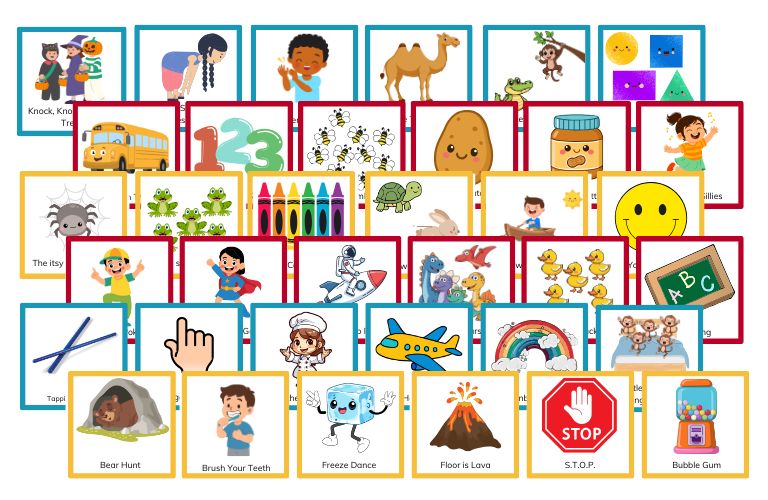
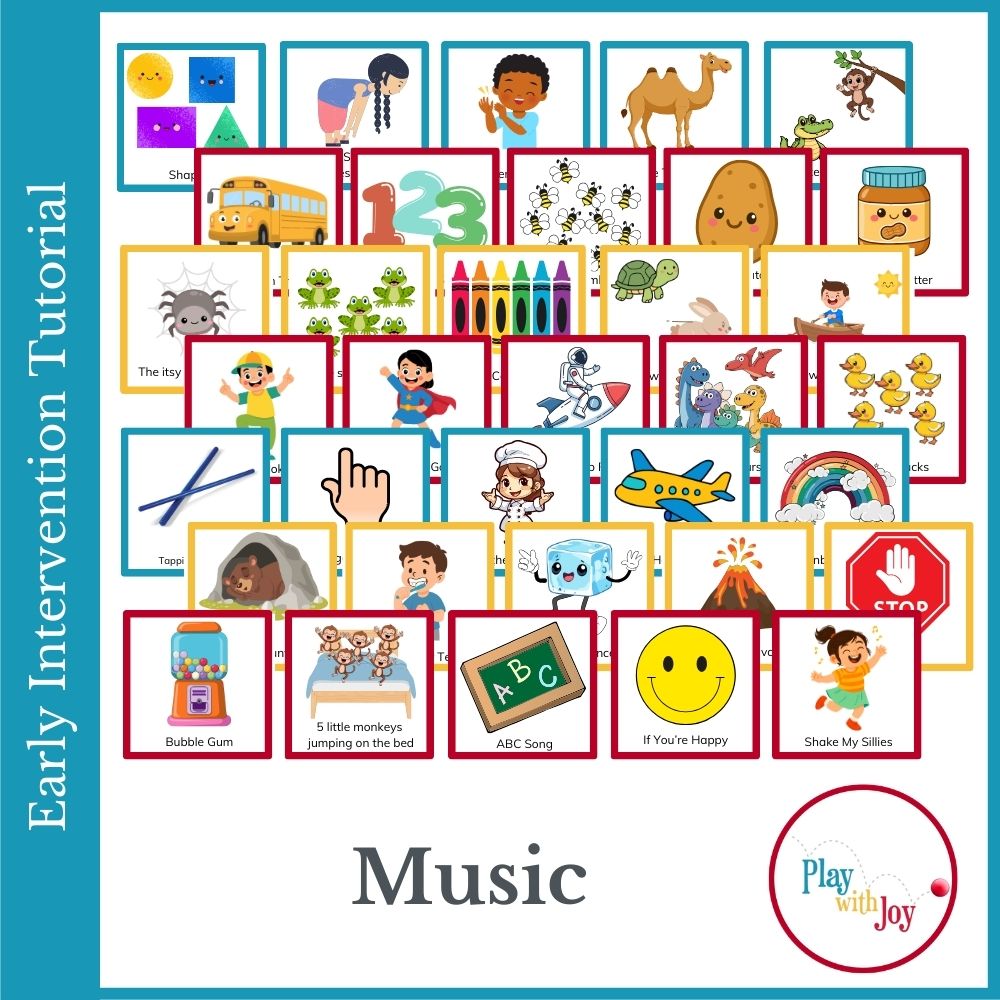
  • Download the Song Cards to give your child choices of what he/she wants to sing. This is especially helpful for kids who are not yet talking.
  • Sing songs together 
  • You’ll find songs in the different sections below

Extra Tips & Ideas

Adapting to Different Stages of Play

Developmental Skills

In this section, I will give you specific examples of what you can do in this activity to address specific areas of development.

Communication skills

Cognitive skills

Executive Functioning skills

Motor Skills

Social Skills

Adaptive Skills

Downloads

More Blog Posts

Leave a Reply

Your email address will not be published. Required fields are marked *

Login to access your content